

How to Use Cloves
The Bold Buds
Pungent · Sweet · Bitter · Peppery

Cloves are deep, dark, dramatic, sweet, and medicinal. They offer a unique richness thanks to a curious warmth that numbs the tongue. A single bud can infuse a dish for four, so they demand restraint but give generously.
FORMS
- Whole: Whole buds shine in lentil soups, meaty broths, root vegetable roasts, and spiced drinks. They offer a more prolonged flavor, ideal for infusing.
- Ground: When ground, cloves are very potent, so always start small and adjust to taste. Grinding releases their full potency immediately. Just one powdered bud can transform baked goods, braised meats, masalas, marinades, and barbecue rubs. For more subtlety, pair ground cloves with other complementary spices or herbs from the list above.
STORAGE
- Whole: Cloves are among the longest-lasting spices when stored in an airtight container in a cool, dry, dark place. Their hard structure helps lock in their oils, often retaining high quality for 3-4 years.
- Ground: Ground cloves lose flavor rapidly and should be bought in small quantities and used within a few months. For peak freshness, buy whole cloves and grind as needed. If you find yourself with a large batch of ground cloves, you can slow flavor loss by storing it in the freezer in a tightly sealed container.
PREPARATION
- Grinding: Cloves' flavor compounds (especially eugenol and caryophyllene) evaporate quickly after grinding, so it's best to do so right before cooking. If you're looking for a softer, sweeter flavor, separate the bud (the rounded head and petals) from the woody stem, which is hotter and more astringent. Cloves are dense and fibrous, so use a sturdy electric spice grinder for a fine powder or crush them in a mortar and pestle and remove the big pieces prior to use.
- Infusing & Pickling: Whole buds can infuse syrups and vinegars, allowing you to create unique condiments and flavoring agents. For example, clove-infused vinegar can be used to pickle vegetables or add a tangy vibe to salad dressings.
COOKING
- When to Add: Cloves can be toasted briefly with other whole spices for blends like garam masala, but they scorch quickly and turn bitter, so keep it very short. Add them whole early in the process so their essential oils have time to diffuse from the bud. Ground cloves can be sprinkled near the end so their full aroma is present when the dish is served.
- Blooming: Clove’s main flavor compounds are oil-based and do not dissolve well in water, so they shine when cooked with fats, dairy, or alcohol. With that said, cloves are so potent that dropping a single bud into tea will bring a noticeable and welcome change. Its warm, sweet-smelling aroma comes through even in water, so you may find you want less sugar.
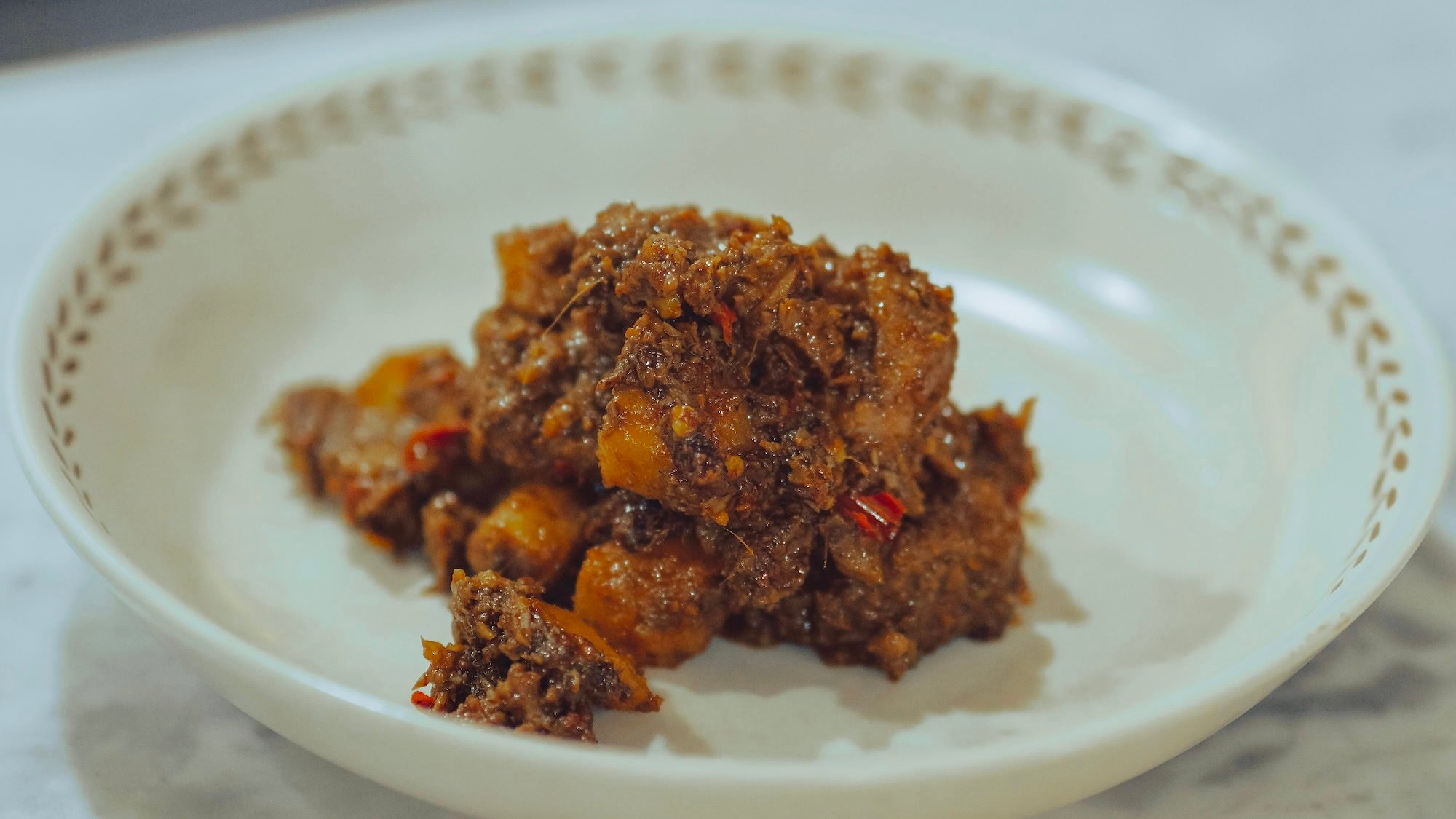
Beef rendang, a Minangkabau masterpiece from Indonesia. Slow-cooking the beef in coconut milk for hours reduces the sauce and its spices to a thick, dark paste that clings to every piece of meat.