Mace
Mace is the spice produced from the outer webbing that encases the whole nutmeg seed. It is known as the sister spice to nutmeg since they both come from the same fruit of Myristica fragrans, a tropical evergreen tree in the Myristicaceae family.
REGION OF ORIGIN
The nutmeg tree is from the southern Banda Islands in the Maluku archipelago (also known as the Moluccas) in eastern Indonesia. The Moluccas were historically called the "Spice Islands" for being the sole source of nutmeg and mace to the south and cloves to the north. These islands' tropical climate, rich volcanic soil, and reliable rainfall are ideal for these ever-important spice trees.
PART & COLOR
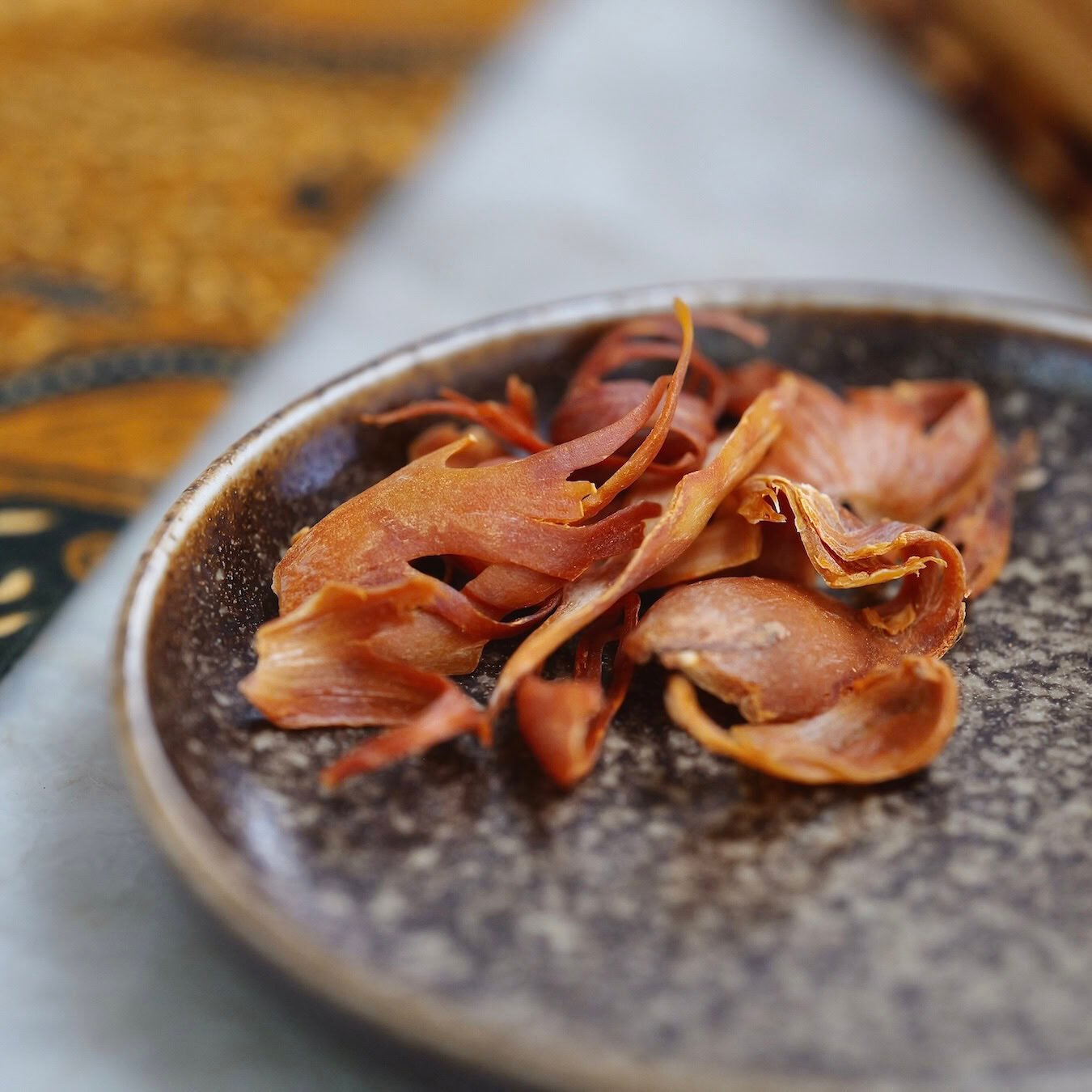
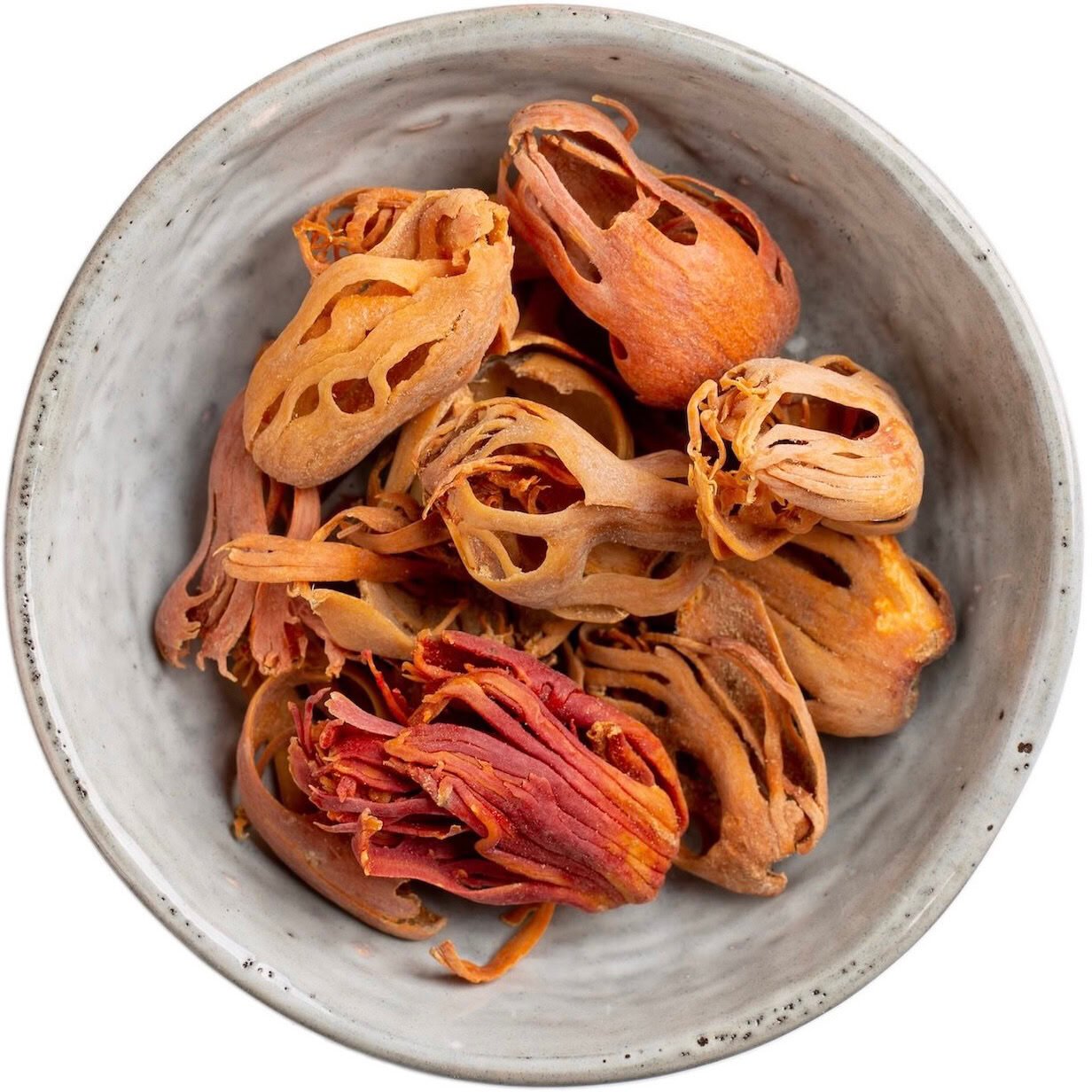
The lacy webbing around the nutmeg seed is called an aril. Fresh mace is thick, glossy, and bright red. When properly dried, it turns golden, yellow-orange with hints of light maroon. These mace "blades" are either ground into a brilliant fine powder or used whole to infuse dishes and beverages.
PRODUCTION
There are separate male and female nutmeg trees, and only females produce fruit. They begin flowering around 5-8 years old, and after pollination, develop fruit over 9 months. The fruit is ripe when it splits in half, revealing the seed (nutmeg) and the aril (mace) within. Once this happens, they must be harvested and processed quickly to prevent spoilage.
FLAVOR & AROMA
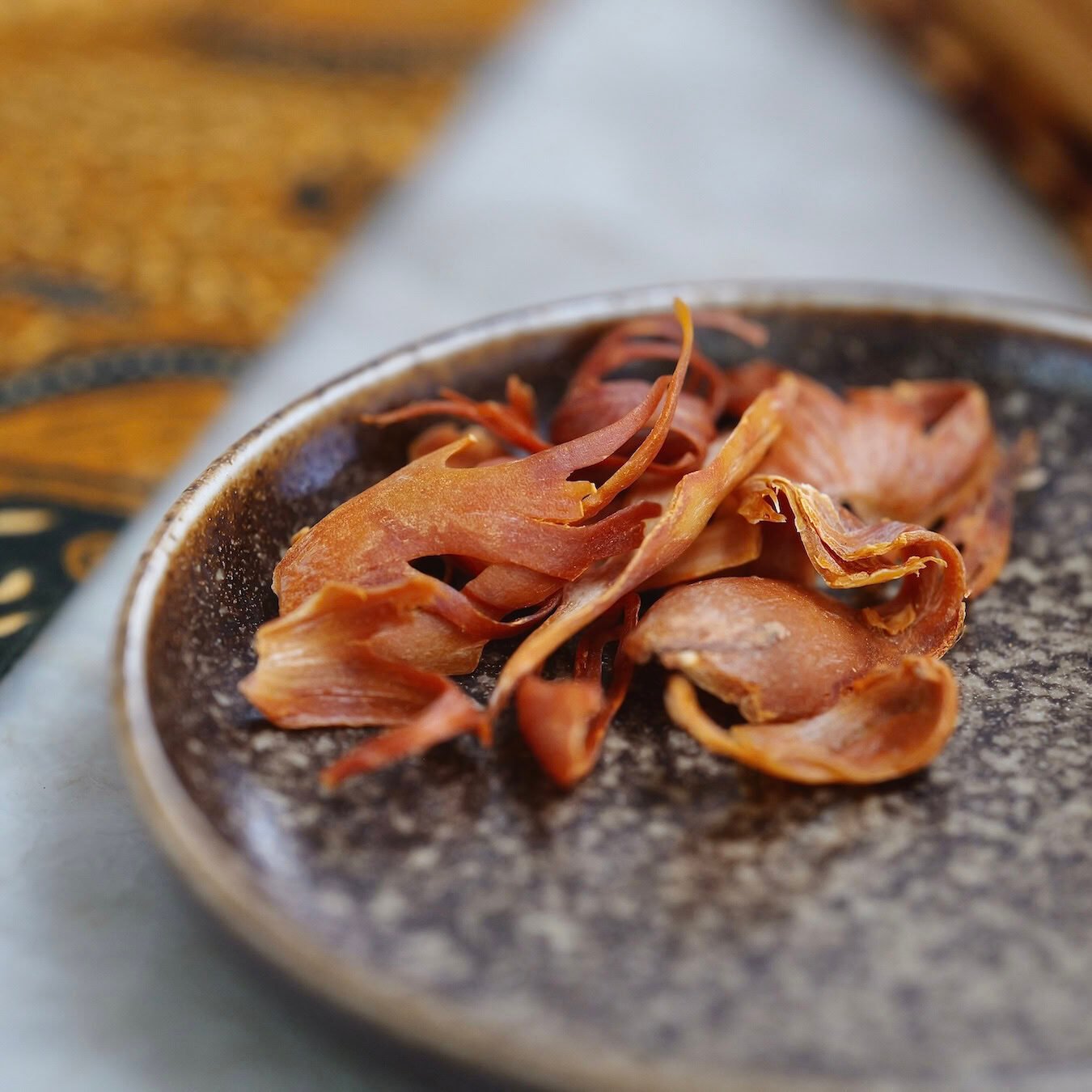
Mace offers a delicate counterpoint to nutmeg's robust warmth. Once the vibrant red aril is carefully peeled from the nutmeg seed, it's dried into blades. They release a subtly sweet aroma, mingling fruity notes with floral citrus and warm, woody spice. Its flavor is initially mild, echoing grapefruit zest and raw mango with a gentle cinnamon-like warmth. As it unfolds, a light peppery spice emerges, along with lingering notes of nutmeg (no surprise there).
Pre-ground mace loses the vibrancy of its whole counterpart, its aroma fading and its flavor becoming less nuanced. To experience mace's true elegance, seek out high-quality, dried mace blades and grind them in an electric spice grinder.
CULINARY USES
While mace shares notes with its bolder sister, nutmeg, it offers a more nuanced and delicate profile. This makes it an excellent choice for lighter dishes and beverages; think fruit, tea, and glazes. In desserts, it complements custards, fruity pies, and cookies. Mace can also elevate sauces, rice dishes, and gently spiced seafood. It is a favorite in winter squash soup, and just a pinch greatly benefits vegetable sides like roasted carrots and mashed potatoes. You can even add it to mulled wine or spiced chai for a touch of exotic warmth.
Like nutmeg, mace enhances the richness of butter and cheese, so it works well with anything creamy. Just use less than you think to accentuate the flavors already present.