Bay Leaf
True bay leaf is the spice derived from the leaves of the bay laurel (Laurus nobilis), an evergreen tree in the laurel family.
REGION OF ORIGIN
The bay laurel originated in the Mediterranean basin, especially in Anatolia. Its native range spans the coastlines of Southern Europe, North Africa, and the Middle East. Today, Türkiye remains the world’s leading producer and exporter.
PART & COLOR
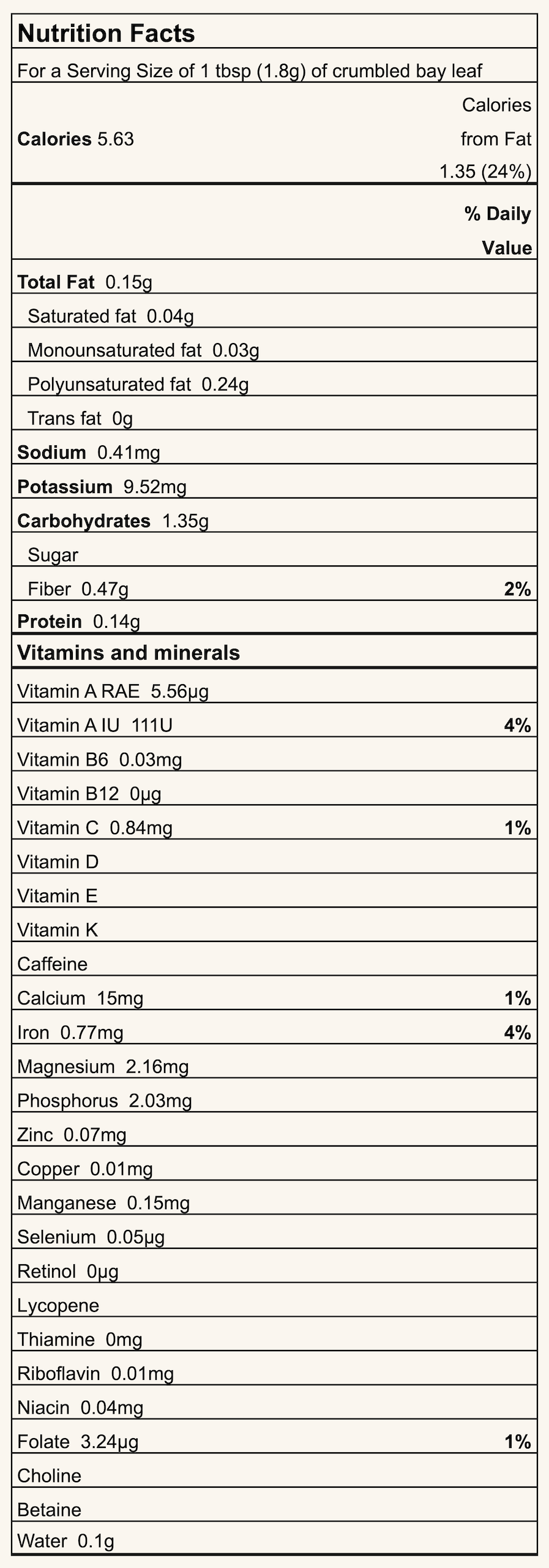
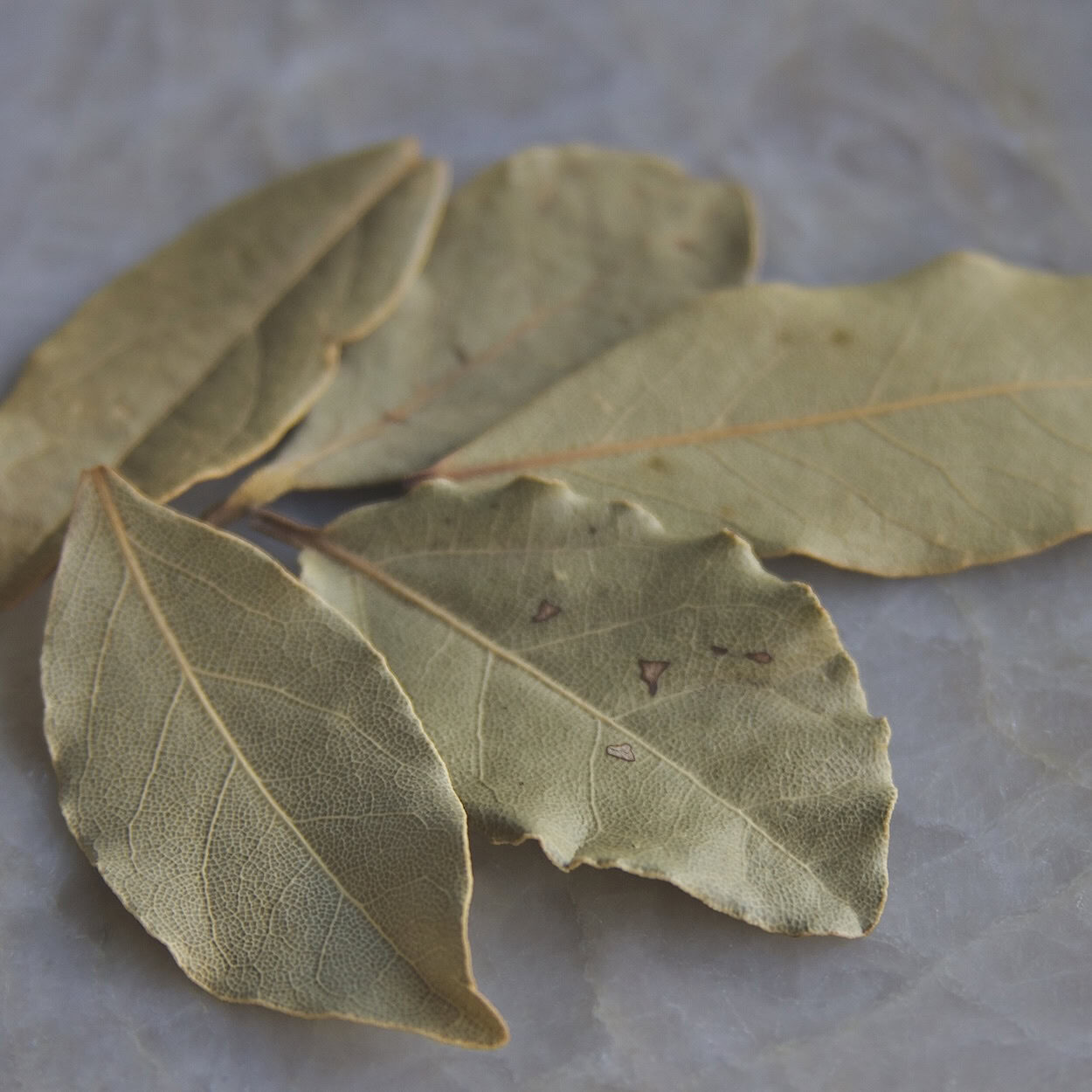
Bay leaves are elongated (2-4 inches / 5-10 cm) with a prominent central vein. Fresh leaves are a glossy dark green with a leathery texture. However, the spice is more commonly used in its dried form. Once dried, the leaves fade to a muted, greyish olive green or pale brown, and their texture becomes matte and slightly brittle.
PRODUCTION
The bay laurel tree can be harvested year-round, but the highest quality leaves come from trees at least 2-3 years old. Young leaves are left on the tree to continue growing as they aren’t yet full-flavored. Mature leaves are hand-harvested during the warmer months, when their essential oil tends to be more concentrated. They are then carefully dried in the shade or with low heat.
FLAVOR & AROMA
Bay leaves are dried more often than not because their flavor mellows, becoming more savory and less sharply bitter. With hints of eucalyptus, pine, and tea leaves, and faint echoes of black pepper, clove, and mint, bay leaves offer a warm, earthy sweetness to the background.
It is a truly foundational note that enhances other flavors by deepening our perception of them. Used sparingly (usually just one or two leaves), bay leaves don't call much attention to themselves. But without it, countless dishes feel incomplete.
CULINARY USES
From French pot-au-feu to Italian ragù to Spanish paella, bay leaf is one of the most indispensable spices in European and Mediterranean cuisine. But it's become so popular beyond its origins that you could even say it's elemental to global cuisine.
Its subtle flavor awakens with heat, which is why it's mostly used in slow-cooked recipes where the whole leaf is added at the beginning of cooking and removed before serving. Let it simmer into soups, stocks, stews, broths, sauces, braises, rice, and beans to harmonize all of the ingredients in the dish.