

Cloves
Cloves are the spice produced from the unopened flower buds of Syzygium aromaticum, a tropical evergreen tree in the myrtle family.
REGION OF ORIGIN
The clove tree is from the northern islands of the Maluku archipelago (also known as the Moluccas) in eastern Indonesia. The Moluccas were historically called the "Spice Islands" because they were the sole source of cloves to the north and nutmeg and mace to the south. The islands' tropical climate, rich volcanic soil, and reliable rainfall are ideal for these ever-important spice trees.
PART & COLOR
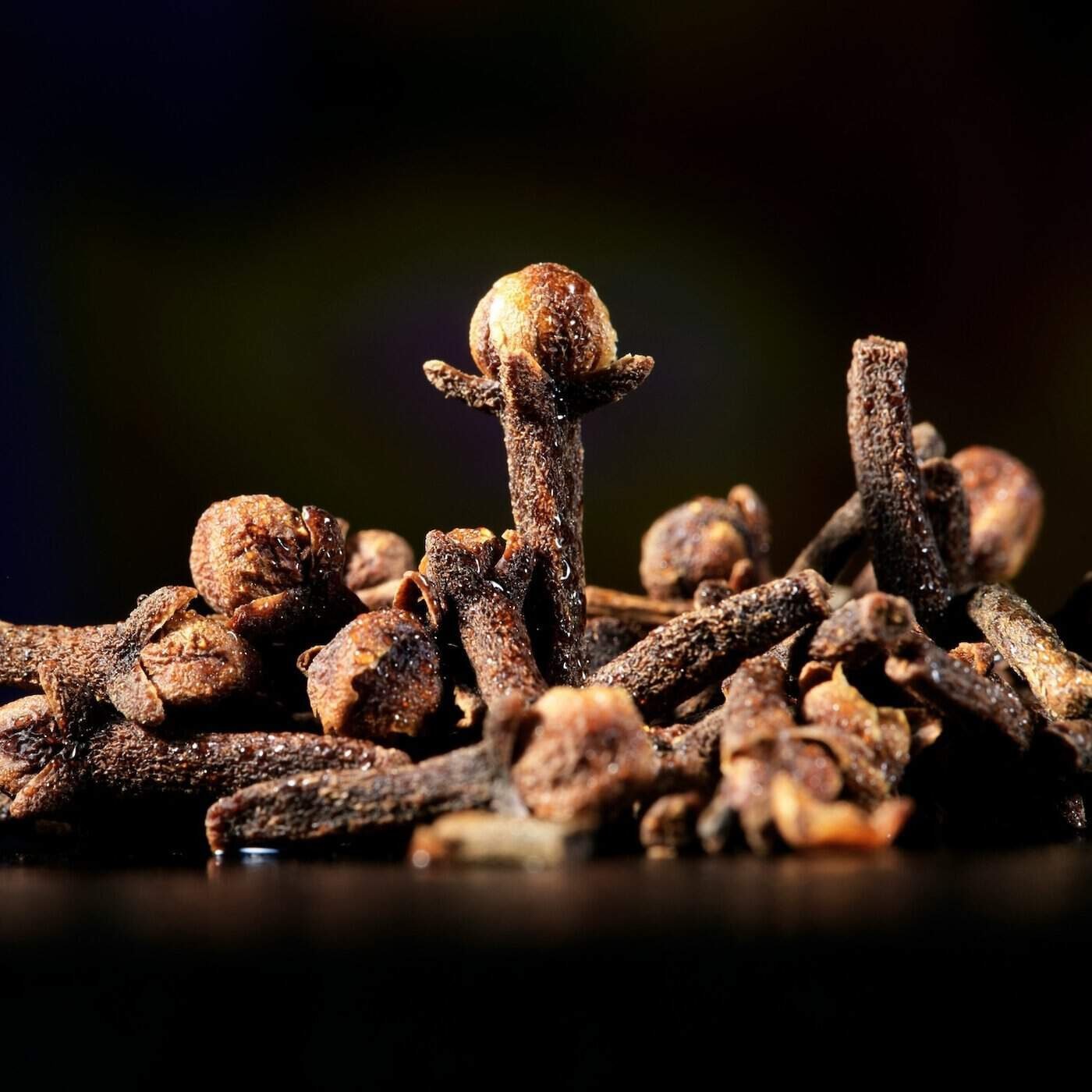
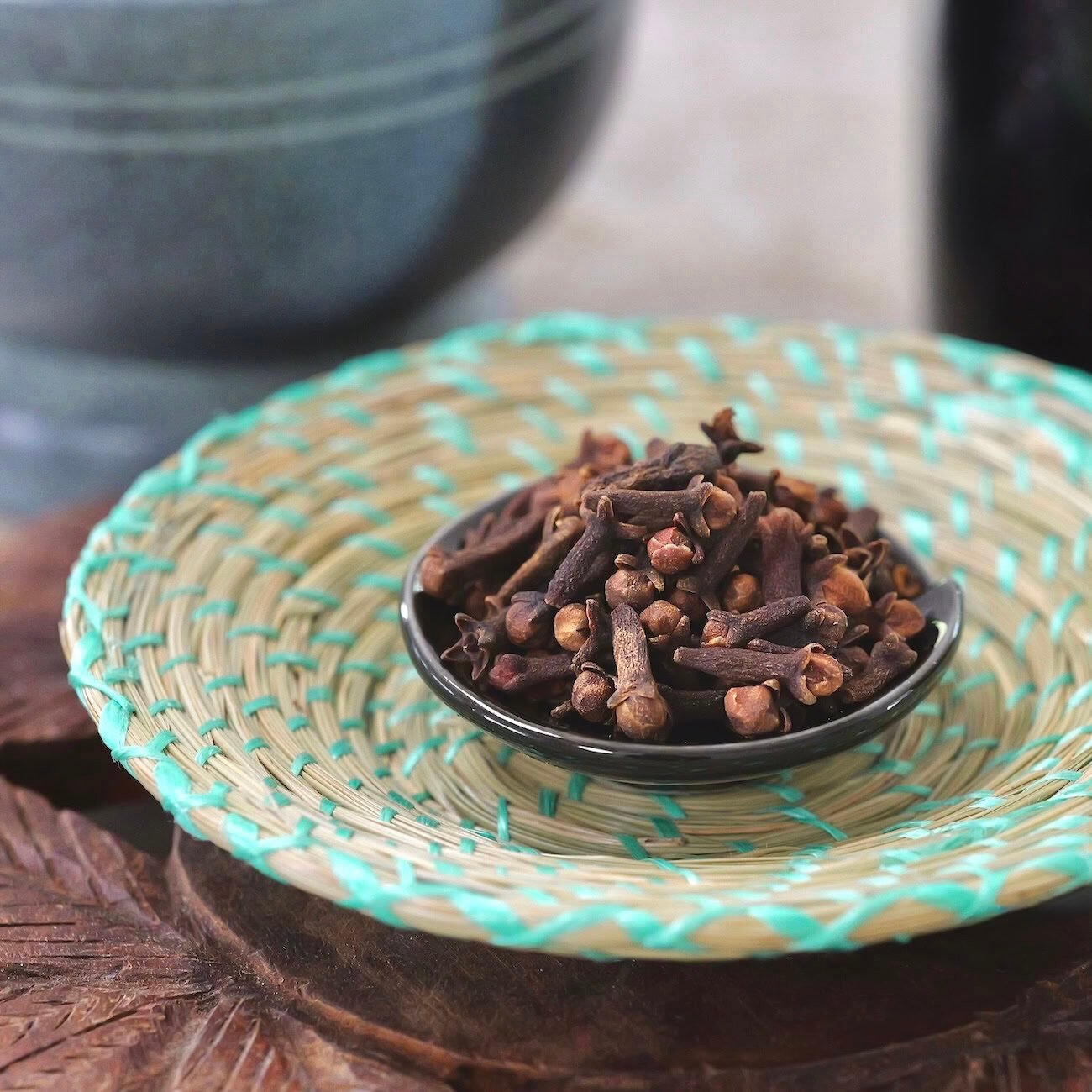
Cloves are unopened flower buds. Once dried, they turn a deep reddish-brown color. Dried clove buds have a characteristic nail-shaped appearance with a round head (the four unopened petals), the four spreading sepals, and the slender calyx tube. The term "clove" comes from the Latin clavus, which means "nail."
PRODUCTION
Clove trees are evergreen and can flower year-round, but peak harvests align with the drier months. The unopened buds are hand-harvested right before they bloom as they turn from green to pink. They are then sun-dried, sorted, and graded by size, color, aroma, and moisture content.
FLAVOR & AROMA
Cloves possess a powerful aroma that is instantly recognizable, a unique blend of sweet, spicy, warm, and woody notes. The primary aromatic compound, eugenol, lends cloves their distinctive, almost medicinal fragrance, reminiscent of pepper, cinnamon, and eucalyptus with an earthy, resinous depth. On the palate, cloves deliver a potent punch of flavor with an assertive heat. The initial taste is pungent and warm, followed by sweetness and a subtle tingling, numbing sensation.
They are intense, but when used with restraint, cloves can bring an exhilarating flair to otherwise plain dishes. It is a spice that can only be understood firsthand. Reading about it could never do it justice.
CULINARY USES
Cloves' multifaceted flavor is compatible with many other spices: cinnamon, nutmeg, mace, allspice, cardamom, ginger, cumin, star anise, the list goes on... They are thus key to many famous spice blends around the world: garam masala in India, the iconic Chinese five-spice powder, the beloved Middle Eastern baharat, and the lovely ras el hanout from North Africa. It's fun to blend all these complementary spices in varying proportions to create novel spins on classic dishes.
Cloves are popular in baked goods like apple pie and gingerbread. However, they're just as capable in savory settings and are often used to flavor meats, such as ham, beef, and game. Incorporate these buds into your repertoire to open new dimensions to your culinary creativity.
Buying them in volume?
We connect you with verified suppliers in our network, negotiate the terms, and stay with the deal until it ships.