Ginger
Ginger is the spice produced from the rhizomes of Zingiber officinale, a tropical perennial herb in the ginger family.
REGION OF ORIGIN
Ginger's birthplace is difficult to pin down because it is not known in the wild today, so its exact origin has been shrouded by thousands of years of widespread cultivation and trade. The best approximation is tropical South and Southeast Asia, stretching toward southern China.
PART & COLOR
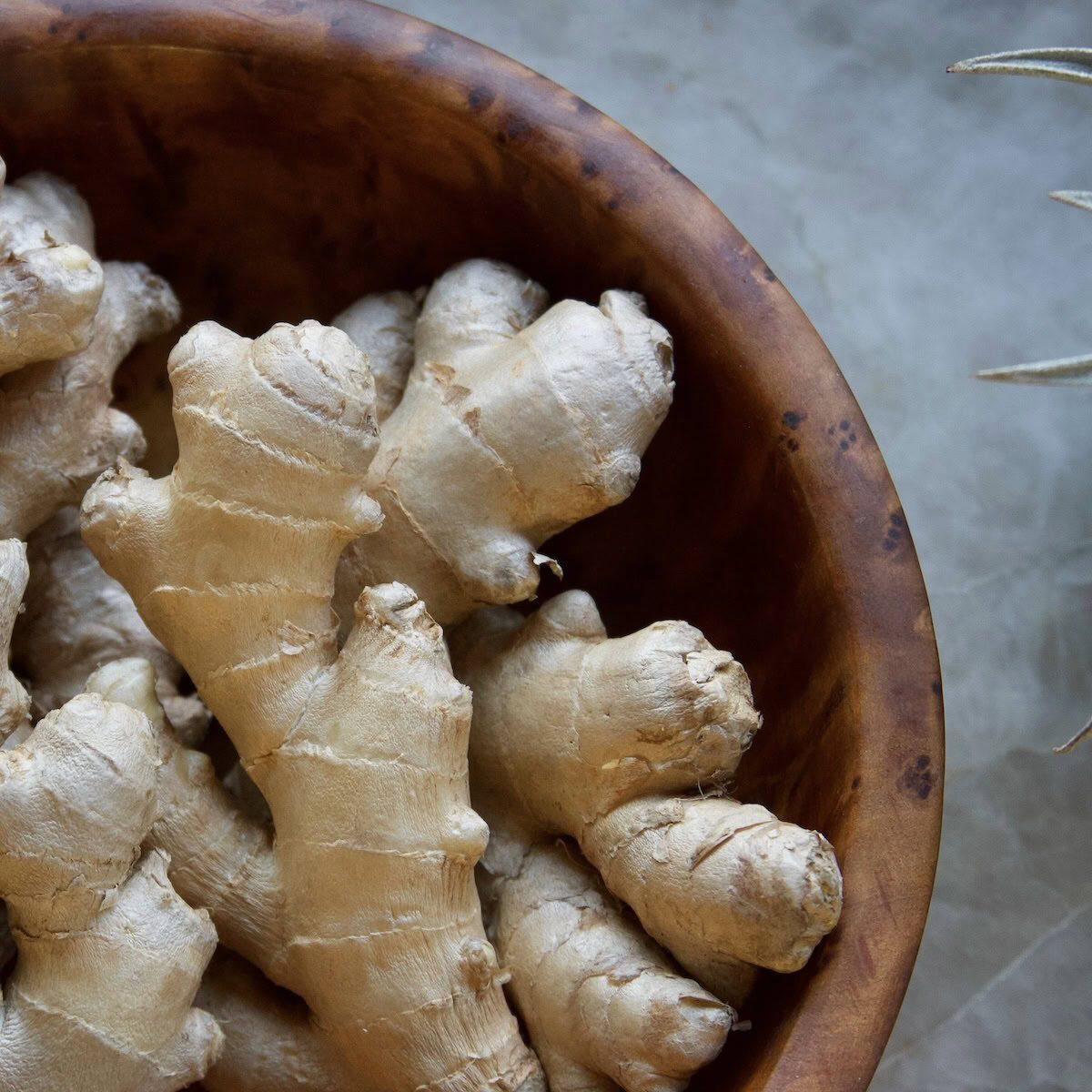
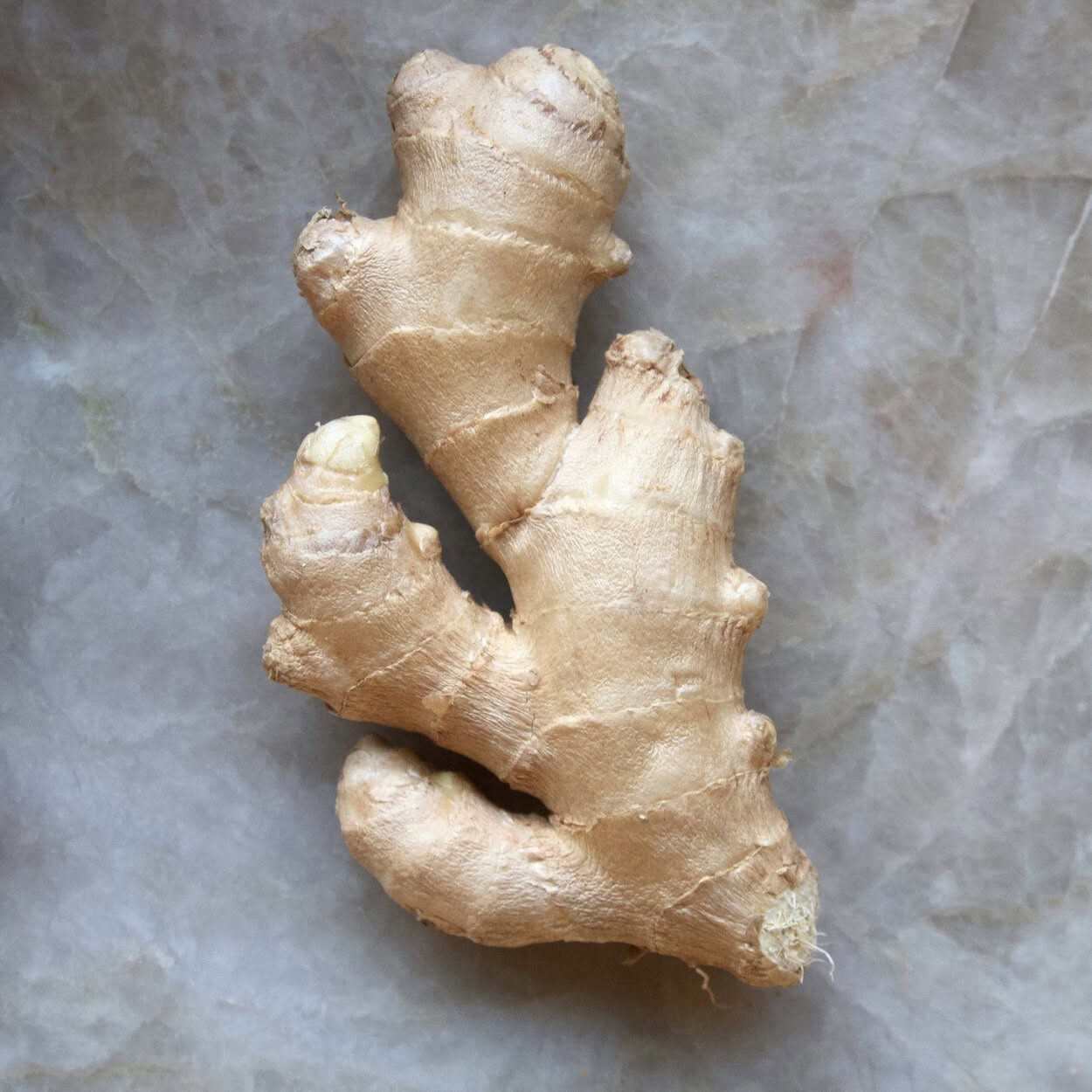
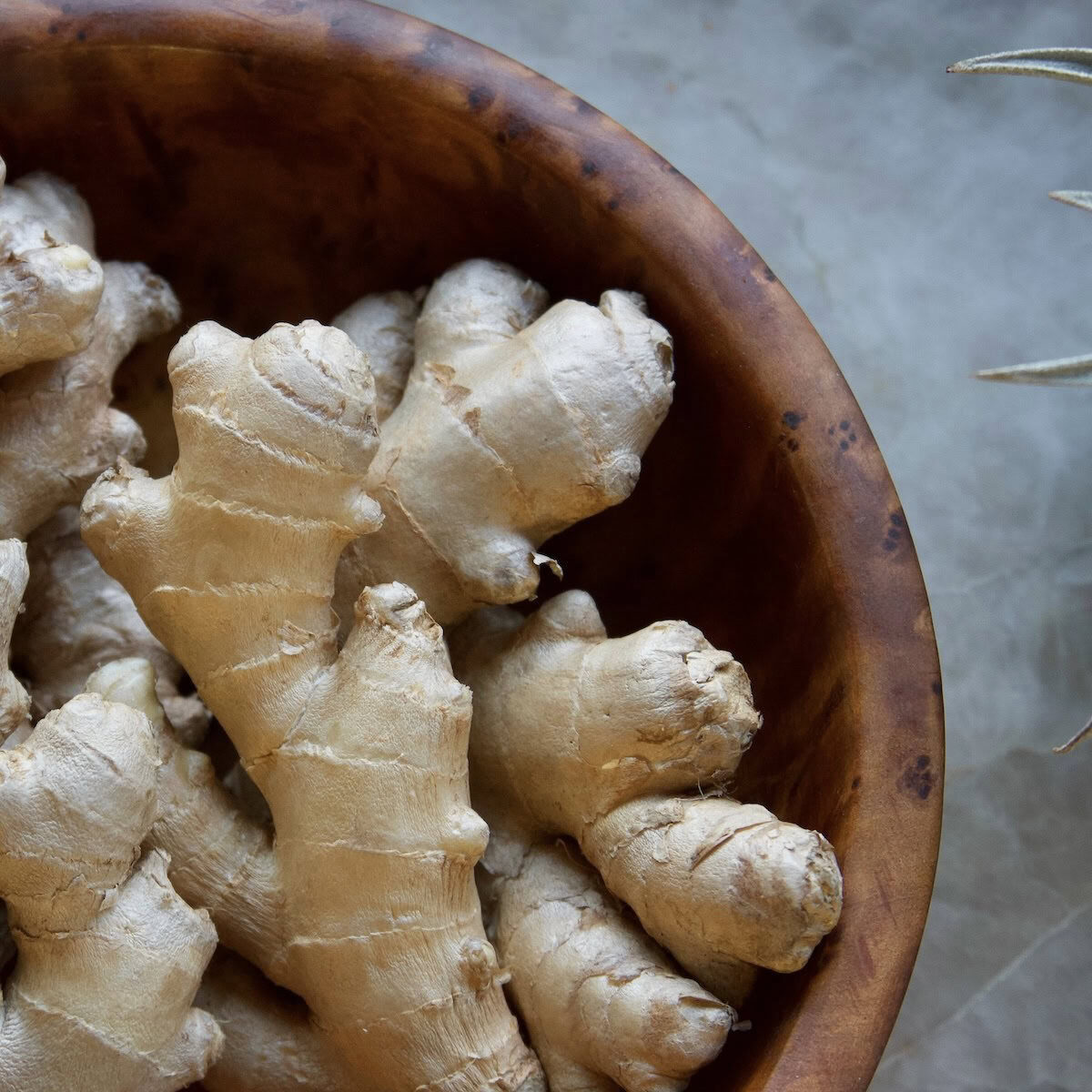
Ginger rhizomes are knobby underground stem structures. Their rough outer skin ranges from light beige to dark brown, depending on the variety and age. The flesh within is a light yellow, with some varieties displaying subtle pinks and blues. Ginger powder is pale yellow to tan. It comes in other forms too: pastes and extracts, candied and pickled.
PRODUCTION
Zingiber officinale thrives in tropical and subtropical climates. It is typically planted at the start of the rainy season to ensure ample water supply. Ginger rhizomes develop over a period of 8 to 10 months, reaching full maturity when the leafy tops of the plant begin to yellow. The entire plant is then carefully dug up, and the rhizomes are separated, cleaned, and processed to either be sold fresh or as a dried powder.
FLAVOR & AROMA
Ginger has a warm and sweet aroma with an invigorating pungency. Fresh rhizomes release a citrusy, floral, earthy, and peppery scent. The initial taste is spicy, followed by sweet notes. The warmth lingers for a while, spreading throughout the mouth. It also has a refreshing and clean aftertaste, which is why it's so popular as a palate cleanser. This use is perhaps most famous in the form of pickled ginger (gari) in Japan, which resets the taste buds between different pieces of sushi.
Fresh ginger offers the most vibrant and nuanced flavor profile. When cooked, ginger mellows, developing a deeper robustness while retaining its signature spice. Dried ginger powder is more concentrated and earthy, with less of the fresh citrusy element. Fresh and dried ginger offer distinct qualities, allowing the spice to suit a spectrum of recipes.
CULINARY USES
Whether fresh, dried, powdered, pickled, or candied, ginger does wonders. In Asia, ginger is often found in stir-fries, curries, marinades, and sauces. Its zesty heat and earthy notes add complexity to the stir-fries of Thailand, kung pao chicken from China, and Burmese ginger salad. In Indian cuisine, ginger is commonly paired with garlic to create a flavorful base for many curry, lentil, and masala recipes. In the Caribbean, it helps spice up one of the most succulent dishes on Earth, jerk chicken. Across North America and Europe, ginger is the star of festive baked goods like gingerbread cookies and cakes.
And we mustn't forget drinks. You've likely enjoyed a ginger ale, ginger beer, Moscow Mule, or ginger lemon tea, not to mention its pivotal role in masala chai.