Black Pepper
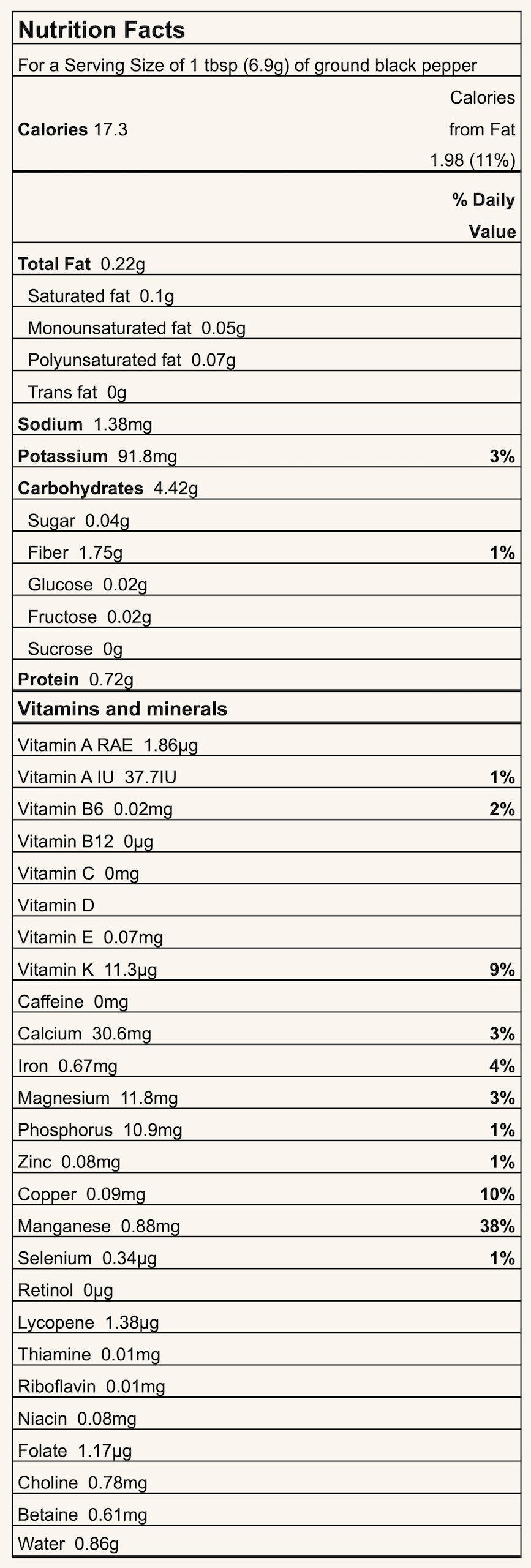
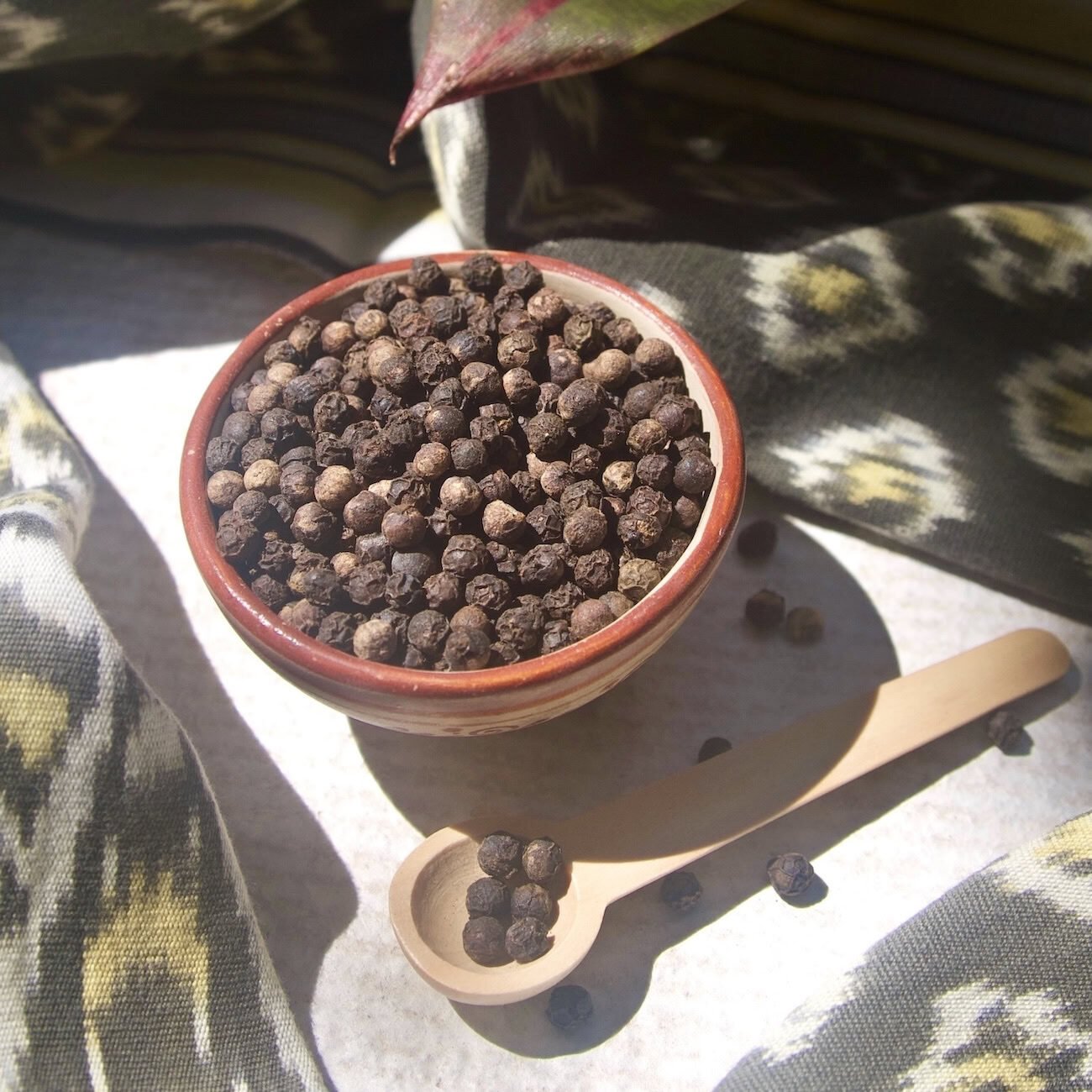
Black pepper is the spice produced from the unripe fruits of Piper nigrum, a tropical flowering vine in the pepper family.
REGION OF ORIGIN
Black pepper originated in the lush, tropical rainforests of the Western Ghats in southwestern India, which is also the birthplace of cardamom. This is one of the wettest regions of the subcontinent, allowing the pepper vine to flourish for millennia. From there, cultivation spread to the neighboring foothills of the Malabar Coast, which became one of the most significant spice hubs of the ancient world.
PART & COLOR
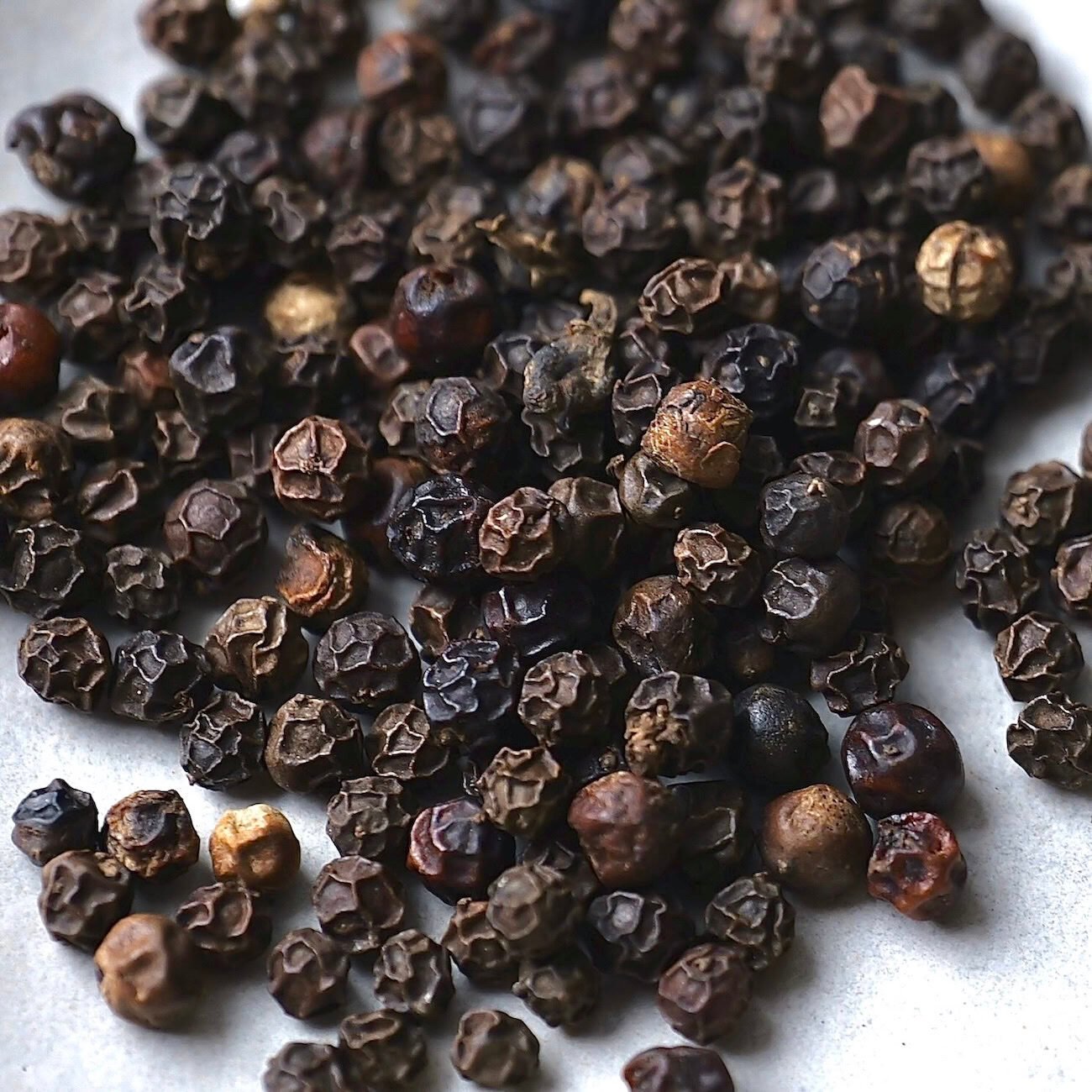
Black pepper "berries" are technically small, round fruits called drupes. They are harvested unripe and turn dark brown to black when dried. The color varies with the drying process and ripeness, with some showing reddish or amber hues.
PRODUCTION
Piper nigrum is a perennial vine that begins flowering around 3-4 years after planting and continues to produce fruit for many years. The fruits start green and ripen to a vibrant red, but for the black pepper spice, they are harvested when still green. The 'spikes' are carefully handpicked, threshed, and dried for 5-6 days with their skins intact. As they dry, the fruits shrink and wrinkle into their distinctive appearance.
FLAVOR & AROMA
Most people are unaware that black pepper is a truly exquisite spice because of that pre-ground powder that sits in a shaker next to salt. Since most of the volatile oils have already dissipated, the flavor of “pepper” is flat and one-dimensional. Just a little kick of heat, really.
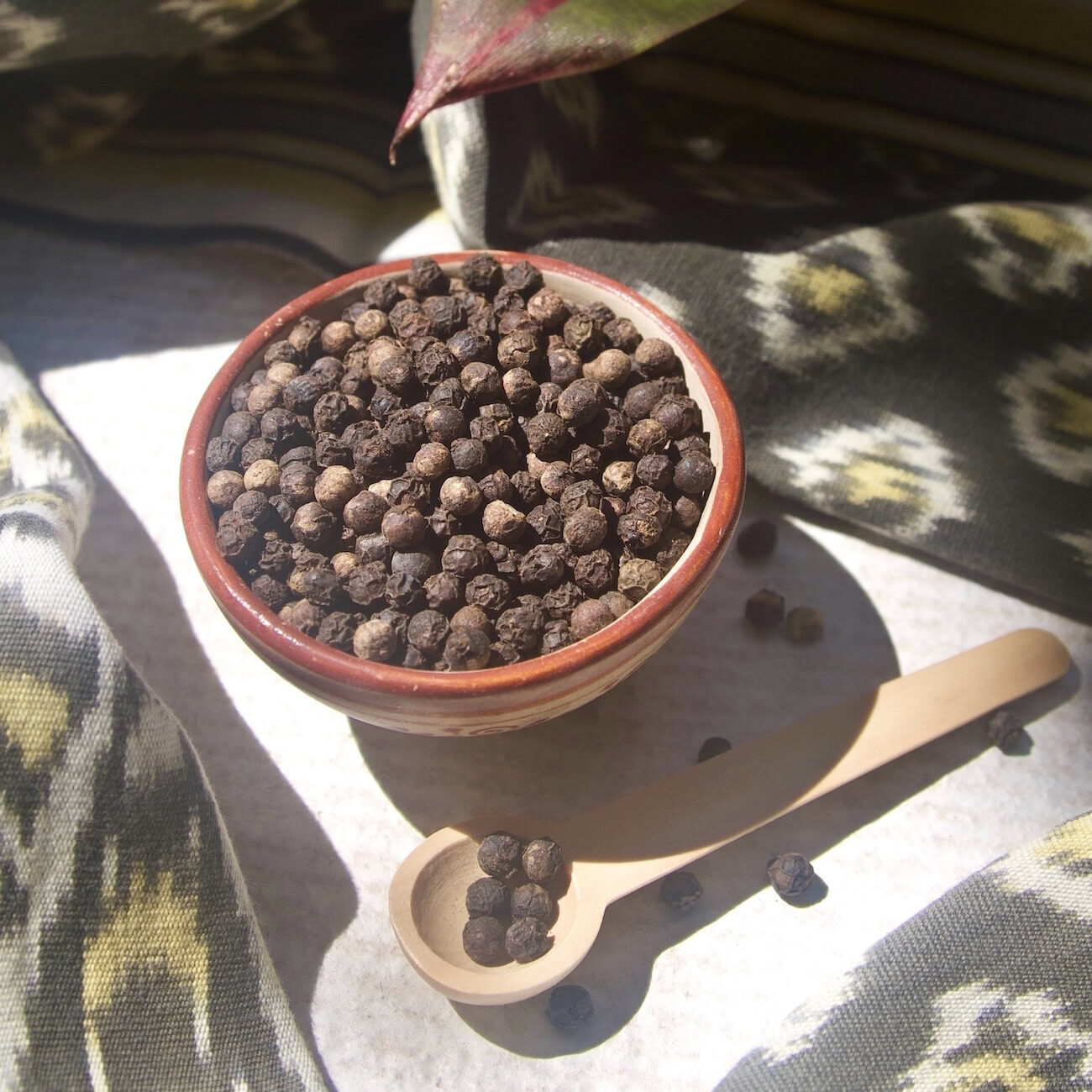
That's why waiters freshly grind black peppercorns right in front of you at upscale restaurants. You must be present when they are released to fully experience the spice. Freshly ground peppercorns have depth, their flavors more intense and nuanced. They offer a sharp, robust heat with layered notes of citrus, pine, and fruit. They are fruits, after all.
When freshly ground, the powder isn’t just grey, but speckled with white and black. The white is the inner seed, holding the most concentrated heat, and the black is the wrinkled outer layer, which is fruity and a little floral. They both mix together, perfectly blending sweet and spice.
CULINARY USES
Hailed as the “King of Spices,” black pepper’s versatile pungency has made it one of the most popular spices on earth. Sweet and savory dishes, spice blends, desserts, and beverages all welcome the king.
In savory cuisine, black pepper's fruity heat cuts through rich flavors, and its earthiness complements a wide range of ingredients. Just a few cracks of freshly ground, quality peppercorns elevate a simple steak and transform a vegetable stir-fry.
Black pepper is key to many beloved blends like garam masala and baharat. And while it may seem unexpected in desserts, it can add a surprising twist. Just a pinch enhances the flavors of chocolate in particular. It's also essential to some cocktails like the Bloody Mary, and it can add intrigue to classic drinks by infusing simple syrup. Black pepper is the universal spice, well-deserving of its throne.