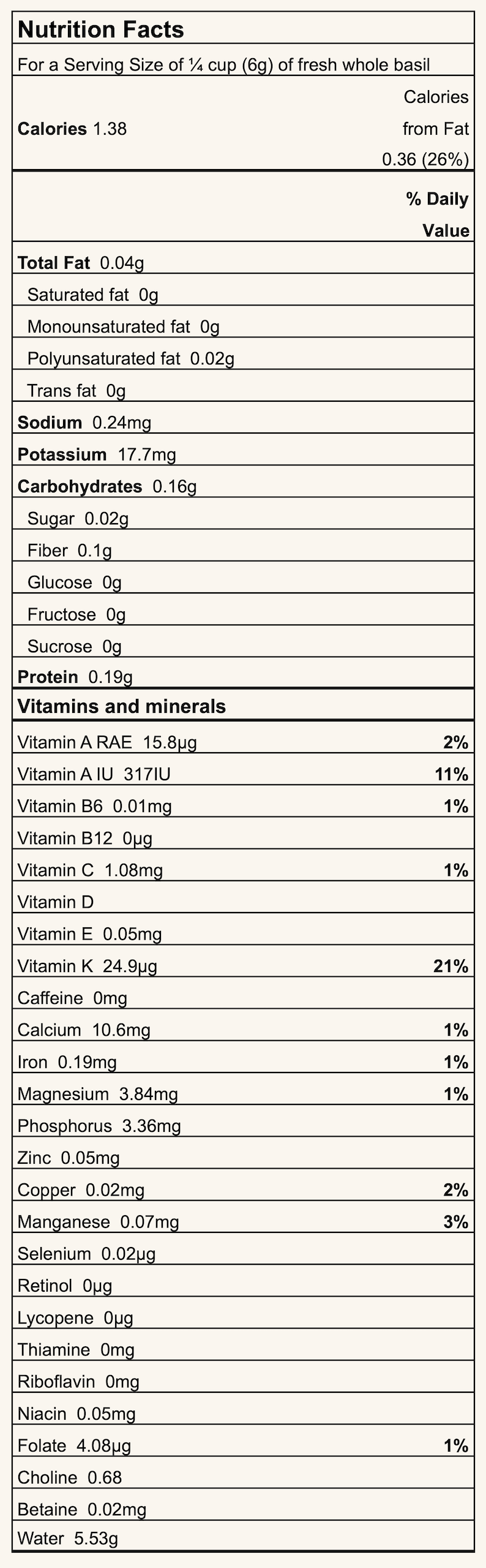
Basil
Basil is the herb derived from the leaves of various species and cultivars in the genus Ocimum, part of the mint family. There are over 60 species and hundreds of cultivars, but the most widely used in cooking are:
Sweet Basil: Ocimum basilicum
Holy Basil: Ocimum tenuiflorum
Lemon Basil: Ocimum × citriodorum
Thai Basil: Ocimum basilicum var. thyrsiflora
Purple Basil: Ocimum basilicum var. purpurascens

REGION OF ORIGIN
Most of the best-known culinary basil types, including sweet, holy, and Thai, have deep roots in South and Southeast Asia. Other Ocimum species are native to tropical Africa.
PART & COLOR
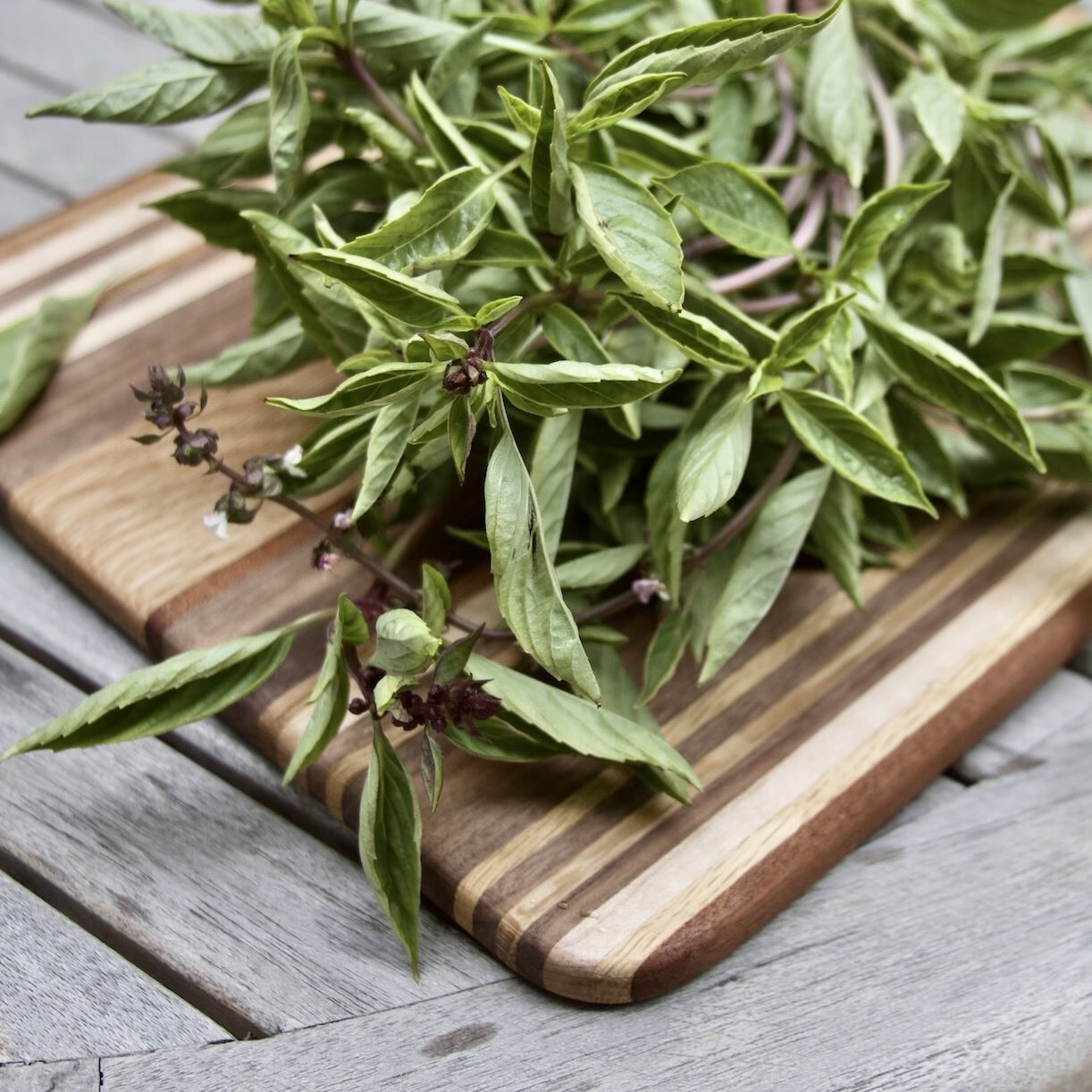
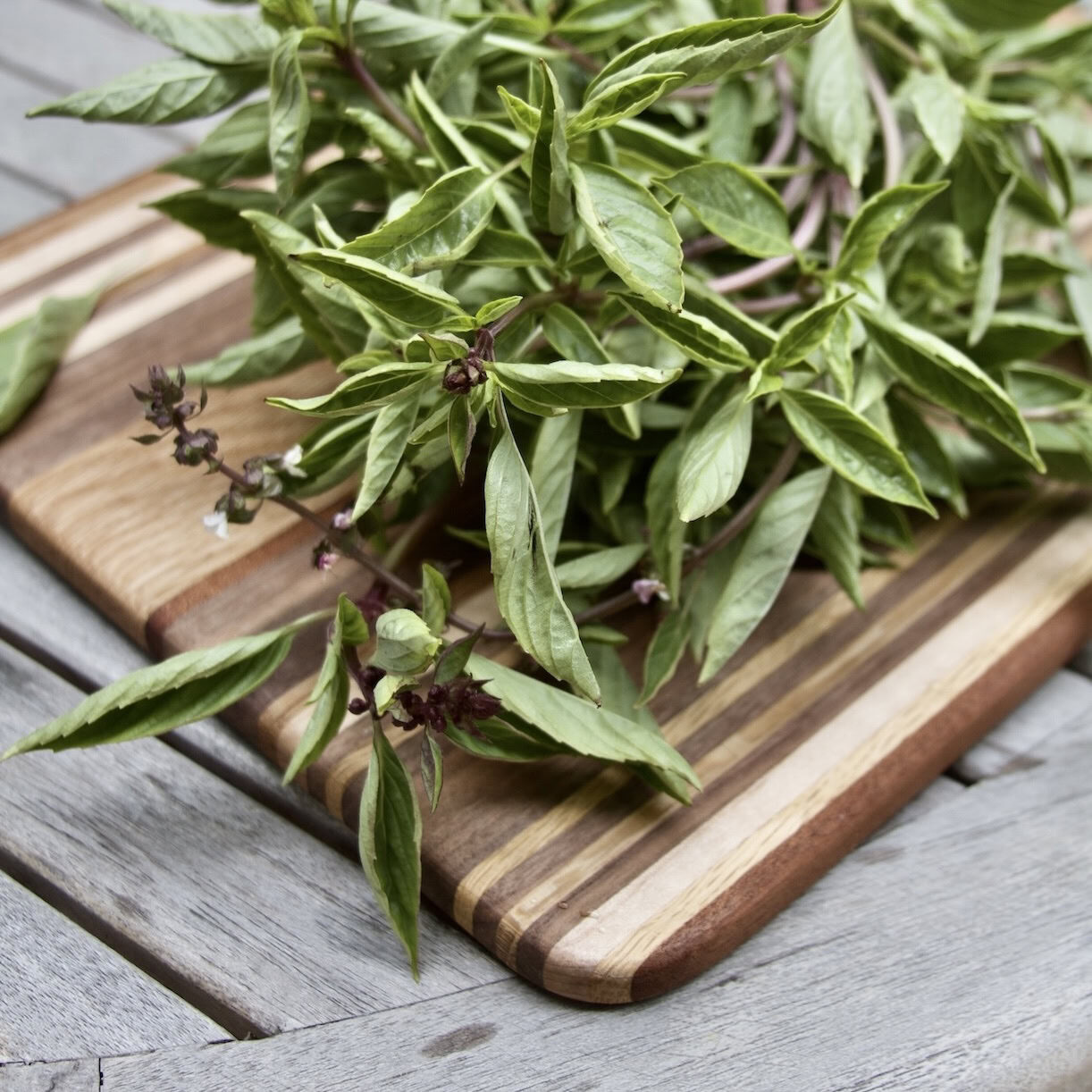
Basil leaves come in a wide variety of shapes, sizes, and colors. The most popular, sweet basil, has vibrant, bright green leaves that are smooth and wide with a slightly pointy tip. Holy basil leaves often have a slightly purplish hue and are more serrated. Lemon basil is light green with a yellow tint. Thai basil is more of an olive green and can be identified by its reddish-purple stems. Purple basil is, not surprisingly, deep purple with hints of olive green at the tips and edges.
PRODUCTION
Basil is typically a warm-season annual that is planted in the spring and is ready for harvest 6-8 weeks after planting. Regular harvesting encourages the plant to continue producing new leaves and delays flowering, and removing any flower buds that appear extends the season. For the best flavor, harvest in the morning after any dew has dried.
FLAVOR & AROMA
Basil's aroma is an intoxicating melody of sweet herbaceous notes with a hint of spice. It awakens the senses and stimulates the appetite. Its flavor is similarly invigorating, regardless of the variety. Sweet basil offers a slightly sweet, peppery taste with a touch of mint. Purple basil is similar to sweet basil, but often with a more noticeable clove note. Thai basil has licorice-like undertones. Lemon basil, as you may surmise, brings a bright, citrusy element. Holy basil can combine all these elements, so it tends to feel more robust than the rest. Perhaps that has contributed to its air of divinity, alongside its deep history in traditional medicine.
On the palate, the soft texture and velvety mouthfeel of the leaves further enhance the experience. The herb is complete when fresh, exuding its coveted bright top notes. Dried basil lacks the same full vibrancy, but still has value for its convenience and more concentrated, earthy flavor.
CULINARY USES
In its fresh form, basil is a culinary powerhouse. Its tender leaves are often used as a fragrant garnish or chopped and added to salads, sauces, and soups for a refreshing burst. They can also be muddled into cocktails or blended into smoothies, and they work really well in light desserts like strawberry basil sorbet. Dried whole leaves are often used to infuse liquids, while dried and ground basil is a component in Mediterranean herb blends like Italian seasoning.
Sweet basil is famous in Italian cuisine, the star of pesto, Caprese salad, and countless tomato-based sauces. In Southeast Asian cuisine, Thai basil is critical to stir-fries, curries, and noodle dishes. Lemon basil adds a refreshing twist to salads and soups, but especially grilled fish. In India, holy basil makes a delicious, soothing tea. Whichever variety you choose, and however you decide to use it, feel free to get creative. This beloved herb knows few bounds.