Cardamom
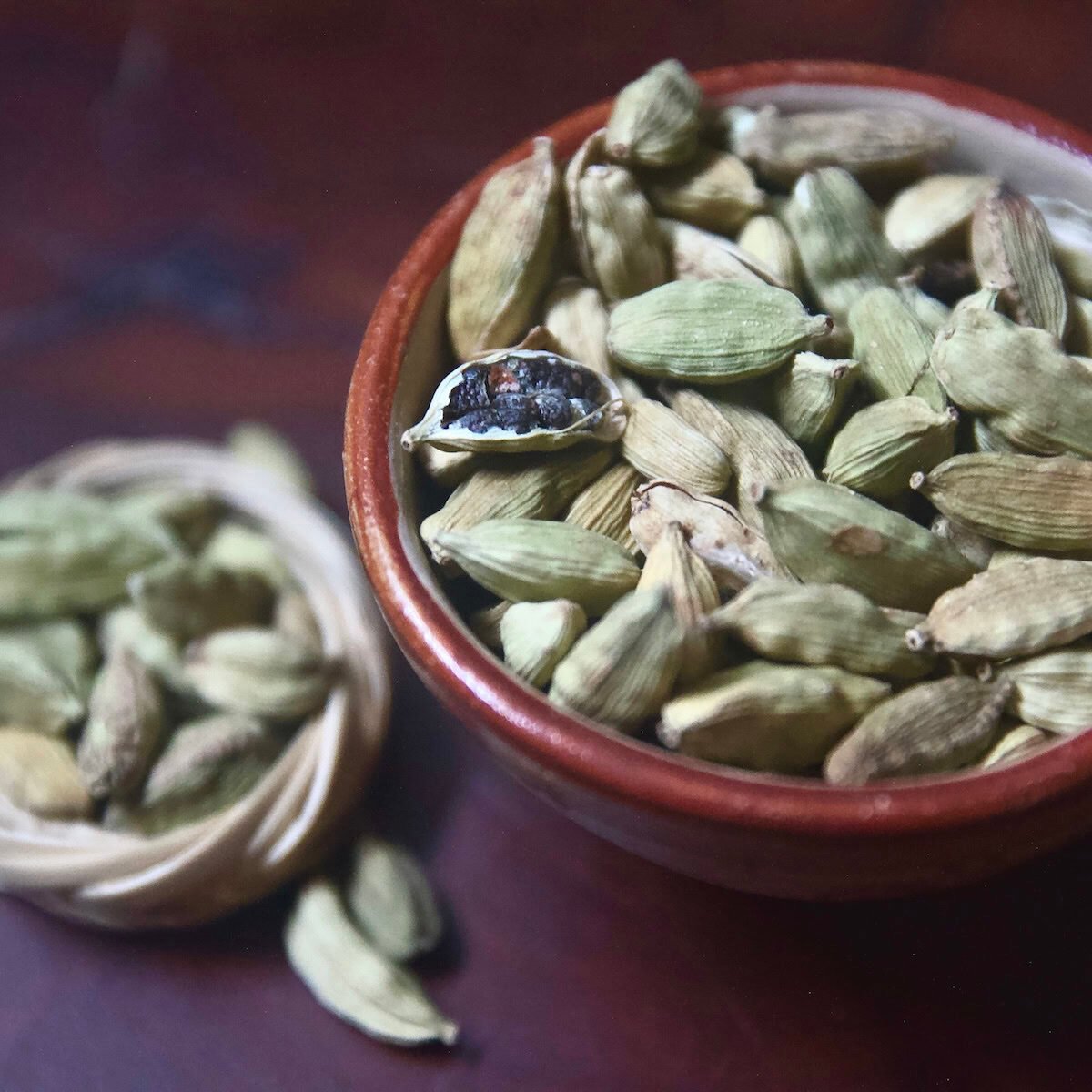
True cardamom, or green cardamom, is the spice produced from the fruit pods and seeds of Elettaria cardamomum, a tropical perennial herb in the ginger family.
REGION OF ORIGIN
Cardamom is from the humid, forested hills of the Western Ghats in southwestern India, which is also the birthplace of black pepper. From these hills, it was carried down to the Malabar Coast, one of the ancient world's most important centers of the spice trade.
PART & COLOR
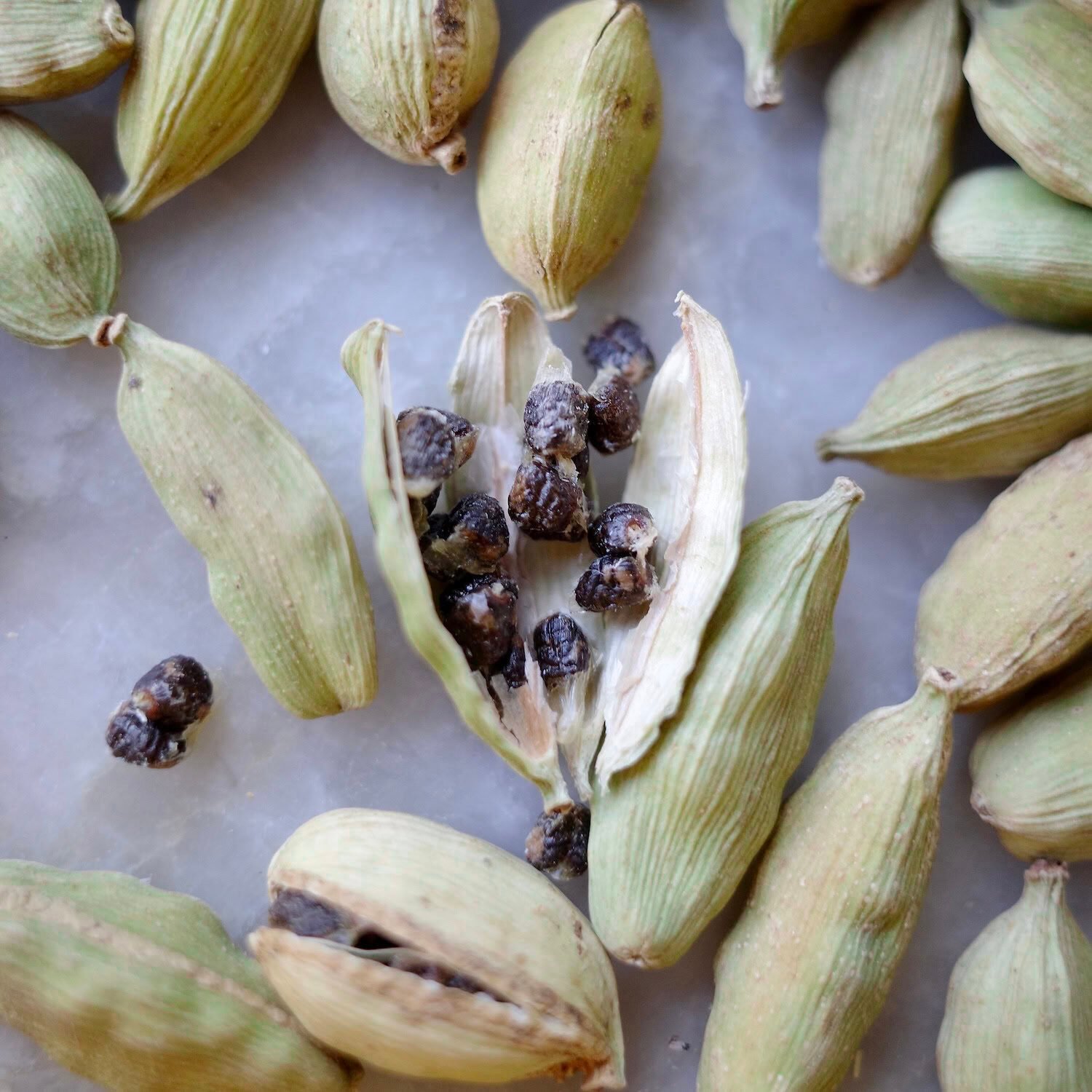
The pods are small, spindle-shaped capsules. When fresh, they are bright green, fading to a paler shade as they dry. Inside each pod, there are ~15-20 small, sticky, dark brown to black seeds, the main source of the spice's essential oils.
PRODUCTION
The cardamom plant is a perennial that requires shade, humidity, and patience to yield its precious spice. The plant begins producing seed capsules, or pods, about 3 years after planting and reaches peak production around 6-7 years. Skilled harvesters carefully hand-pick the pods that have reached optimal ripeness, right before they split open. They are then dried and graded for their size, color, fullness, aroma, and moisture level, strong indicators of quality.
FLAVOR & AROMA
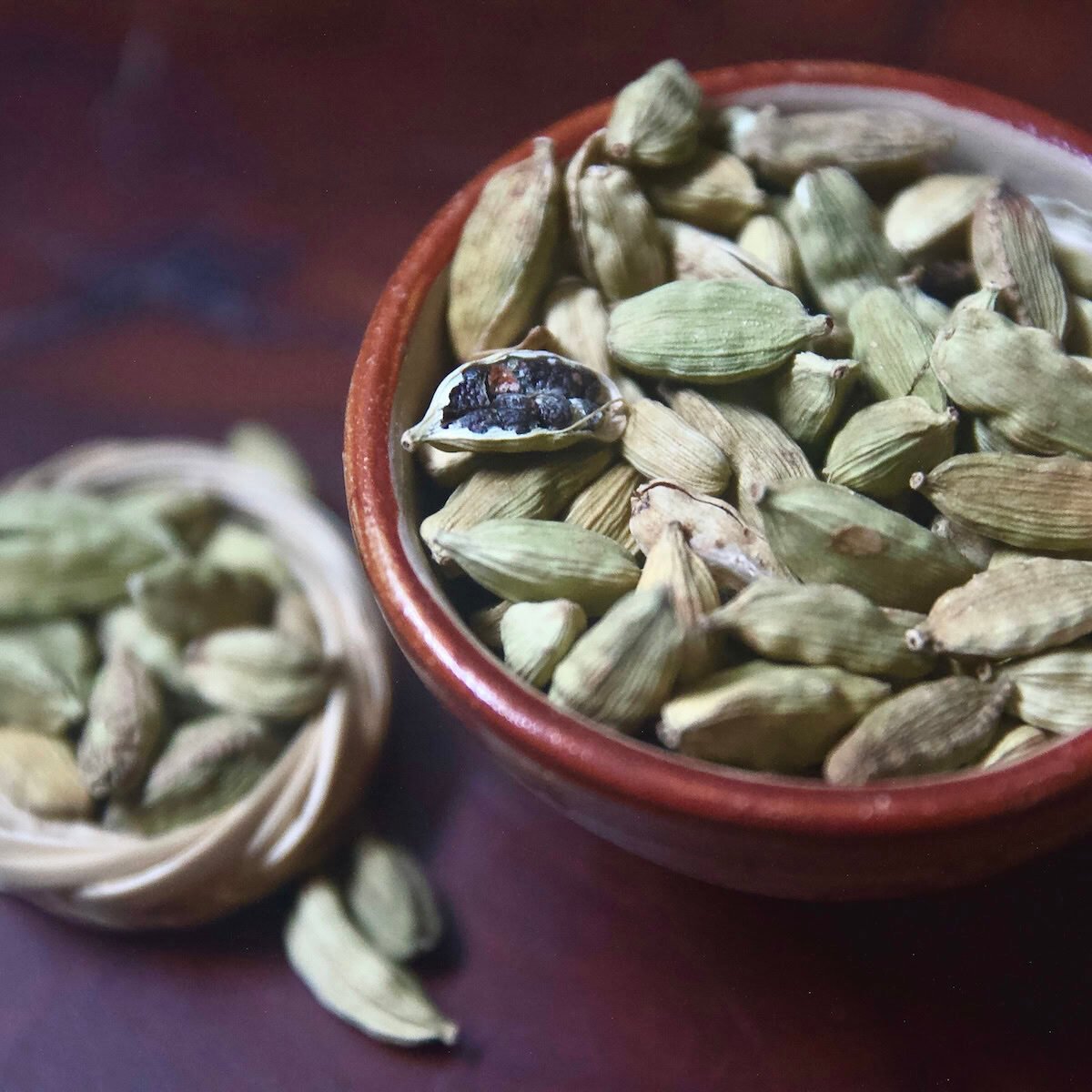
Whole cardamom pods softly emanate a beautiful aroma of fresh mint, lemon, pepper, and eucalyptus. The seeds within are brimming with essential oils. To know the essence of true cardamom, extract the seeds from the pods and crush them in a mortar and pestle. This can be a bit challenging as the seeds can cling together inside the pod, but it is so much more rewarding to release the rich oils yourself. As the seeds break apart, their intense aroma fills the room, a unique blend of sweetness and spice with a delicate floral undertone.
The flavor journey is an initial burst of camphor-like coolness that evolves into a warm, peppery spice, followed by a wisp of citrus. The seeds' rich oils linger on the palate, lengthening the experience and leaving warmth as the flavor trails off.
CULINARY USES
Cardamom is a treasure across its homeland of India. Whole pods are simmered in rice dishes like biryani and pulao, and the ground powder is mixed into drinks like chai and lassi. It's also common in many spice blends like garam masala.
As it spread around the world, cardamom became essential to many more cuisines. In the Middle East, it is used in both sweet and savory dishes, from lamb stews and fragrant rice pilafs to rich desserts like baklava and Turkish delight. It's also a signature flavoring for Arabic coffee. In Scandinavia, it's a classic in sweet breads and pastries, where its warm spice complements both the dough and the fruit. It's best not to feel limited by its traditional uses, though, as it offers so much opportunity for creativity.
CLASSIFICATION
Expand- KINGDOM: Plantae
- CLADE: Tracheophytes
- CLADE: Angiosperms
- CLADE: Monocots
- CLADE: Commelinids
- ORDER: Zingiberales
- FAMILY: Zingiberaceae
- GENUS: Elettaria
- SPECIES: Elettaria cardamomum
OTHER NAMES
ExpandSeveral other spices use the name "cardamom" because their seed pods resemble cardamom, they're all in the ginger family, and they share some of cardamom's camphoraceous, resinous qualities. However, their flavor profiles differ considerably, and none of them is considered true cardamom:
- Black Cardamom: Amomum subulatum
- Red Cardamom: Lanxangia tsao-ko
- Thai Cardamom: Wurfbainia vera
- Ethiopian Cardamom: Aframomum corrorima
The following names refer to true cardamom (Elettaria cardamomum).
- English: cardamom, true cardamom, green cardamom, small cardamom, queen of spices, white cardamom (bleached green cardamom pods)
- Spanish: cardamomo, cardamomo verde
- Portuguese: cardamomo, cardamomo verde
- French: cardamome, cardamome verte
- Italian: cardamomo, cardamomo verde
- German: Kardamom, grüner Kardamom
- Dutch: kardemom, groene kardemom
- Czech: kardamom, zelený kardamom
- Hungarian: kardamom, zöld kardamom
- Danish: kardemomme, grøn kardemomme
- Norwegian: kardemomme, grønn kardemomme
- Swedish: kardemumma, grön kardemumma
- Finnish: kardemumma, vihreä kardemumma
- Polish: kardamon, kardamon zielony
- Greek: kardámomo, kakoulé, prásino kárdamomo
- Turkish: yeşil kakule
- Hebrew: hel yarok
- Arabic: hayl 'akhḍar, habbahan akhdar
- Persian: hel-e sabz
- Swahili: iliki ya kijani
- Russian: zelyonyy kardamon, zelenyy kardamon
- India
- Hindi: chhoti elaichi, hari elaichi
- Bengali: chhoto elach, elach
- Gujarati: elaichi, lili elchi
- Marathi: velchi, hirvi velchi, veldoda
- Telugu: yelakulu
- Kannada: yelakki
- Tamil: elakkai, pachchai elakkai
- Malayalam: elam, elathari
- Sanskrit: ela
- Sinhala (Sri Lanka): enasal
- Burmese: hparlar hpyu
- Thai: krawan thet, krawan khiao
- Khmer (Cambodia): krâvanh
- Vietnamese: tiểu đậu khấu
- Malay: buah pelaga hijau
- Indonesian: kapulaga sabrang, kapulaga seberang
- Filipino: berdeng kardamono, kardamono
- China
- Mandarin: xiǎo dòu kòu, lǜ dòu kòu
- Cantonese: siu dau kau, luk dau kau
- Korean: sodugu, noksaek kadameom
- Japanese: karudamon, shōzuku, gurīn karudamon
Note: Languages that use only the common international spelling and have no distinct or widely used local name are not listed.
NUTRITION FACTS
Expand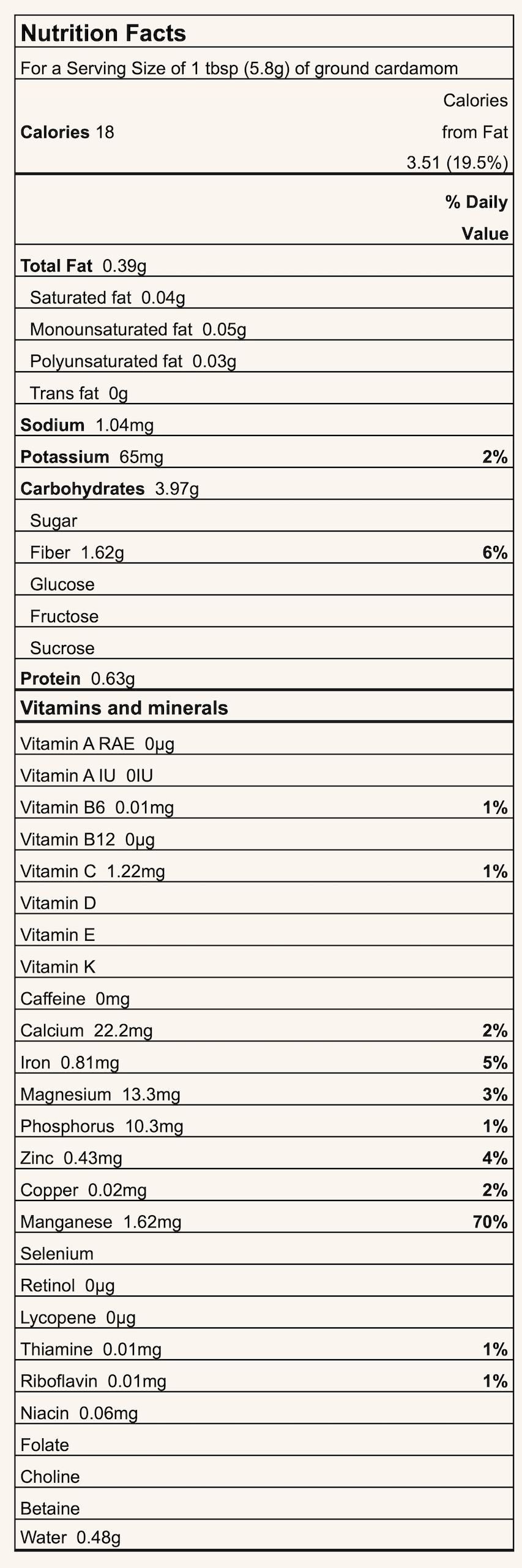
FLAVOR CHEMISTRY
ExpandFlavor emerges from the combined effects of aroma, taste, and mouthfeel. Cardamom is wonderfully complex, with dozens of flavor compounds layered together. These are the most significant:
Aromatic Compounds
- α-Terpinyl Acetate
- The most abundant compound in cardamom essential oil (around 40%), α-terpinyl acetate drives its sweet, floral, herbaceous character. It's the compound that makes cardamom distinctively cardamom.
- Sweet, herbaceous, floral, and lightly fruity.
- 1,8-Cineole (Eucalyptol)
- Linalool
- Linalool softens cardamom’s sharper eucalyptus notes with a gentle floral sweetness. Its concentration varies substantially and can become especially prominent in certain cardamom types.
- Floral, sweet, lavender-like, and lightly citrusy.
- Limonene
- Abundant in citrus-peel oils, limonene adds a bright top note that keeps cardamom’s dense floral and camphoraceous aromas feeling fresh.
- Bright, citrusy, and fresh.
- Linalyl Acetate
- Closely related to linalool, linalyl acetate contributes a smoother and fruitier floral note. It is also an important part of the aroma of lavender and bergamot.
- Sweet, floral, fruity, and softly citrusy.
- α-Terpineol
- α-Terpineol bridges cardamom’s floral sweetness and its cooler, more resinous side.
- Sweet, floral, herbal, and slightly woody.
- Sabinene
- The same fresh, woody terpene found in black pepper and nutmeg, adding a slightly peppery lift.
- Fresh, woody, subtly peppery.
- Myrcene
- An earthy, musky terpene also found in lemongrass and mango, adding a mild balsamic depth.
- Earthy, musky, lightly balsamic.
- Other Aromatic Compounds
- Cardamom may also contain terpinen-4-ol, geranyl acetate, nerol, pinenes, citral, terpinolene, nerolidol, and numerous other volatiles.
Taste and Mouthfeel Compounds
- Tannins
- Cardamom seeds carry only small amounts of tannins, so in normal use they sit quietly behind the aromatics.
- Astringent, drying, faintly bitter.
Understanding Composition
- Chemical composition can vary widely, mainly in the concentrations of certain compounds. This variation causes differences in quality, which is why the best spices and herbs are often graded by the levels of key compounds that drive flavor, aroma, and color.
- Quality is affected by variety, age and freshness, region and terroir, environmental stressors, and potential adulteration. It's then further influenced by how the plant is handled at every stage: cultivation, harvesting, processing (drying, curing), shipping, storage, and preparation (grinding, grating, infusing, toasting). A magnificent spice or herb is a celebration of an immense journey, shaped by nature, the people who produce it, and the cook who delivers it to a dish.
HEALTH BENEFITS
ExpandCardamom holds a wealth of medicinal benefits rooted in ancient traditions like Ayurveda and Traditional Chinese Medicine. Modern science is now starting to validate these uses. Some of the most promising areas of green cardamom's medicinal potential are:
- Antioxidant and Anti-inflammatory Action
- Cardamom is packed with antioxidants, such as terpenes, flavonoids, and phenolic compounds, which help neutralize free radicals in the body. Its essential oil also exhibits powerful anti-inflammatory activity.
- Digestive Aid
- Cardamom has been used for ages to treat a variety of digestive issues, such as indigestion and bloating. We now know it works by relaxing digestive muscles.
- Antimicrobial Activity
- Due to its broad-spectrum antimicrobial activity, the spice is useful against a variety of fungi, viruses, and bacteria.
- Oral Health
- Cardamom's antibacterial powers work well as a natural oral hygiene remedy. It reduces cavities, stops gum disease, and fights bad breath. Cardamom oil is sometimes used in mouthwash, and chewing cardamom seeds is an ancient practice that can freshen breath and promote a healthy oral microbiome.
- Heart Health
- It is well-documented that cardamom can reduce blood pressure and improve heart health. Furthermore, the antioxidants in green cardamom can protect the heart by preventing cholesterol oxidation.
- Respiratory Health
- Cardamom has expectorant properties and has been shown to relax inflamed airways and mitigate congestion and mucus.
- Liver Health
- Cardamom may enhance liver function and protect it from damage.
- Mood Enhancement and Stress Relief
- Cardamom's aromatic compounds have a soothing effect on the body and mind, so it is often used in aromatherapy to alleviate stress, anxiety, and depression.
- Detoxification
- Cardamom can help the body rid itself of waste and toxins through its diuretic properties.
Important Considerations
- Most Research is Preliminary: While research is promising, more extensive human clinical trials are needed to definitively confirm the efficacy and safety of cardamom's medicinal properties.
- Dosage Matters: Researchers commonly use concentrated extracts, so standard dietary consumption may not yield the same results. More studies are required to establish proper dosages and administration methods.
- Medication Interaction: Cardamom should not be considered a replacement for conventional medical treatments. While it is generally safe for most people, it is critical to exercise moderation and consider interactions with other medications.
- Disclaimer: Consult healthcare professionals before using spices or herbs medicinally.
ALTERNATIVE USES
ExpandCardamom’s most popular alternative uses are:
- Cultural and Spiritual Significance
- India: Green cardamom pods are often used as offerings during pujas (prayers) in Hindu ceremonies. It symbolizes purity, prosperity, and devotion. It is also used in making prasad (food offerings to deities), particularly in sweets and beverages. In Indian weddings, cardamom is sometimes included in traditional sweets like laddoos and kheer, and beverages like spiced tea or masala chai and thandai. It symbolizes prosperity in marriage.
- Middle East: Green cardamom is employed in many cultural rites in the Middle East, especially in Arab nations. It is a typical component of gahwa, or Arabic coffee, which is served during significant religious and social events, such as after prayers and during Ramadan. Drinks infused with cardamom are seen as signs of respect and hospitality. Cardamom also symbolizes happiness and celebration and is added to sweets and pastries that are customarily made for weddings and other special occasions in several Middle Eastern cultures.
- Iran: Cardamom plays an important role in the rituals of Zoroastrianism, a religion that originated in ancient Persia. It is also a key ingredient in Persian sweets like baklava and sherbet that are associated with celebration.
- Gift Giving
- In South Asian and Middle Eastern cultures, cardamom is a symbol of luxury and is often included in traditional gift-giving practices as a token of hospitality, wealth, or good fortune.
- Fragrances and Aromatherapy
- The unique warm, spicy fragrance of green cardamom is often used in perfumes and other scented products. Cardamom essential oil is also used in aromatherapy to reduce stress and uplift mood.
- Aphrodisiac
- In various practices like Ayurveda and traditional Middle Eastern medicine, cardamom is believed to improve sexual health and libido. Its sweet, warming aromatics are considered a natural mood enhancer, especially in romantic contexts. It is often added to herbal remedies or consumed in teas and sweets for this purpose.
- Air Freshener
- Cardamom is sometimes added to sachets, potpourris, and essential oil diffusers to freshen homes, closets, and cars.
- Oral Care
- Cardamom is often chewed to freshen breath. It is also used in some traditional remedies for toothaches and gum infections.
- Skincare
- Traditionally, the spice is added to homemade facial masks and scrubs to improve complexion.
Disclaimer
- While cardamom shows promise in these areas, its effectiveness may be limited compared to commercial alternatives.
SUBSTITUTIONS
ExpandBefore we discuss the spices that can be used as substitutes, here are the spices with similar names that often get confused with the real thing:
- Black Cardamom: Although closely related, this species (Amomum subulatum) has a much different flavor profile—smoky and more intense compared to the sweet, floral notes of green cardamom. It's not always a welcome substitute.
- Red Cardamom: Also called Chinese black cardamom (Lanxangia tsaoko), this spice is even smokier than black cardamom, making it vastly different from green cardamom.
- Thai Cardamom: Another different, yet related species (Amomum krervanh), this spice is more pungent, camphorous, and medicinal tasting than the sweeter green cardamom.
- Ethiopian Cardamom: Also known as korarima (Aframomum corrorima), it has a different flavor profile and should not be used as a direct substitute for green cardamom.
Now on to true cardamom's substitutions. While none of them are perfect, there are some options for getting creative:
- Cumin + Coriander + Cinnamon + Nutmeg
- Cinnamon + Nutmeg
- A blend of ground cinnamon and nutmeg can replicate some of the warm, sweet, and slightly spicy notes of green cardamom. Use a 2:1 ratio of cinnamon to nutmeg to replace cardamom in desserts and baked goods.
- Cloves + Cinnamon
- For a more aromatic and spicy substitute, a mix of ground cloves and cinnamon can be used. Cloves offer a strong, pungent flavor, so use sparingly: a pinch of ground cloves with a bit of cinnamon can approximate cardamom's complexity in savory dishes and spice blends.
- Allspice
- Ground allspice has a warm and slightly peppery flavor with hints of cinnamon, nutmeg, and cloves, making it a reasonable stand-in for cardamom in both sweet and savory dishes. Use it in equal amounts to replace ground cardamom.
- Pre-ground Cardamom
- If you can’t get whole cardamom pods, pre-ground cardamom can offer similar effects, although it loses much of its potency as the valuable volatile oils dissipate after grinding. This results in a less intense and somewhat muted flavor.
- Star Anise
- Offers a similar warmth and sweetness, but with a distinct licorice-like flavor. Use sparingly.
- Ginger
- While not a direct replacement, ginger can add a similar warmth and sweet spiciness to some savory dishes and spice blends. Use it sparingly, as ginger is more pungent than cardamom.
- Citrus Zest
- Lemon or lime zest can provide a bright, refreshing note that complements some cardamom-based recipes.
Substitution Tips
- Incomplete Substitution: All spices and herbs are too complex to match exactly, so focus on which aspects of their flavor, aroma, texture, or color you wish to replicate.
- Quantity: Start with a small amount of the substitute and adjust to taste. It won't be a 1:1 exchange in flavor or potency.
- Context: Consider the entire dish and how the substitute's full flavor profile will merge with the other ingredients.
- Experimentation: Playing with substitutions is a great opportunity to explore how different flavors interact. If you approach it with curiosity, you may really enjoy the process and make some delicious discoveries along the way.
A BRIEF HISTORY
ExpandNative to the lush forests of the Western Ghats mountain range in Southwestern India, green cardamom, the only “true cardamom,” has been treasured since antiquity. Crowned as the Queen of Spices, this exquisite fruit pod was first cultivated by ancient Indian civilizations 5,000 years ago. The earliest written records of cardamom use are in ancient Sanskrit texts from 1500 BCE. It was described as a precious spice with a plethora of culinary and medicinal uses.
Cardamom quickly transcended its origins to become a coveted luxury item around the ancient world. Its popularity spread to the courts of Persia, Egypt, Greece, and Rome through networks of Arab traders. The ancient Egyptians used cardamom in embalming rituals, in perfumes, and as a breath freshener, while the Greeks and Romans used it to flavor wines and delicacies. And cardamom-infused coffee, known as "gahwa," became a cultural symbol of hospitality all throughout Arabian society.
It was highly sought-after in the Middle Ages, its price often skyrocketing due to its scarcity. Recognizing the immense value of controlling its supply, the European powers wanted direct access to the East. The British East India Company started cultivating cardamom in India on a large scale and exporting it to global markets. By the 19th century, cardamom plantations had been established in other tropical regions as well. A German coffee planter introduced cardamom to Guatemala in the early 1900s and the country has since overtaken India as the largest global producer.
Today, green cardamom remains essential to many cuisines worldwide, and while not as luxurious as it once was, its rarity and status are still sky high. It is one of the world’s most expensive spices, and its ability to grace a dish with elegance will always be deeply appreciated by those with discerning taste.