

Allspice
Allspice is the spice produced from the unripe fruits of Pimenta dioica, a tropical evergreen tree in the myrtle family.
REGION OF ORIGIN
Allspice originated in the tropical forests of the Greater Antilles (particularly Jamaica), southern Mexico, and Central America. It is the only globally significant spice that is still almost entirely grown and exported from the Americas.
PART & COLOR
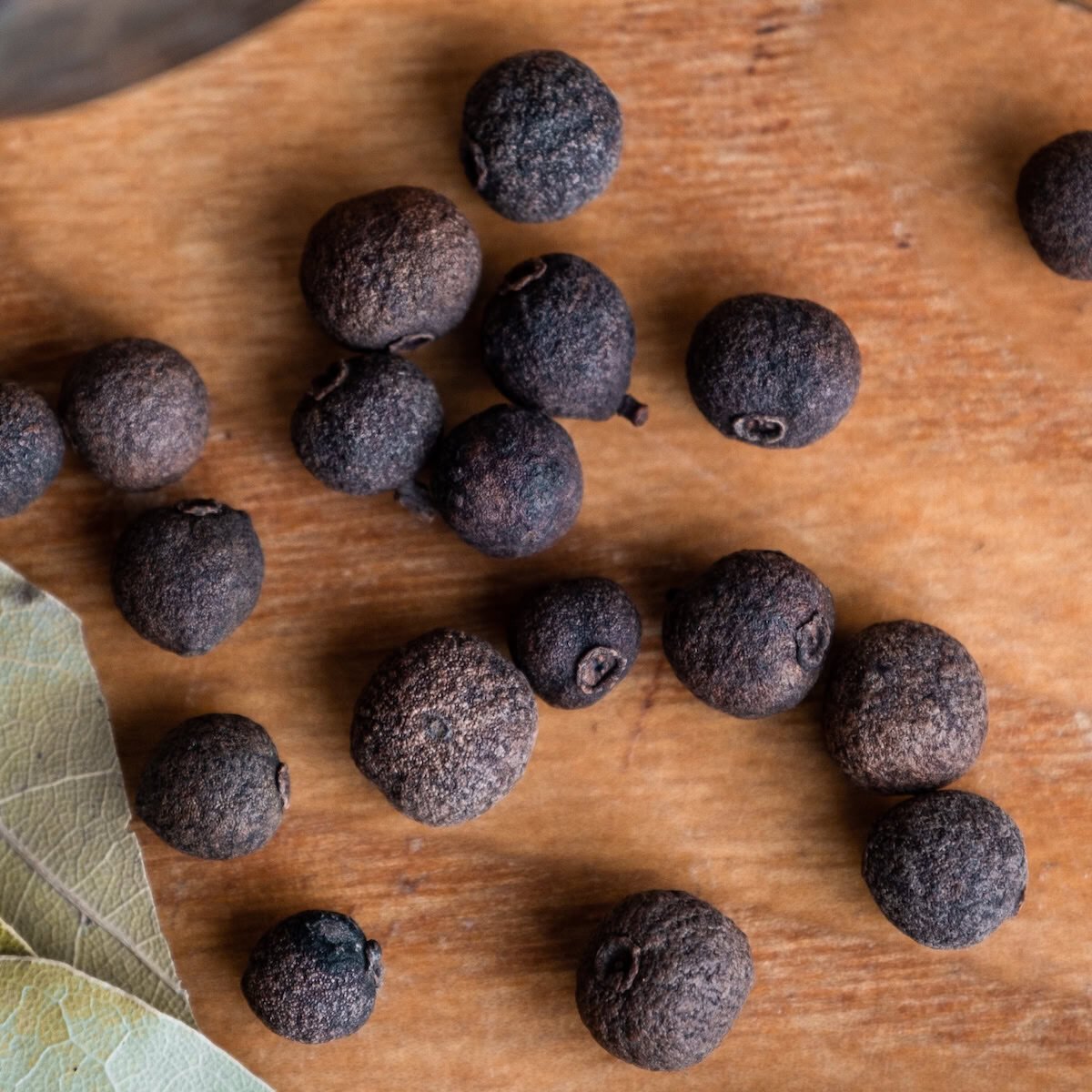
On the tree, ripe allspice fruits (often called "berries") are a dark reddish-purple, but since they are the most aromatically intense when unripe, they are harvested when they're still green. They transform during the curing process, shrinking into reddish-brown balls. They have a rough surface due to tiny glands that hold their precious volatile oils. You can also use allspice leaves like bay leaves, and in Jamaica, jerk dishes are smoked with the wood of the tree ("pimento wood").
PRODUCTION
Only female allspice trees produce berries, so growers interplant a few male trees as pollinators. Small white flowers bloom over months, eventually developing into berries at different rates, which allows for staggered harvesting. The season varies by region and climate, but core producers like Jamaica and Mexico harvest between July and October.

FLAVOR & AROMA
Allspice is a marvel. Aptly named for its ability to mimic the flavors of multiple spices, it captures the deep warmth of cinnamon, the sharp sweetness of nutmeg, and the pungent kick of cloves. It’s not uncommon to detect a touch of vanilla, and depending on its origin and preparation, it may reveal nuances of ginger, juniper, cardamom, and citrus. It even has a hint of peppery heat. Allspice thus has remarkable versatility. It can stand in for other spices, but it also complements them if you're looking for more complexity.
CULINARY USES
In the Caribbean, allspice is the heart of the fiery Jamaican jerk seasonings that famously bring out the richness of meats like chicken, pork, and goat. In Mexico, it infuses moles, pipián sauces, and slow-cooked meats. In North America and Europe, it is synonymous with baking. Further east, it's a common backbone of many Middle Eastern "baharat" spice blends. Allspice is also a commercial flavoring for soft drinks, ketchups, BBQ sauces, and even chewing gum.
Use whole allspice berries for a mild, sustained flavor. Simply toss a few into the pot early with your other ingredients, then remove before serving. Or, for a more concentrated flavor, grind them into a powder and sprinkle on baked goods, savory meats, roasted vegetables, and fruit.

