Chile Peppers
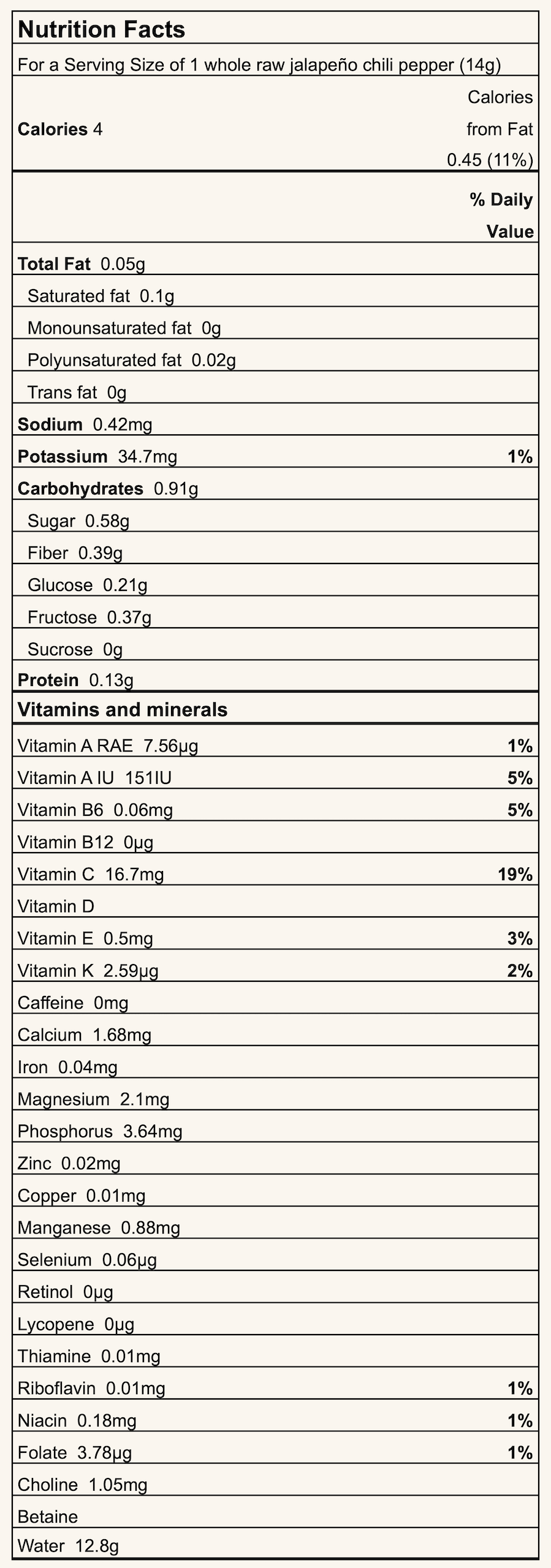
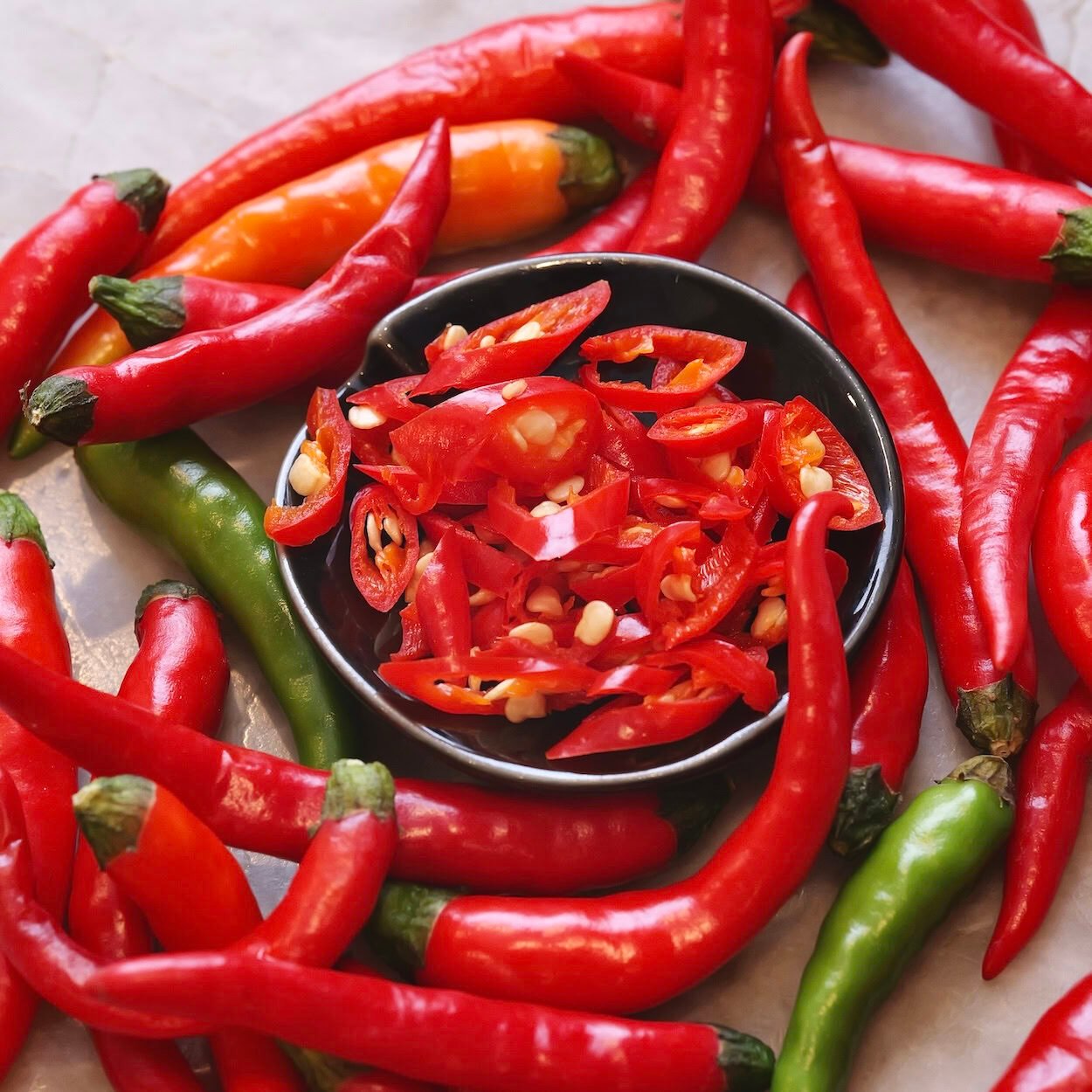
Chile peppers, or chilis, are the spices produced from the spicy fruits of 5 species in the genus Capsicum, part of the nightshade family. There are tens of thousands of cultivars among the 5 species:
Capsicum annuum: jalapeño, serrano, cayenne, poblano
Capsicum chinense: habanero, ghost pepper, Scotch bonnet
Capsicum baccatum: ají amarillo, ají cristal
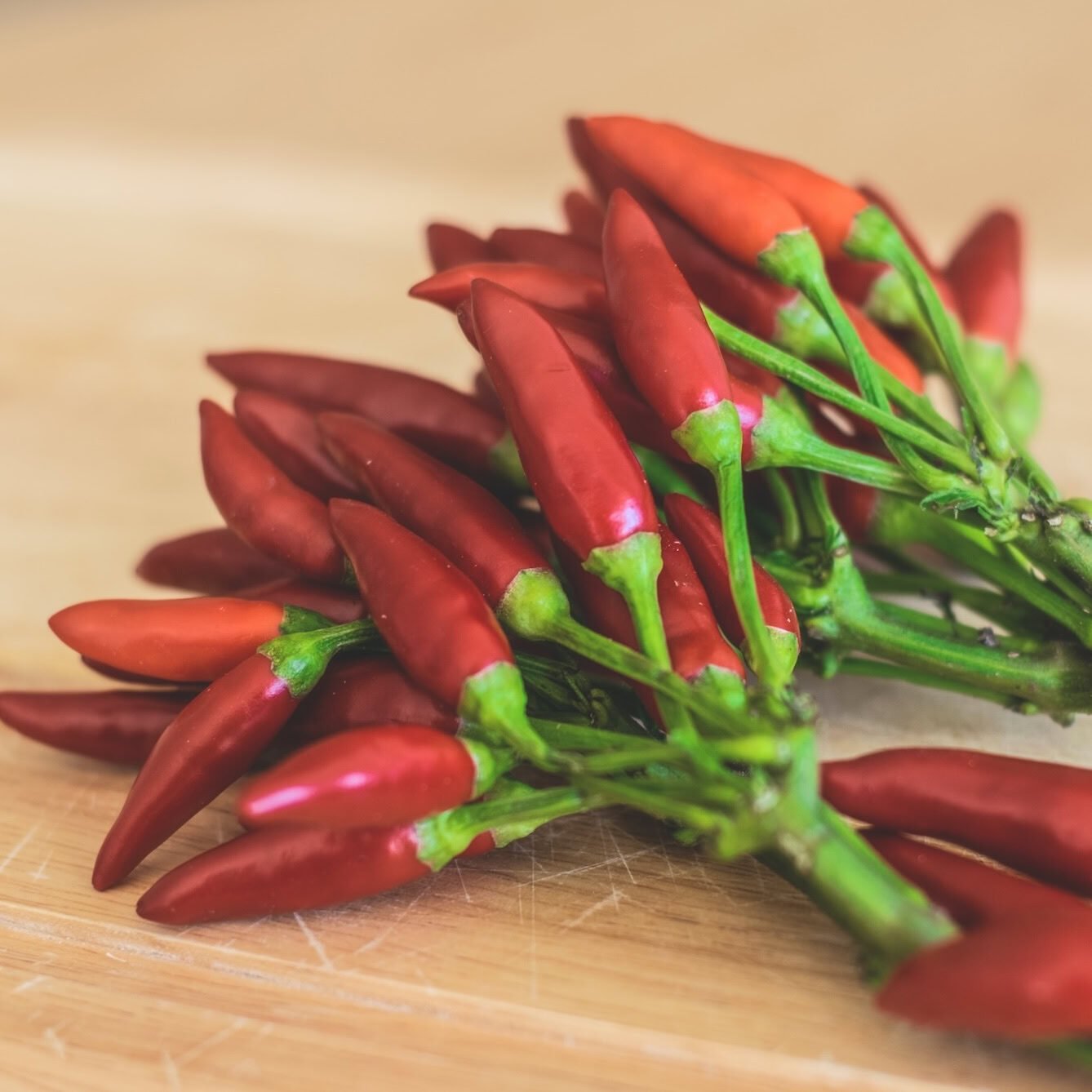
Capsicum frutescens: tabasco, malagueta, piri-piri
Capsicum pubescens: rocoto, locoto, manzano
REGION OF ORIGIN
Chiles are indigenous to the Americas. The genus is rooted in South America, with its greatest diversity still centered in the Andean regions. The 5 domesticated species were developed in different places: C. annuum in Mexico, C. chinense in the Amazon, C. baccatum in Bolivia and Peru, C. pubescens in the high Andes, and C. frutescens across tropical America.
PART & COLOR
Inside the fleshy outer wall of each fruit (berry to be exact), pale placental "ribs" hold most of the spicy capsaicinoids and surround the seeds. Chiles readily hybridize and have been shaped by centuries of human selection, leading to tens of thousands of cultivars, each with unique heat, flavors, shapes, and sizes, from small and round to skinny and elongated. The colors span a spectrum as well: greens, yellows, oranges, reds, purples, browns, and even black when dried and smoked.
PRODUCTION
Chiles are planted in the spring and can be harvested at different stages of ripeness to create different flavors. Younger chiles tend to be brighter, grassier, and sharper, while fully ripened ones become sweeter, fruitier, and deeper.
FLAVOR & AROMA
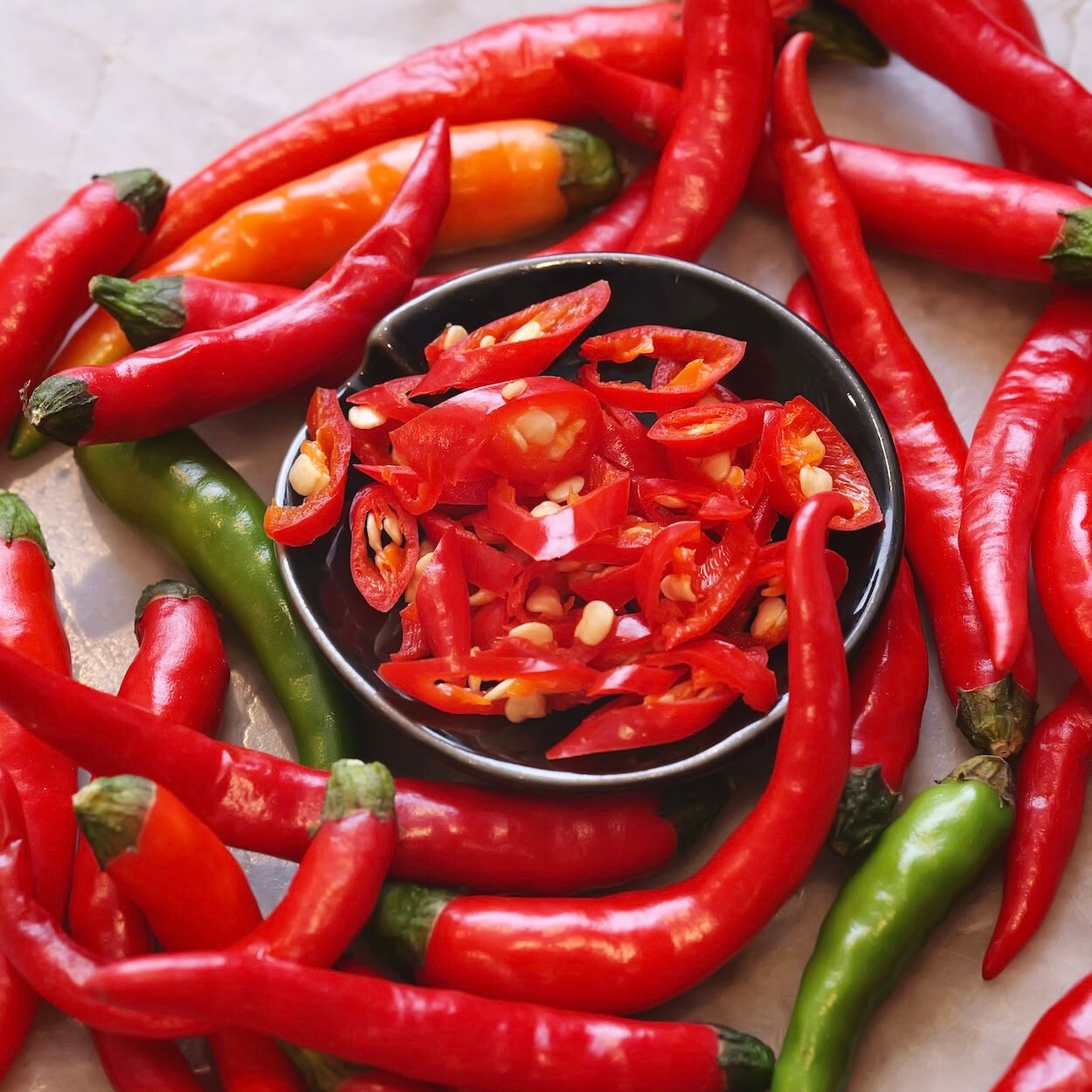
Chile peppers light up the senses. Their unique scent blends grassy, vegetal, and fruity notes. Cutting or crushing hot peppers may also make your nostrils tingle, an introduction to the fiery experience to come. On the tongue, the heat lingers, building and spreading throughout the body.
Some varieties are rather mellow and sweet, while others unleash an intense burn. The hot varieties make chiles the undisputed kings of heat in the spice world. The intensity of the burning sensation depends on the concentration of capsaicinoids, measured in Scoville heat units. These compounds bind to receptors in our mouth and throat that sense heat and pain, tricking them into thinking there's actual heat. Peppers with a high SHU, like habaneros and ghost peppers, can induce sweating and even tears. Heat preferences vary widely across cultures and people. Some love the fire. Others can’t stand it. But with so much variety, the wide world of chile peppers has something for everyone.
CULINARY USES
Chiles can be used fresh or dried, or in various processed forms like powders, flakes, and pastes. Fresh peppers are highly versatile, often chopped, diced, or sliced into salsas, sauces, salads, and stir-fries. They explode into a dish with a vibrant burst of fruity heat. They can also be pickled or fermented, which creates a tangy complexity and extends their shelf life. Dried peppers are more concentrated and tend to seem hotter. Their flavors can also develop a smoky or earthy dimension depending on the variety and drying method. Ground peppers are frequently used in spice blends, including countless types of chili powder, while whole dried peppers can infuse soups, stews, and sauces.
Chile peppers are synonymous with the cuisines of their homeland, Latin America, but they're ubiquitous the world over. Sichuan stir fries, Korean kimchi, Indonesian sambal, North African harissa, Caribbean jerk, Indian chutneys, Thai curries. None would be the same without them.