Garlic
Garlic is the spice derived from the bulbs of Allium sativum, a perennial herb in the onion family.
REGION OF ORIGIN
Garlic was likely first domesticated around 7,000 years ago in the mountainous areas of Central Asia, including parts of present-day Uzbekistan, Turkmenistan, Afghanistan, and Iran.
PART & COLOR
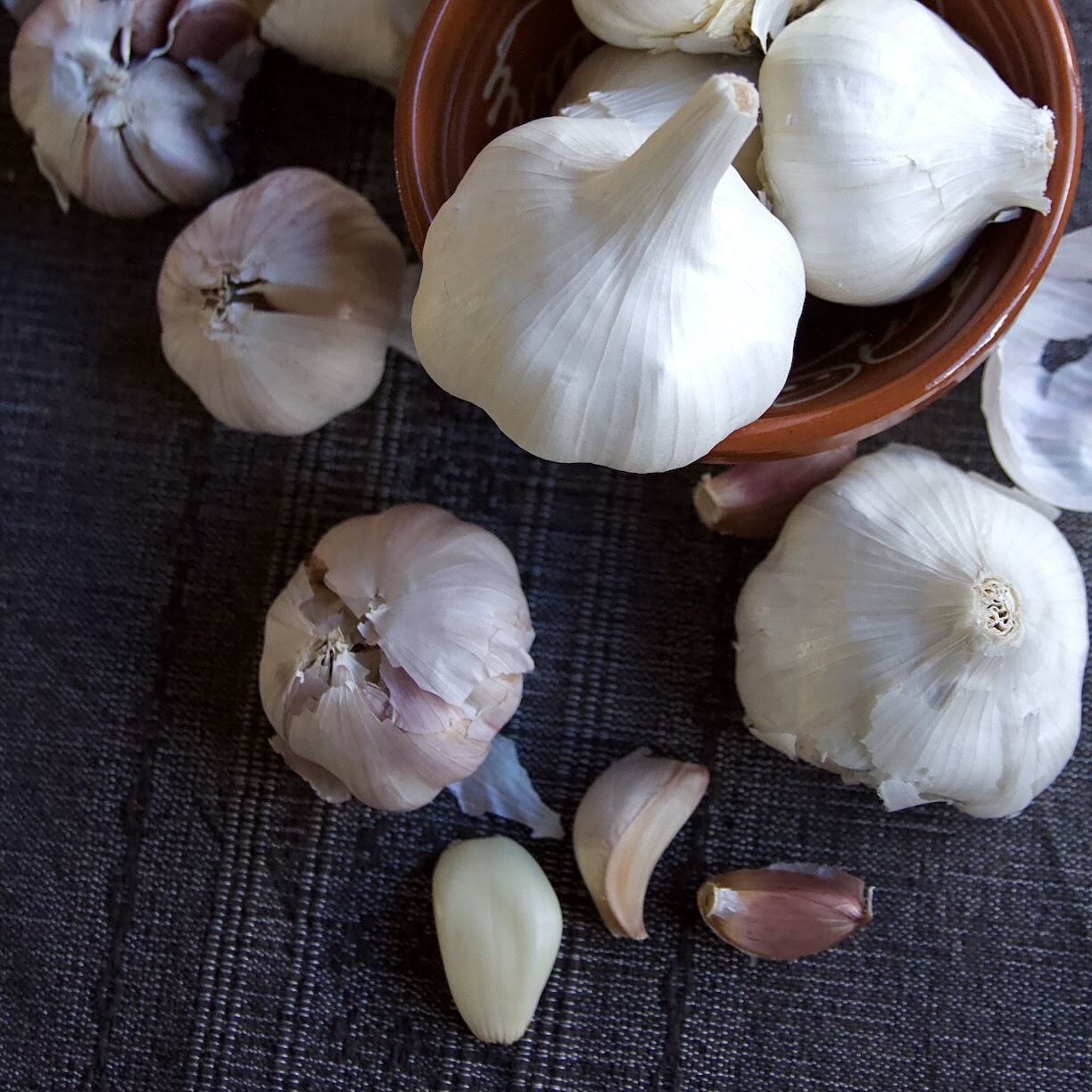
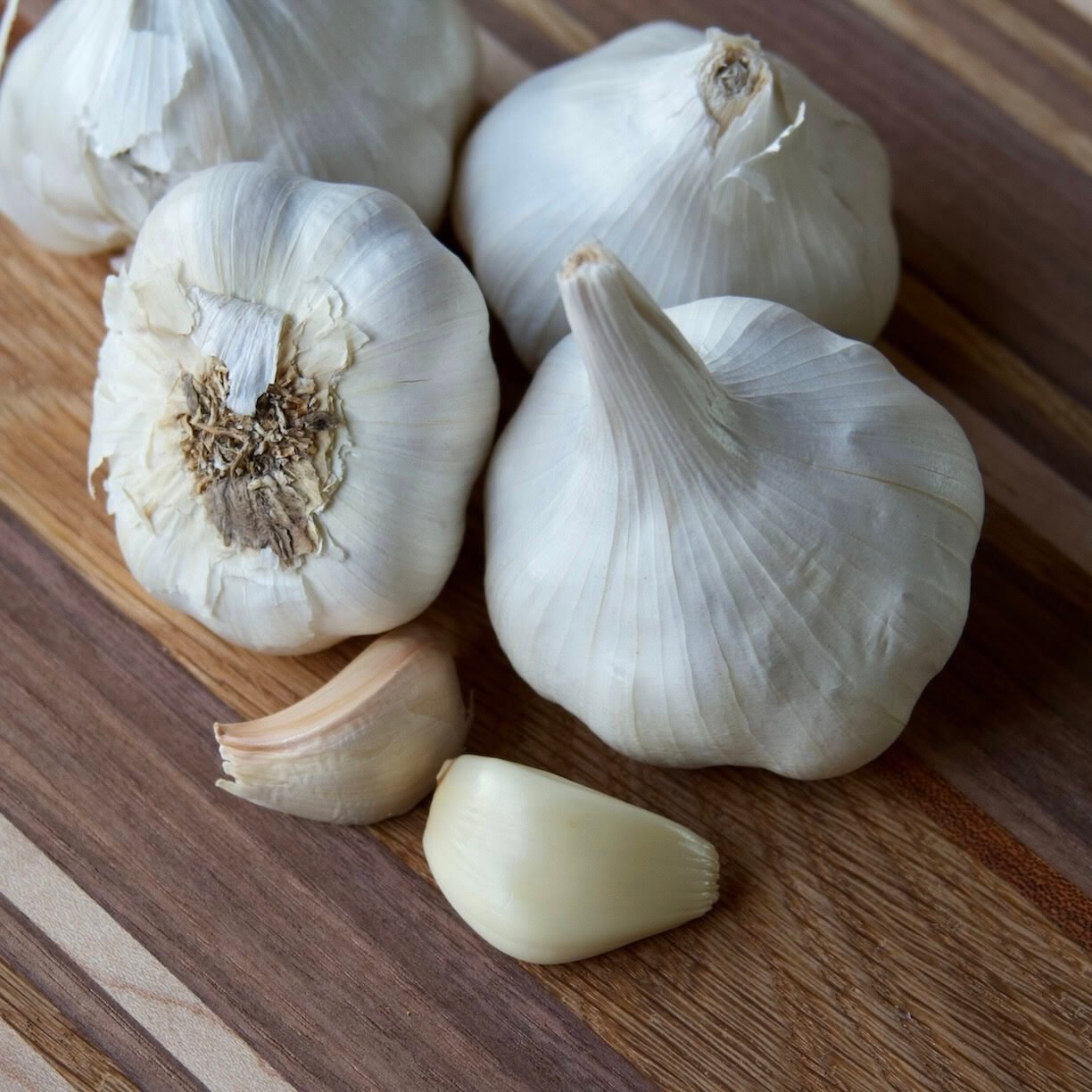
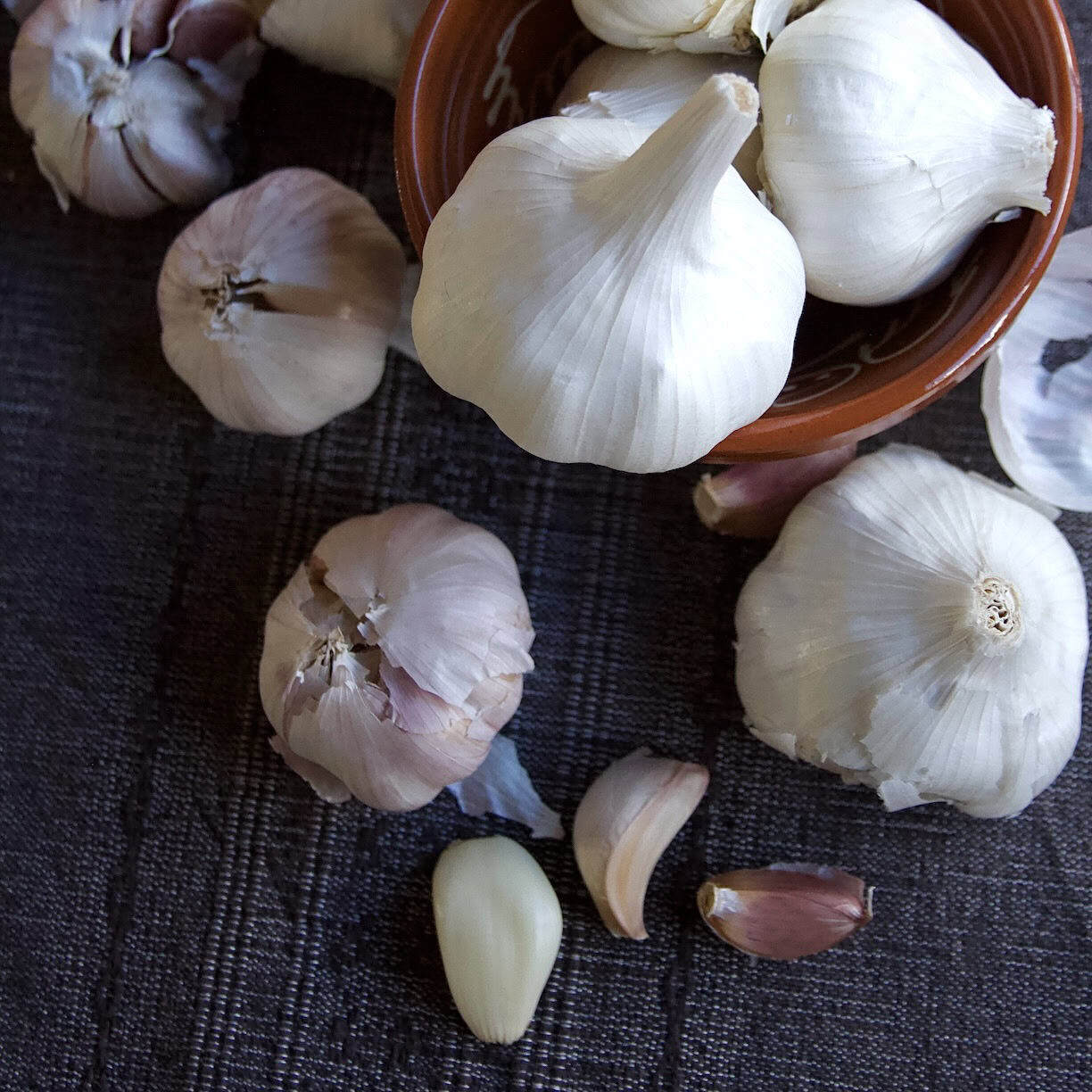
The plump, crescent-shaped "cloves" within the bulbs have a smooth, off-white surface and a creamy, pale yellow flesh. They are protected by a papery skin, which is often white but can have pink and purple hues depending on the variety. They become a beautiful caramelized golden brown when roasted. Dehydrated garlic powder is off-white to light beige.
PRODUCTION
Garlic needs cold temperatures to properly develop, so it is planted in the fall so it can establish roots before the winter. It grows through the cold months but then thrives in full sun as it matures. The bulbs are thus ready the following summer when the lower leaves turn yellow. The entire plant is dug up and the bulbs are cured and dried for several weeks. This process mellows their flavors and hardens their outer skin, which facilitates storage, transportation, and culinary use.
FLAVOR & AROMA
Garlic’s aroma is infamous: pungent and sulfurous with earthy and sweet notes. When crushed or chopped, the cloves release volatile compounds that cut through the air.
Depending on the type, raw garlic can have a biting, robust heat that dominates the palate. However, it undergoes a remarkable transformation when cooked. The harsh edge mellows into a milder warmth with hints of sweet caramel and roasted nuts. Applying heat also gives it a softer, creamier texture that helps melt its flavor into a dish.
CULINARY USES
Garlic is one of the most popular flavoring agents worldwide. Raw garlic imparts a sharpness to dressings, marinades, and salsas, lifting the flavors of other fresh ingredients. When sautéed or roasted, its newfound caramelized sweetness enhances countless meat, seafood, and vegetable dishes.
Garlic also helps form the base of many sauces, such as marinaras, aiolis, French pistou, and Argentine chimichurri. It is foundational, the core flavor that builds complex dishes from the ground up.