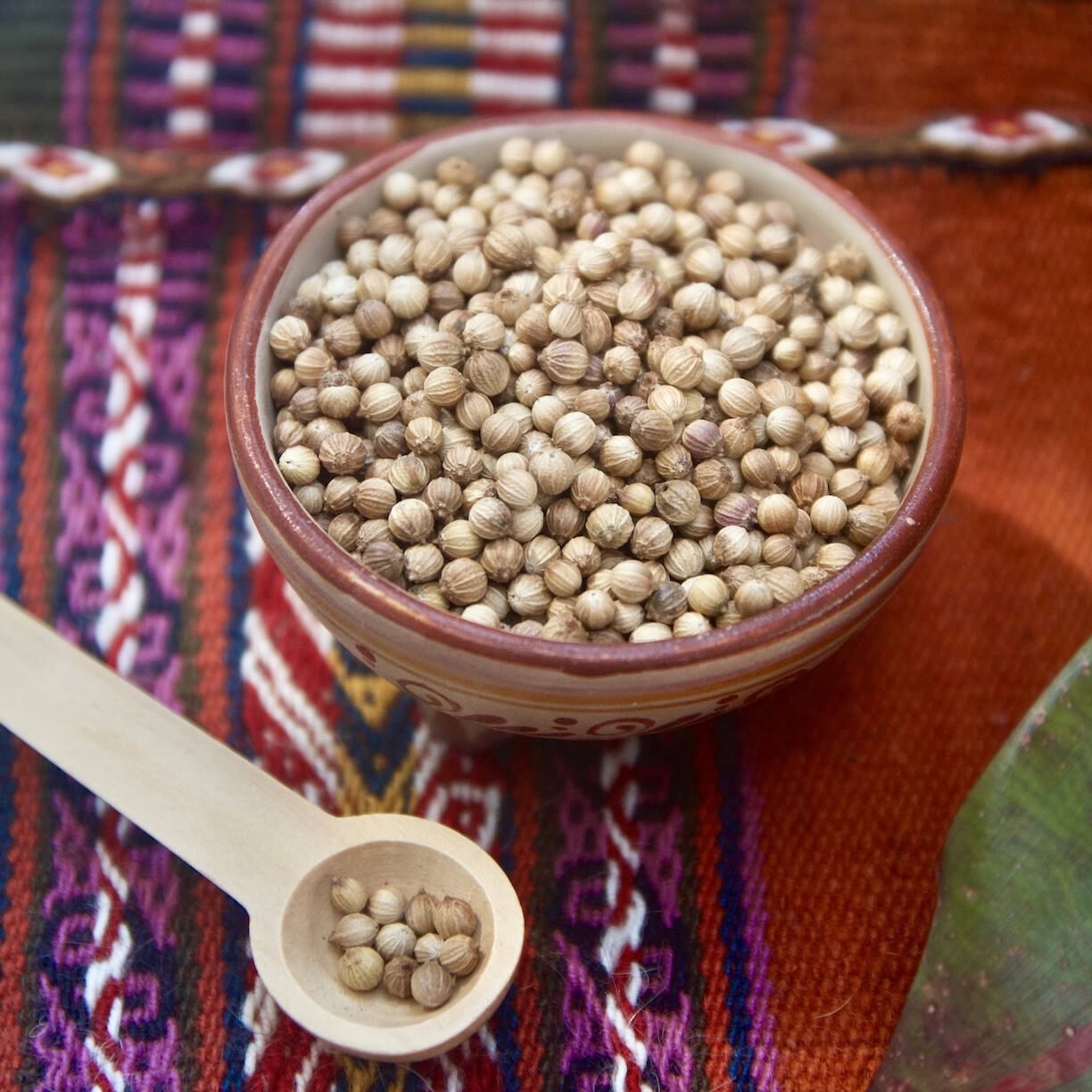
Coriander
Coriander is the spice produced from the tiny fruits of Coriandrum sativum, an annual herb in the parsley family that also provides the culinary herb cilantro from its leaves.
REGION OF ORIGIN
Coriandrum sativum originated in the Eastern Mediterranean, spanning parts of Southern Europe, North Africa, and the Middle East. One of the oldest known spices, coriander use dates back to 6000 BCE from a Neolithic site in the Levant.
PART & COLOR
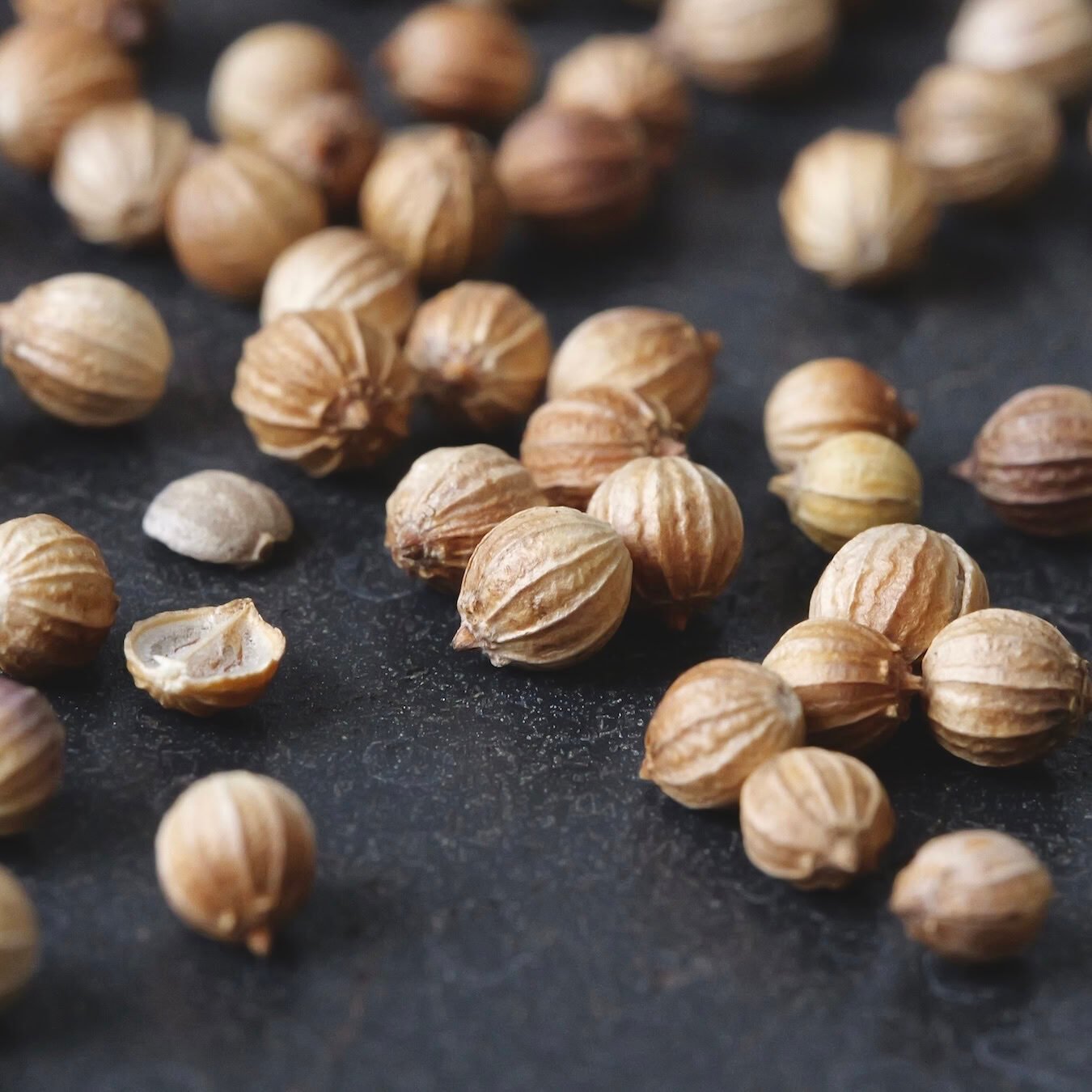
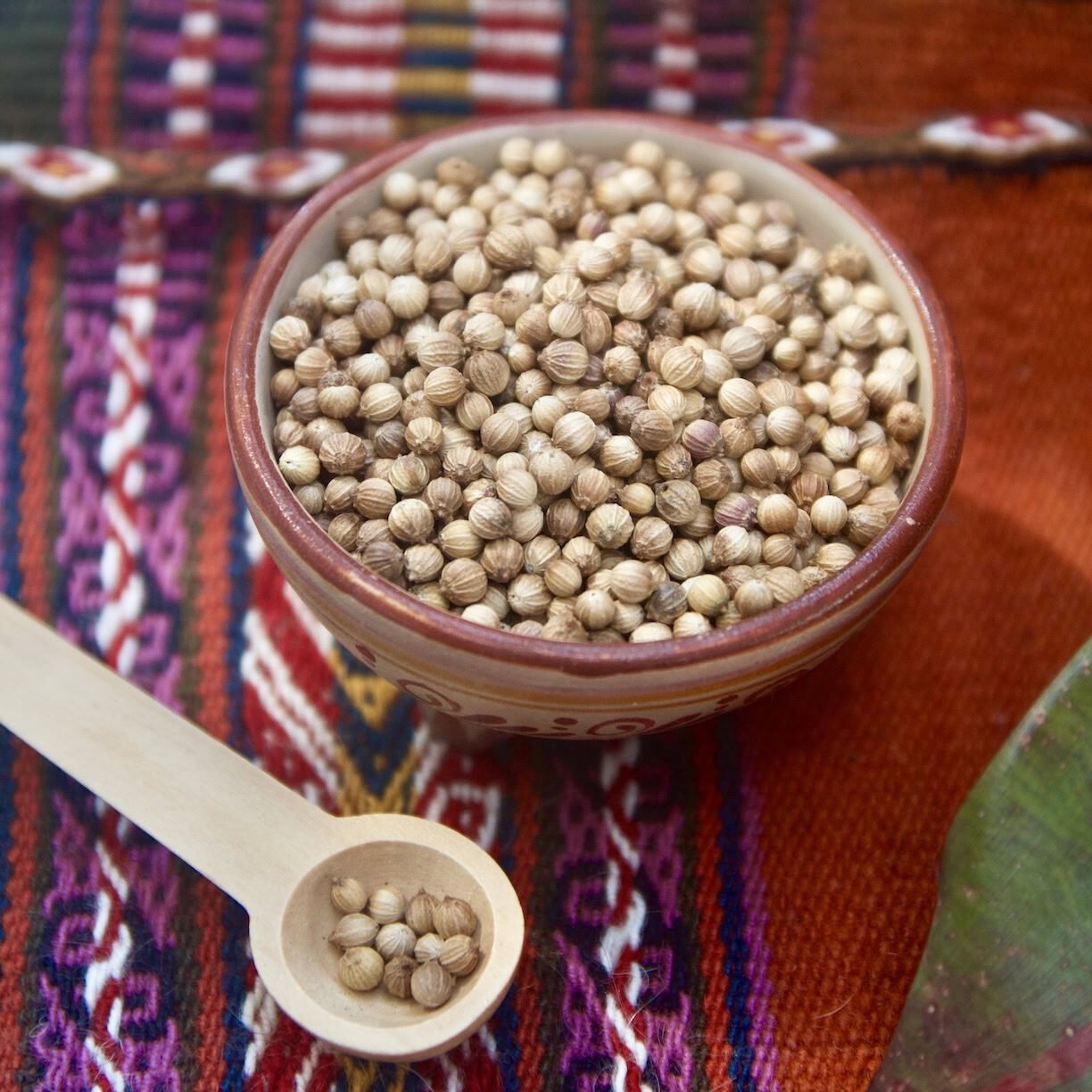
Like the other “seed” spices in the parsley family (anise, caraway, cumin, dill seed, and fennel seed), coriander “seeds” are actually tiny, round fruits called schizocarps. They are green on the plant, but turn brown when ripe and a lighter tan to yellowish beige when fully dried. The flat, broad, bright green leaves (cilantro) are also widely used in cooking.
PRODUCTION
Coriandrum sativum is an annual herb that thrives in temperate climates and is typically sown in the spring. The plant is allowed to flower, producing small white and pale pink blossoms that develop into little green fruits. They are ready for harvest in late summer or early autumn when they turn brown, but before they split open. The entire plant is cut, dried, and threshed to isolate the spice.
FLAVOR & AROMA
Unlike most dried spices, which tend to have primarily warm, earthy qualities, the little fruits of the coriander plant are predominantly bright. They have a very clear, citrusy sweetness and floral appeal. It is an herbal, fruity spice. On the palate, the flavor starts with a mild sweetness and transitions into a slightly tangy burst of lemon, sage, and pepper.
When toasted, its aroma deepens, releasing nutty, toasty notes while retaining refreshing hints of orange zest. This unique combination makes coriander a compelling addition to any cook’s spice rack. Its ability to balance and enhance other ingredients with its brightness, while not needing to be fresh, makes coriander irreplaceable.
CULINARY USES
Coriander is a staple across cuisines and spice blends. It's key to Indian garam masalas and curry powders, which in turn flavor curries and lentil dishes. In North Africa and the Middle East, it's often combined with cumin to flavor stews and roasted vegetables. It's also used in the popular blends baharat and ras el hanout, adding dimension to tagines and grilled meats. In Western and Asian cooking, coriander is used in pickling spices, marinades, and rubs.
There are many reasons to leverage its citrusy element. Whenever a dish calls for a squeeze of lemon or lime, consider grinding some coriander in with it. Or just use coriander when you want the brightness without the acidity or liquid.