

How to Use Cilantro
The Lively Herb
Citrusy · Fresh · Bright · Sweet
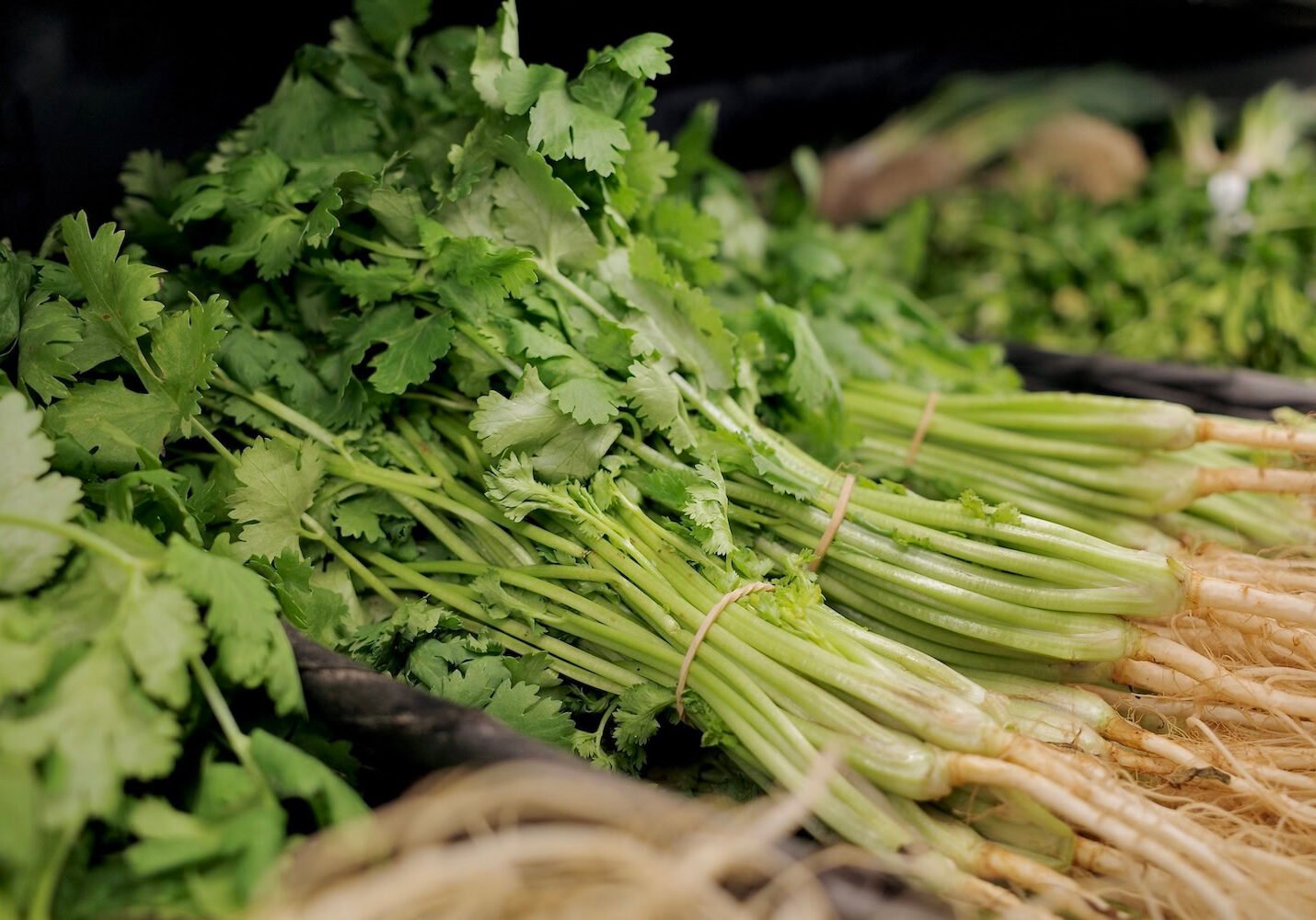
Loved in salsas, soups, curries, chutneys, and salads across continents, cilantro awakens the palate and lifts all other flavors with a lemony, floral electricity.
FORMS
- Fresh: Cilantro is almost always used fresh. Both the leaves and stems are flavorful. The stems are especially aromatic and hold up better in cooking, making them excellent for stews or roasting. The roots are intensely fragrant as well and are often pounded into curry pastes in Thailand.
- Dried: Dried cilantro exists but is a poor substitute, as most of the herb’s bright, lemony oils vanish during the drying process, leaving little aroma or flavor. With this herb, we always say to use fresh only.
STORAGE
- Fresh: Cilantro is delicate and tends to wilt quickly. To extend its life, trim the ends of the stems and store upright in a glass of water, loosely covered with a plastic bag in the refrigerator. Change the water every couple of days. You can also wrap it in a damp paper towel. Stored like this, cilantro lasts about a week. For longer storage, puree it with oil and freeze it, which preserves some flavor but sacrifices texture.
- Dried: If you do buy dried cilantro, keep it airtight in a cool, dark place, but expect little flavor.
PREPARATION
- Selecting: Sift through your leaves to discard any that are wilting and yellowing or becoming black and slimy. Only use vibrant, green leaves that still have a noticeable vitality to them.
- Rinsing: Rinse the leaves and stems gently to remove any grit, grime, or dirt, then pat until they're relatively dry before chopping.
- Tearing / Chopping: Leaves are best torn or chopped with a sharp knife to avoid bruising. The stems can be finely chopped as well and added to soups, stews, or braises. Avoid grinding or toasting cilantro leaves, as heat and abrasion quickly destroy their delicate oils.
COOKING
- When to Add: Cilantro’s citrusy notes fade quickly under high heat, so it is usually best to use at the end of cooking or as a garnish. Sprinkle freshly chopped leaves over curries, stir-fries, soups, and rice dishes.
- Cooked Dishes: However, in moist or enclosed methods, like steaming, poaching, or baking in foil (below), whole sprigs can be added earlier, infusing a mellow depth that pairs well with fish and lamb.
- Using the Roots: In Thai cooking, cilantro roots are pounded with garlic and white peppercorns into saamkler, "the three friends," a paste that seasons countless marinades, stocks, and stir-fries.
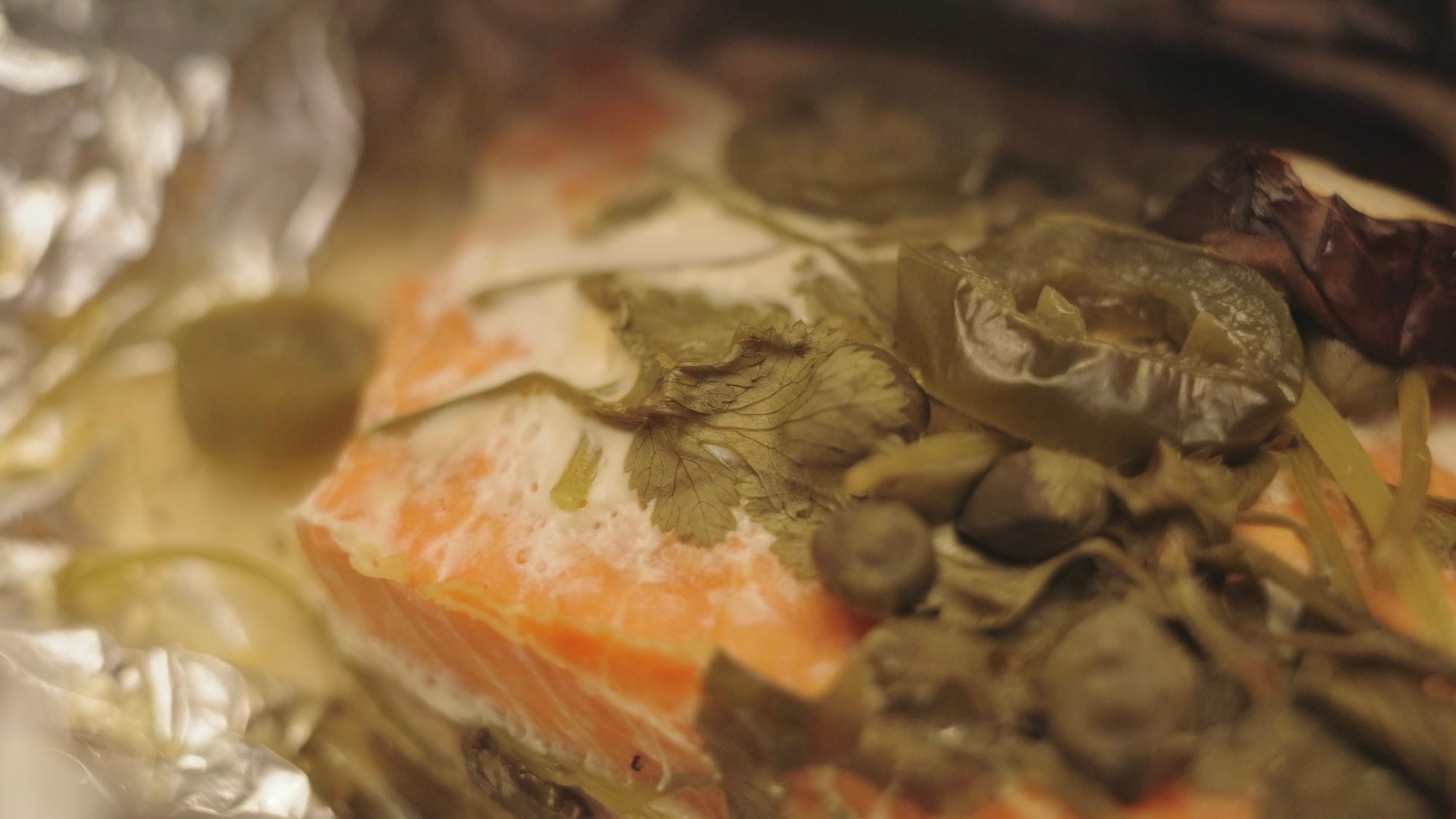
Salmon baked in a foil parcel with cilantro, one of the few contexts where cooking cilantro directly makes sense. The sealed foil traps steam and keeps the volatile aldehydes from fully escaping, preserving more of the herb's flavor than open-pan cooking would.