Parsley
Parsley is the herb derived from the leaves and shoots of Petroselinum crispum, a biennial in the Apiaceae family. The two primary culinary varieties are flat-leaf and curly-leaf parsley.
REGION OF ORIGIN
Parsley is rooted in the Mediterranean, especially Italy, Greece, Algeria, and Tunisia, which played important roles in the herb's early cultivation. It’s a highly adaptable herb and now grows in many climates around the globe.
PART & COLOR
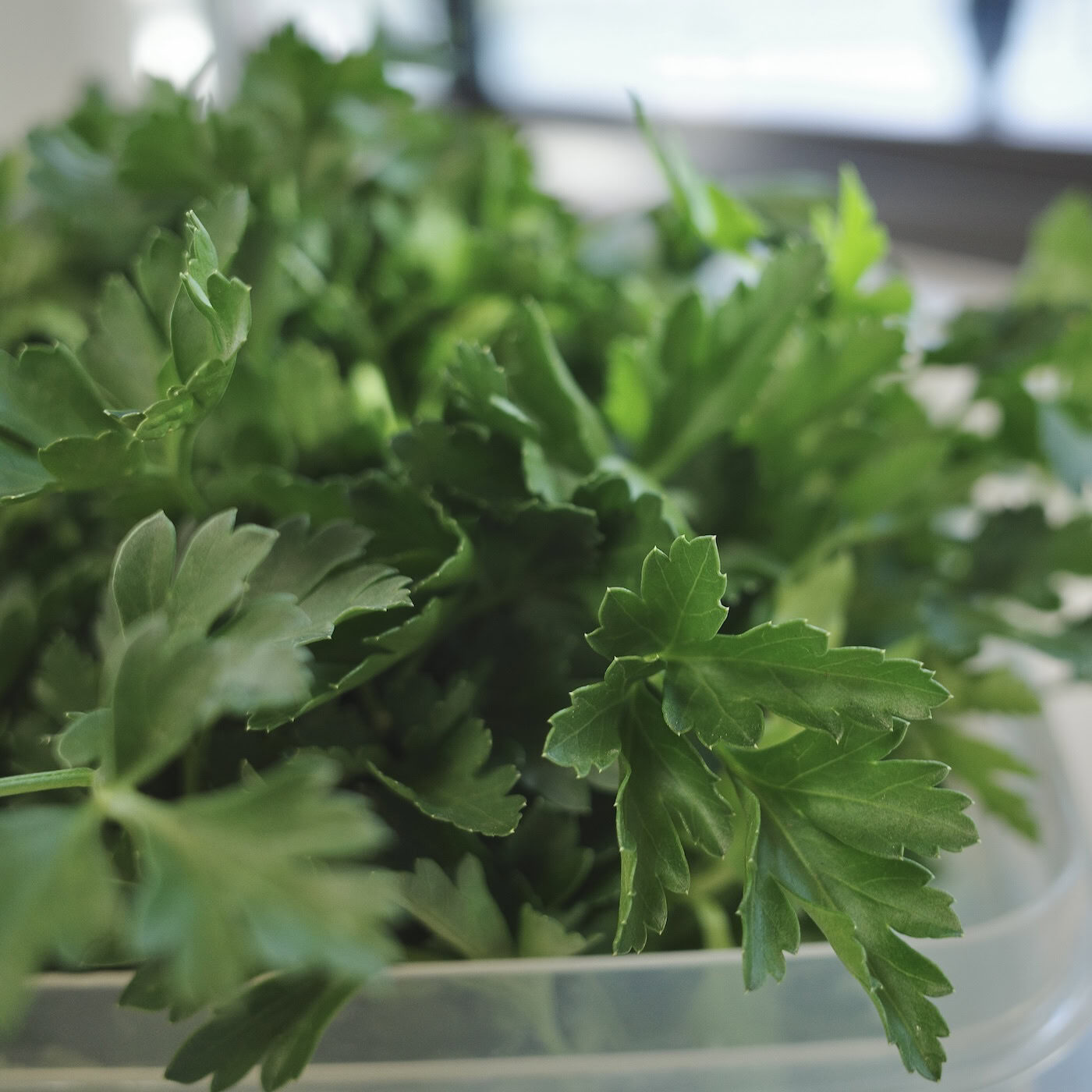
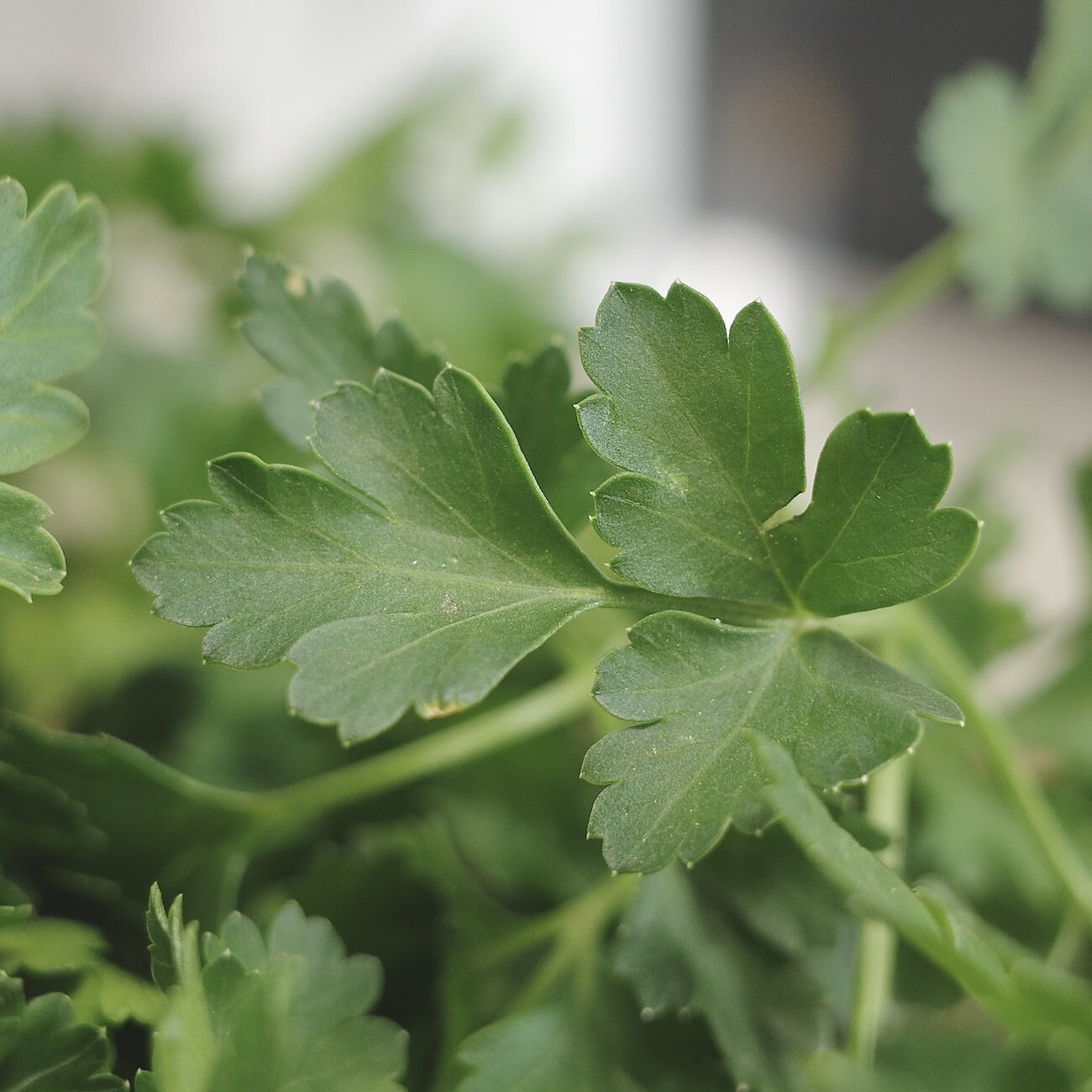
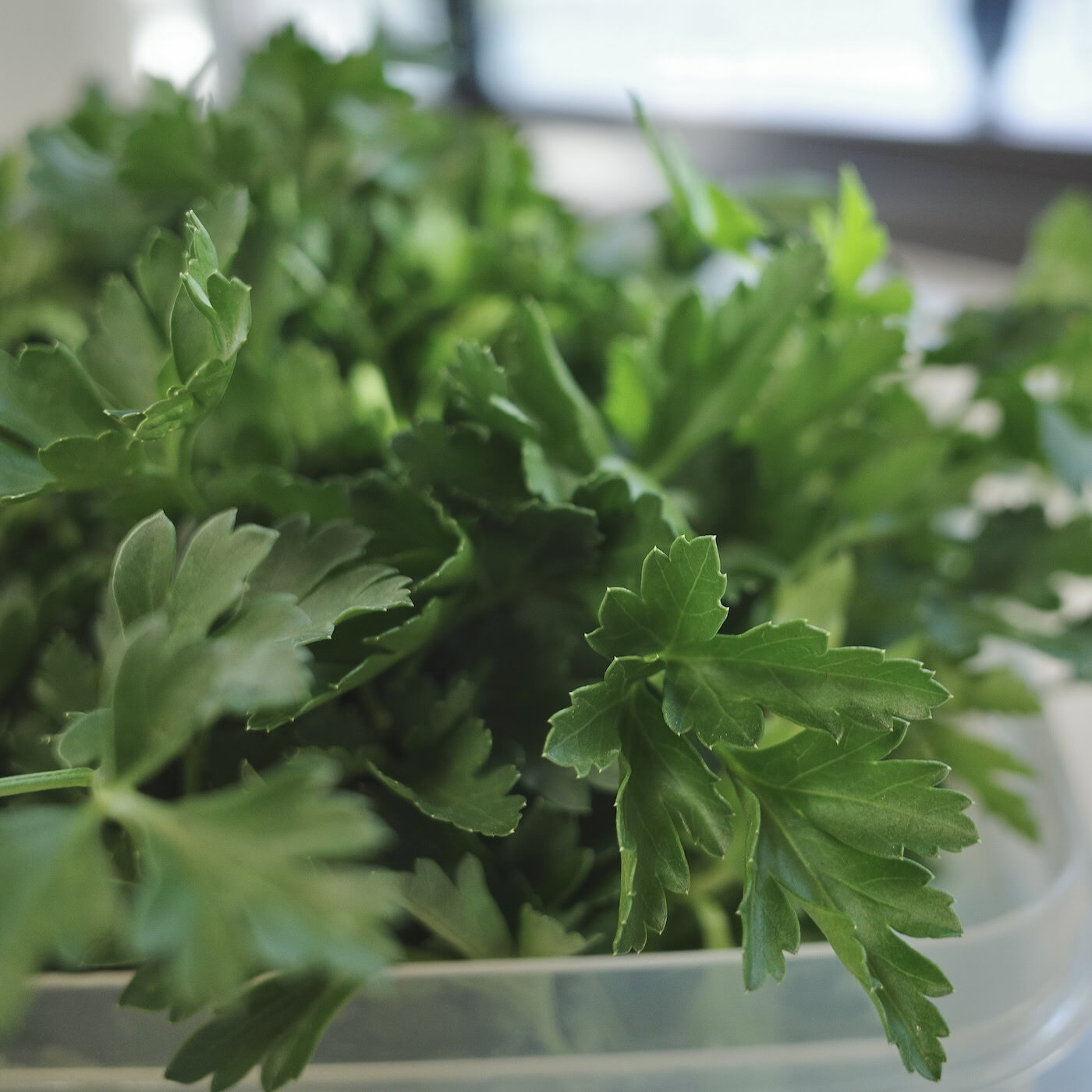
Parsley is primarily used for its vibrant leaves, which range from bright, almost neon green to a deeper, darker green. Curly-leaf parsley leaves are tightly curled, looking frillier than the broader, smoother flat-leaf parsley. When dried, parsley becomes a duller green. If allowed to grow into its second year, small, yellowish edible flowers form.
PRODUCTION
Parsley is a biennial herb, but it is often grown as an annual and harvested in its first year. It can be sown in early spring or late summer and prefers full sun over partial shade. Harvesting can begin as soon as the plant has enough leaves to spare. For a steady supply, snip the outer stems first, close to the base. Try not to cut more than a third of the plant at a time to encourage healthy regrowth.
FLAVOR & AROMA
Parsley's aroma is clean and green. It has a freshness reminiscent of spring meadows—grassy with subtle notes of citrus, anise, mint, and pepper.
The flavor carries these refreshing notes through to the palate, a subtle lift that blends so well with other ingredients. Yet, it’s distinct enough to be noted and appreciated. Flat-leaf parsley is known for its stronger flavor, while the curly-leaf variety is milder and mainly used as a garnish due to its beautiful ruffled leaves.
CULINARY USES
Finely chopped parsley is often sprinkled atop soups, salads, pastas, roasted meats, and vegetables. It's a primary ingredient in sauces and condiments like Argentinian chimichurri and Italian gremolata, and is sometimes added to modern takes on pesto. It's also popular in poultry stuffings, where its brightness contrasts with the savory elements.
Fresh parsley is preferred for its vibrant top notes, but dried and crumbled parsley is convenient for seasoning blends, rubs, soups, and stews.