Thyme
Thyme is the herb derived from the leaves, stems, and flowers of various species and cultivars in the genus Thymus, part of the mint family. There are over 250 species, but only a few are widely used in cooking. Common or "true" thyme (T. vulgaris) is the most popular with the most cultivars, followed by Lemon Thyme (T. × citriodorus), Wild / Creeping Thyme (T. serpyllum), and Spanish Thyme (T. zygis).
REGION OF ORIGIN
Thyme has a broad Old World range, but its heart lies in the Mediterranean. For millennia, this intensely aromatic herb has been woven into the cuisines and cultures of southern Europe, North Africa, and the Middle East.
PART & COLOR
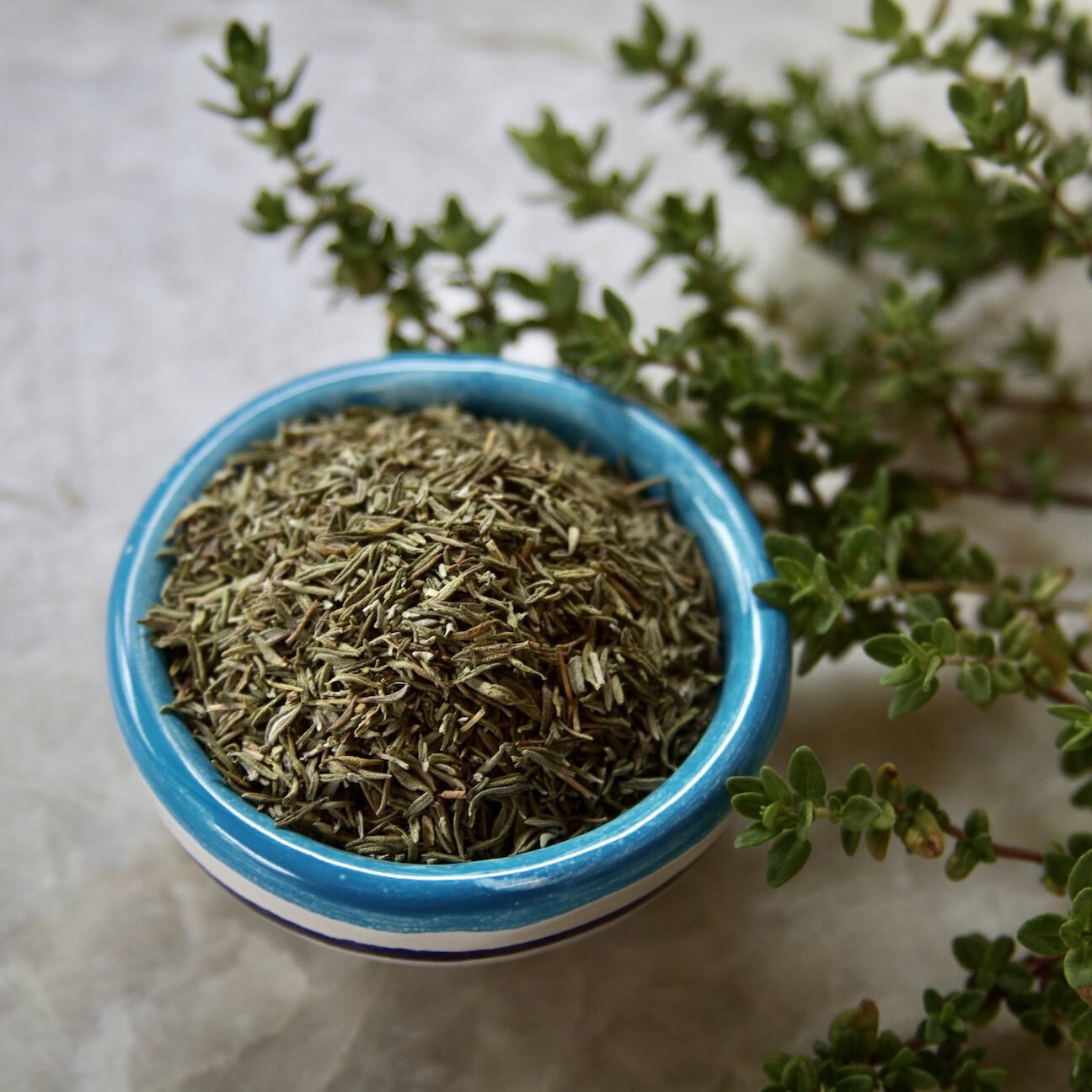
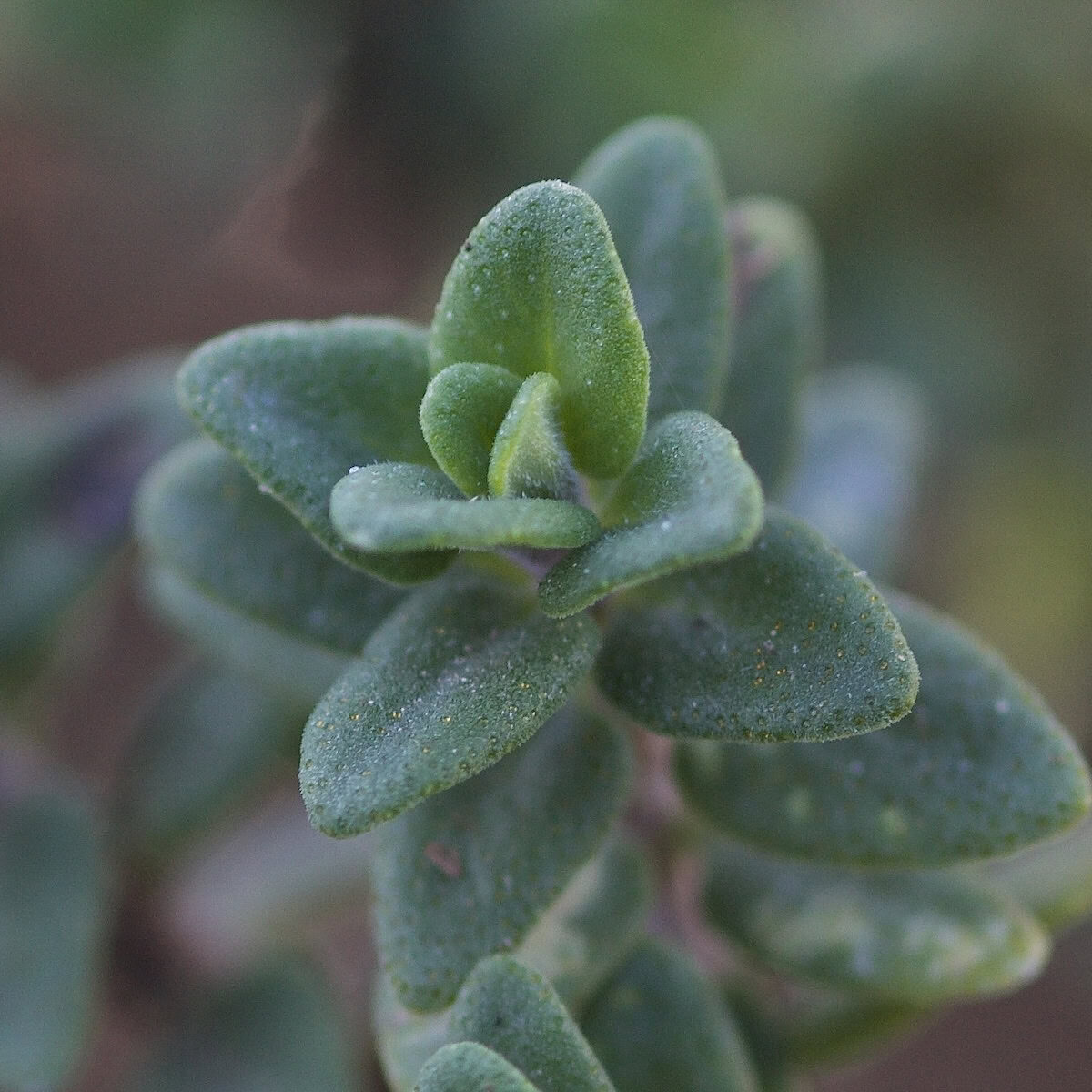
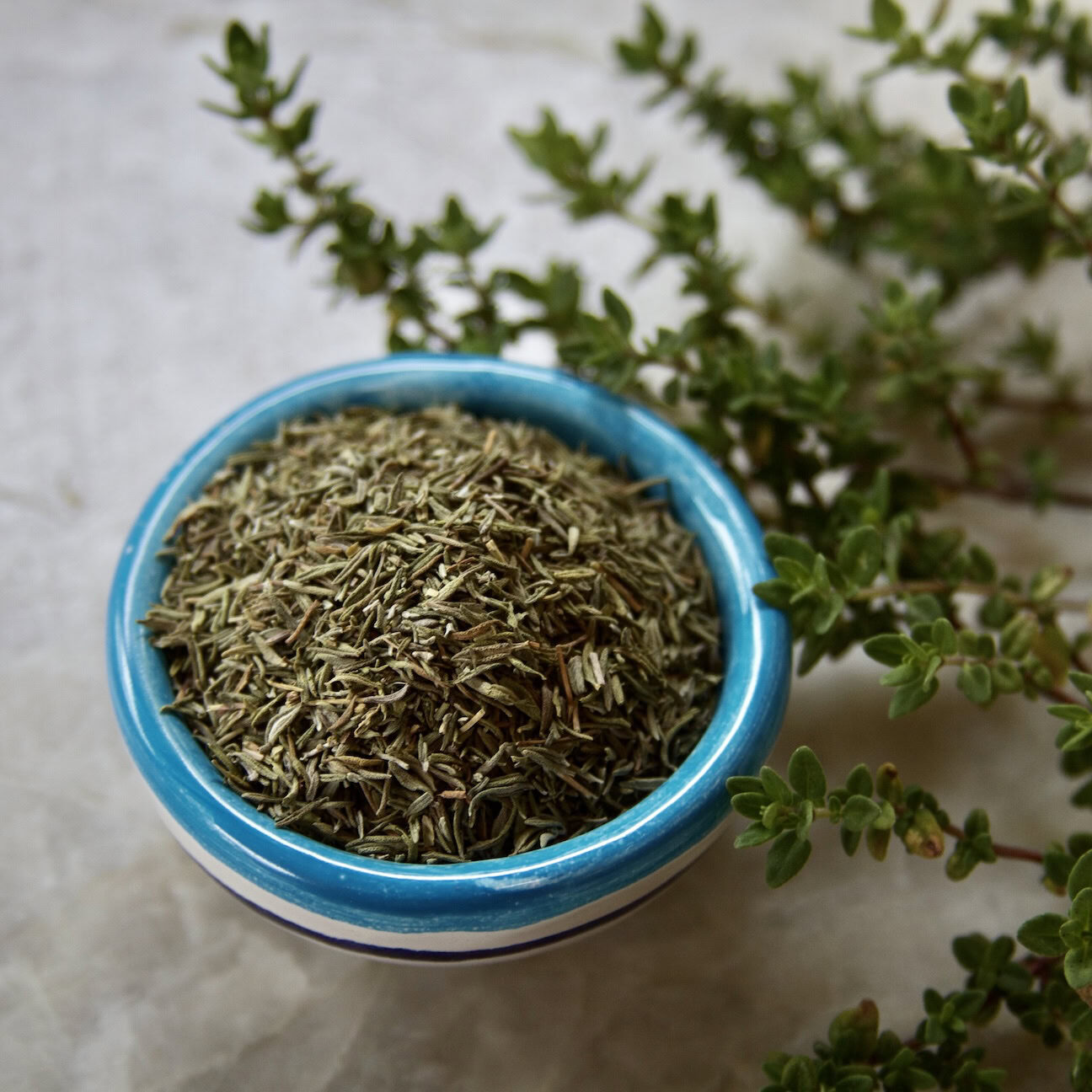
Thyme’s tiny leaves grow in pairs or clusters along its stems. Depending on the variety, the leaves may be oval, narrow, smooth, or slightly fuzzy, ranging from bright green to grey-green, yellow, purple, or variegated. When dried, they deepen to olive green or light brown. Thyme flowers bloom in tight clusters at the tips of the stems, usually in shades of pale purple, pink, or white. They are edible and rather delicious.
PRODUCTION
Thyme is a hardy evergreen perennial that can be harvested throughout the year. Soft, new leaves are usually the most flavorful from late spring through summer. Snip young shoots regularly rather than old woody stems, and always leave enough green growth for the plant to recover. Extra sprigs can be bundled and dried for later use in a warm, dark, well-ventilated place.
FLAVOR & AROMA
Thyme's aroma is a concert of pine needles, mint leaves, and lemon zest with an underlying herbal depth and earthy warmth. It’s a wordy description, but words aren’t the best way to know it. It’s unmistakable once you become familiar. This evocative fragrance has been associated with courage, strength, and style since antiquity. "To smell of thyme" was a high compliment to the Greeks.
All of the aromatic notes are delivered to the palate, accompanied by a warming sensation. Some cultivars have a more pronounced citrus or floral character, but all of them offer a bold, multilayered experience.
CULINARY USES
Throughout the Mediterranean, thyme is often paired with meats and seafood. Its robust flavor plays well with the richness of beef, pork, and lamb, and its lemon notes bring out the sweetness of fish and shellfish.
In the United States, it's a classic herb in Thanksgiving stuffing. The timing is perfect, since it's also a staple herb for winter vegetables like carrots, potatoes, and squash, especially in hearty soups and stews. Try bundling it with bay leaves and parsley in a bouquet garni. You can add whole sprigs early on, giving their essential oils time to slowly infuse the dish, or you can strip the leaves and finely chop them for more intensity.