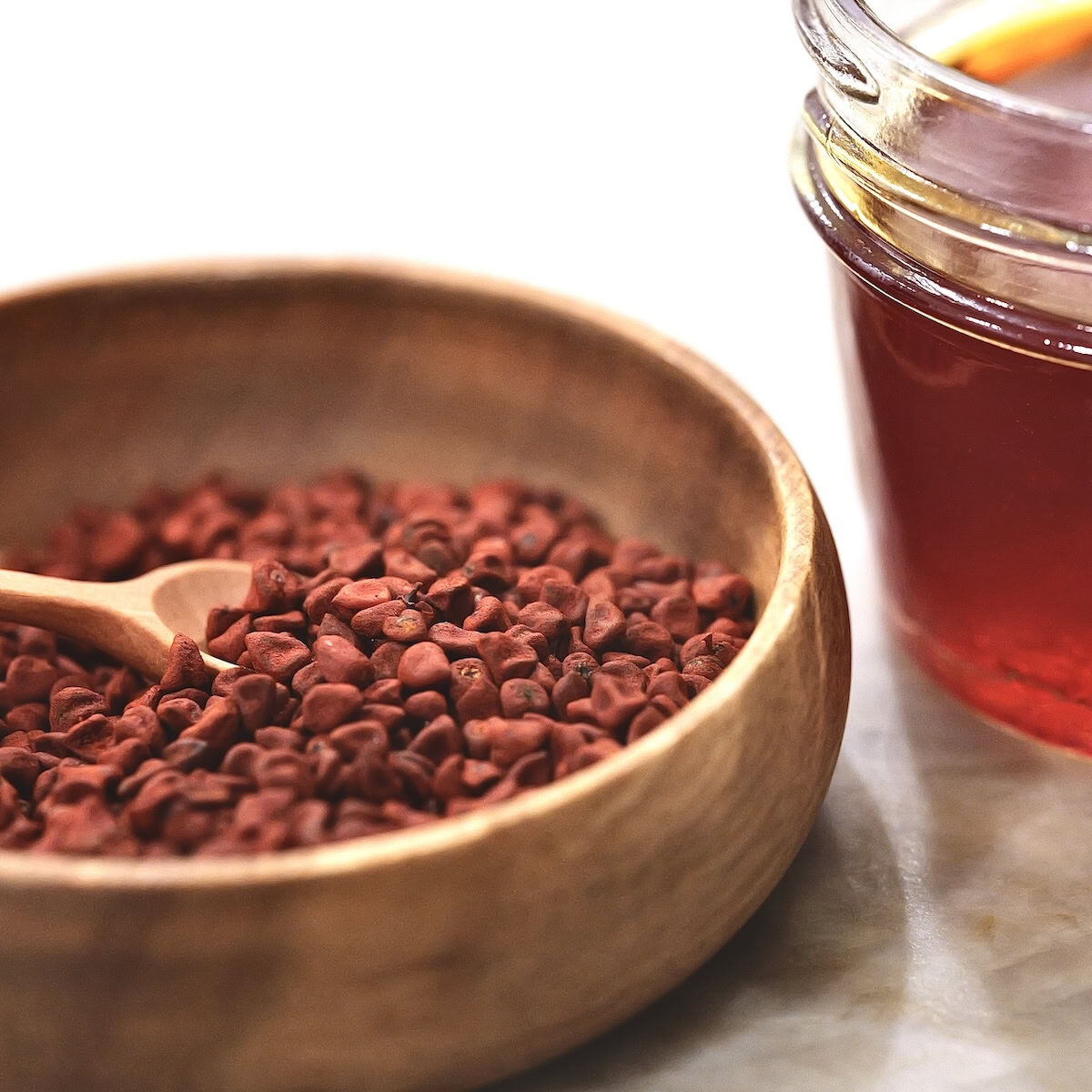
Annatto
Annatto, or achiote, is the spice produced from the seeds of Bixa orellana, a tropical evergreen shrub or small tree in the Bixaceae family.
REGION OF ORIGIN
Annatto originated in the lowland forests of tropical America, with its natural range stretching from Mexico and Central America into northern South America. Indigenous peoples across this region were the first to use the spice, long before it spread across the world's tropics.
PART & COLOR
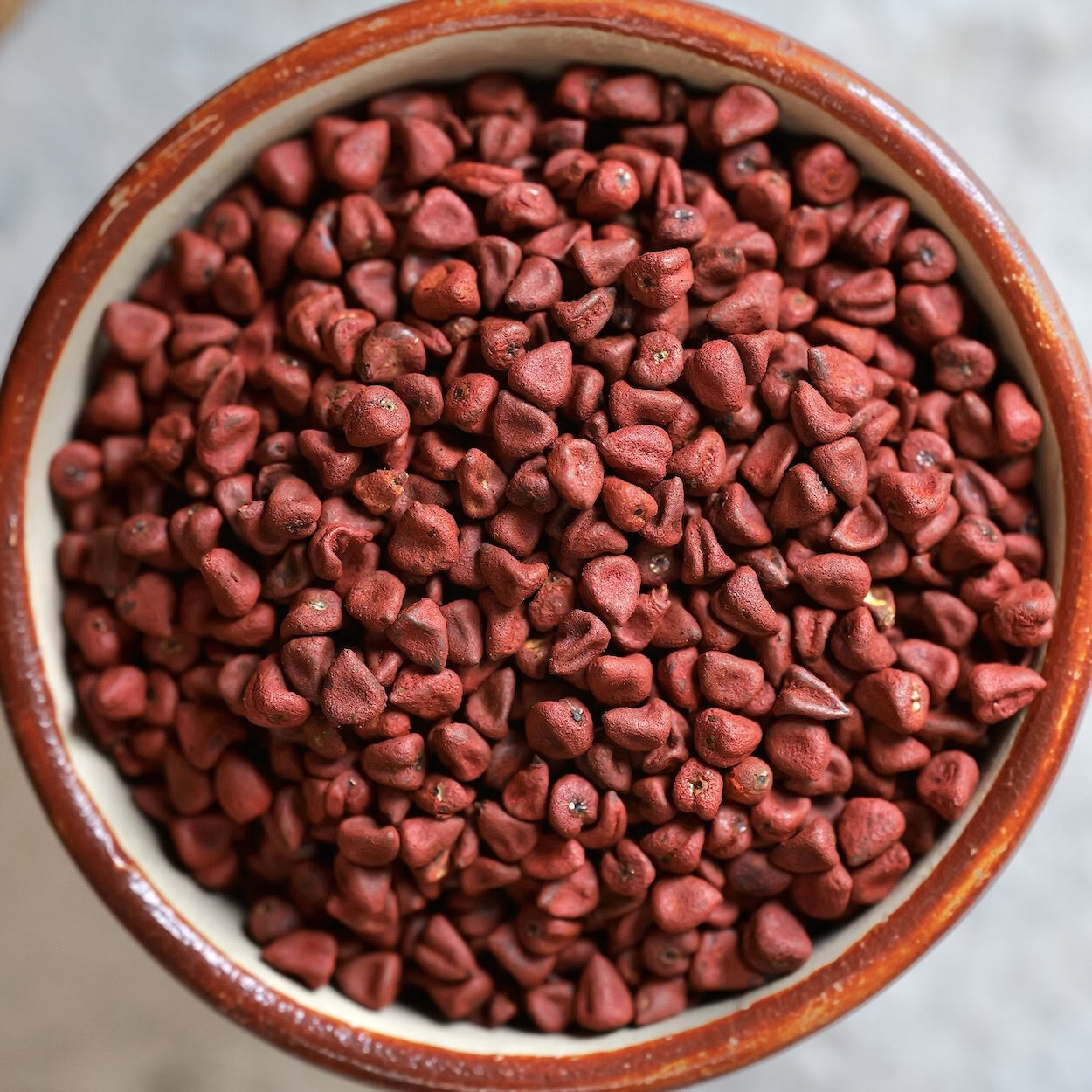
The bright red-orange color of the seeds comes from bixin, a fat-soluble carotenoid pigment concentrated in the waxy coating around each seed. Alkaline processing can convert bixin into norbixin, the more water-soluble form. Annatto colorants are designated E160b, the natural color that is extracted for culinary and commercial uses.
PRODUCTION
Annatto trees thrive in warm, tropical climates. They begin flowering within their first few years, producing pinkish-white blossoms that develop into spiny fruit pods. As the pods mature, they turn brown and begin to dry, so growers harvest them before they fully split open and scatter their seeds. The pods are dried and threshed, and then the seeds are dried.
FLAVOR & AROMA
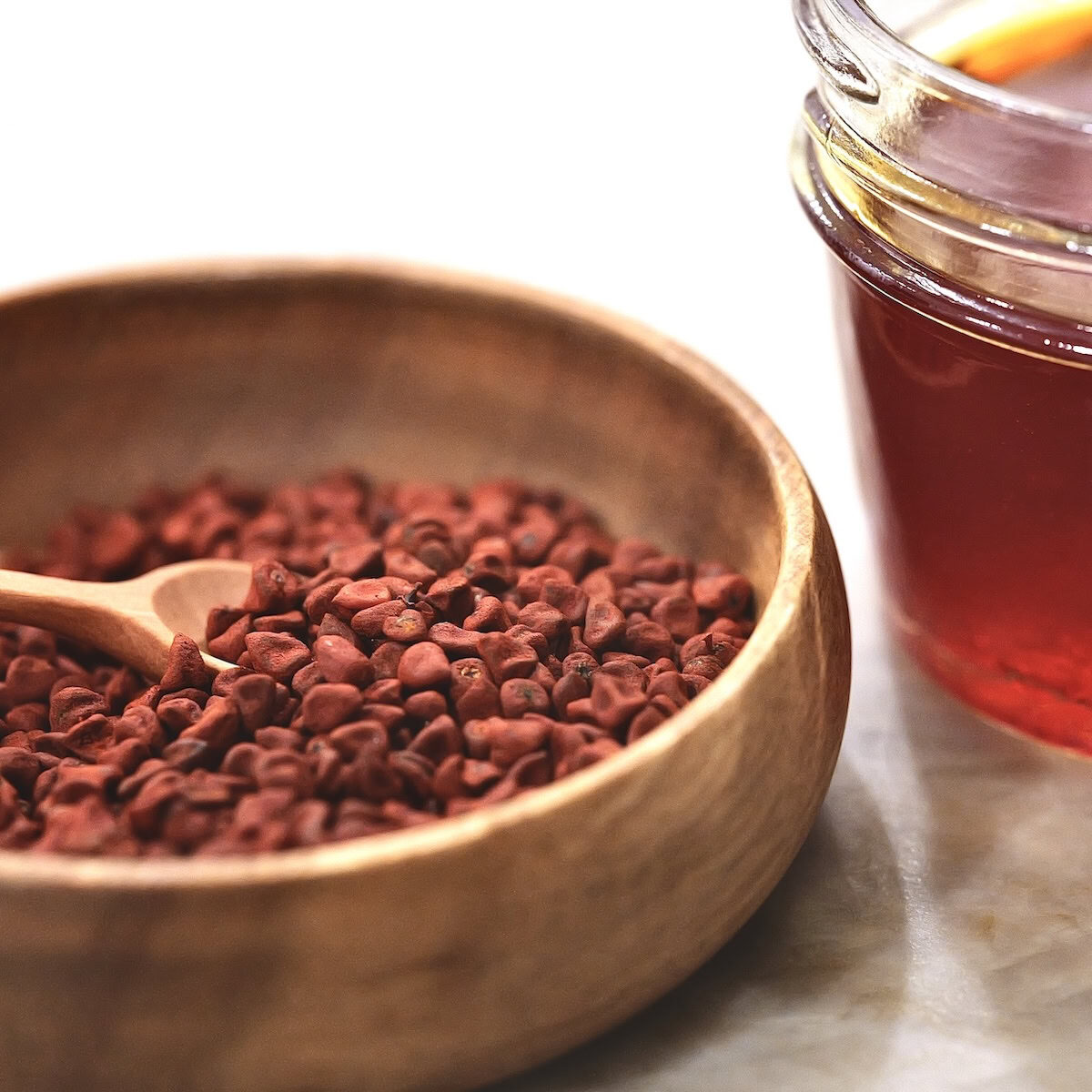
For such a vibrant spice, annatto’s aroma is unexpectedly nuanced and delicate, with faint notes of rose, nutmeg, cracked nuts, and sun-dried wood. The flavor of the seeds is equally mild and earthy. It has a light peppery quality that fades into a nutty sweetness. You can deepen the seeds’ nuttiness by toasting them or infusing them in a neutral oil to make achiote oil.
Although annatto is mainly used for its brilliant color that makes dishes look richer and more enticing, its flavor shouldn’t be overlooked. Since it's never overbearing, it can serve a key supporting role in your seasoning approach.
CULINARY USES
Annatto has long been cherished by many Latin American and Caribbean cuisines for its ability to imbue dishes with a warm, golden-orange hue without much flavor. This makes it rather handy as you can season the dish however you wish on top of annatto’s brilliant color and subtle nutty character.
While it’s primarily used in the Americas as the base of spice pastes and marinades for fish, meat, rice, and vegetable dishes, annatto is also frequently used in Southeast Asian cuisine to enhance soups, stews, and noodle dishes. Many Filipino and Vietnamese dishes call for the seeds of the “lipstick tree."