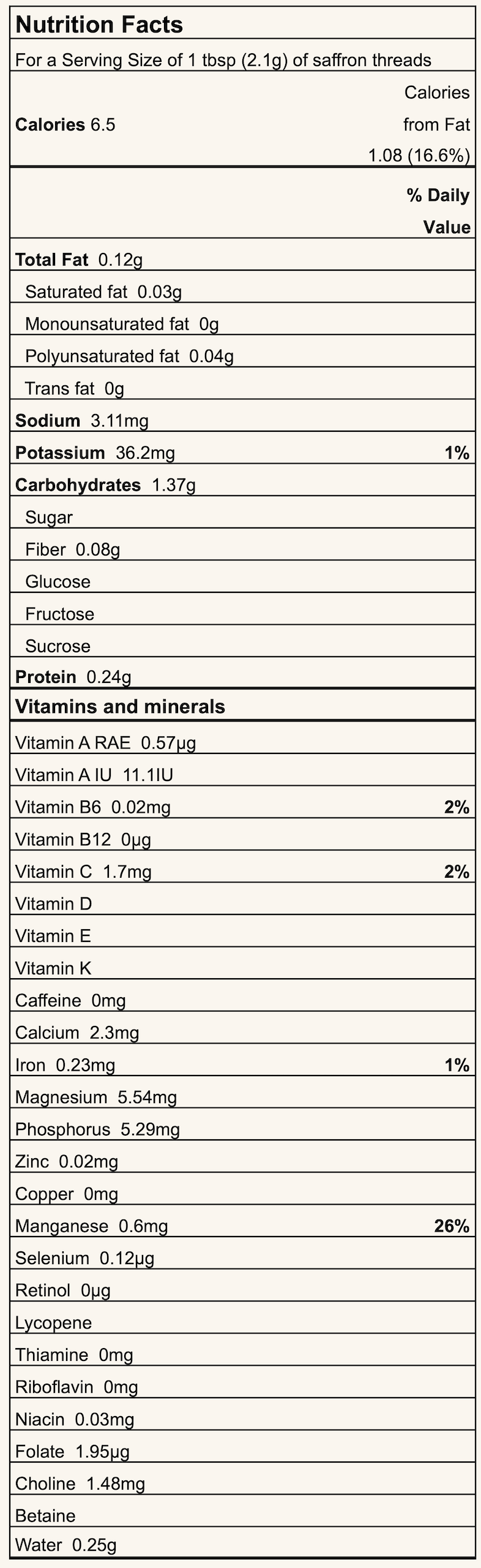
Saffron
Saffron is the spice produced from the stigmas of the saffron crocus (Crocus sativus), a perennial herb in the iris family.
REGION OF ORIGIN
After centuries of debate, recent genetic evidence strongly points to saffron originating in ancient Greece. Its wild ancestor is Crocus cartwrightianus, native to southern Greece, the Aegean Islands, and western Crete. The saffron crocus itself likely emerged in Attica near Athens. This fits beautifully with some of saffron’s earliest historical appearances, like the Minoan frescoes of Crete and Santorini (~1700-1600 BCE).
PART & COLOR
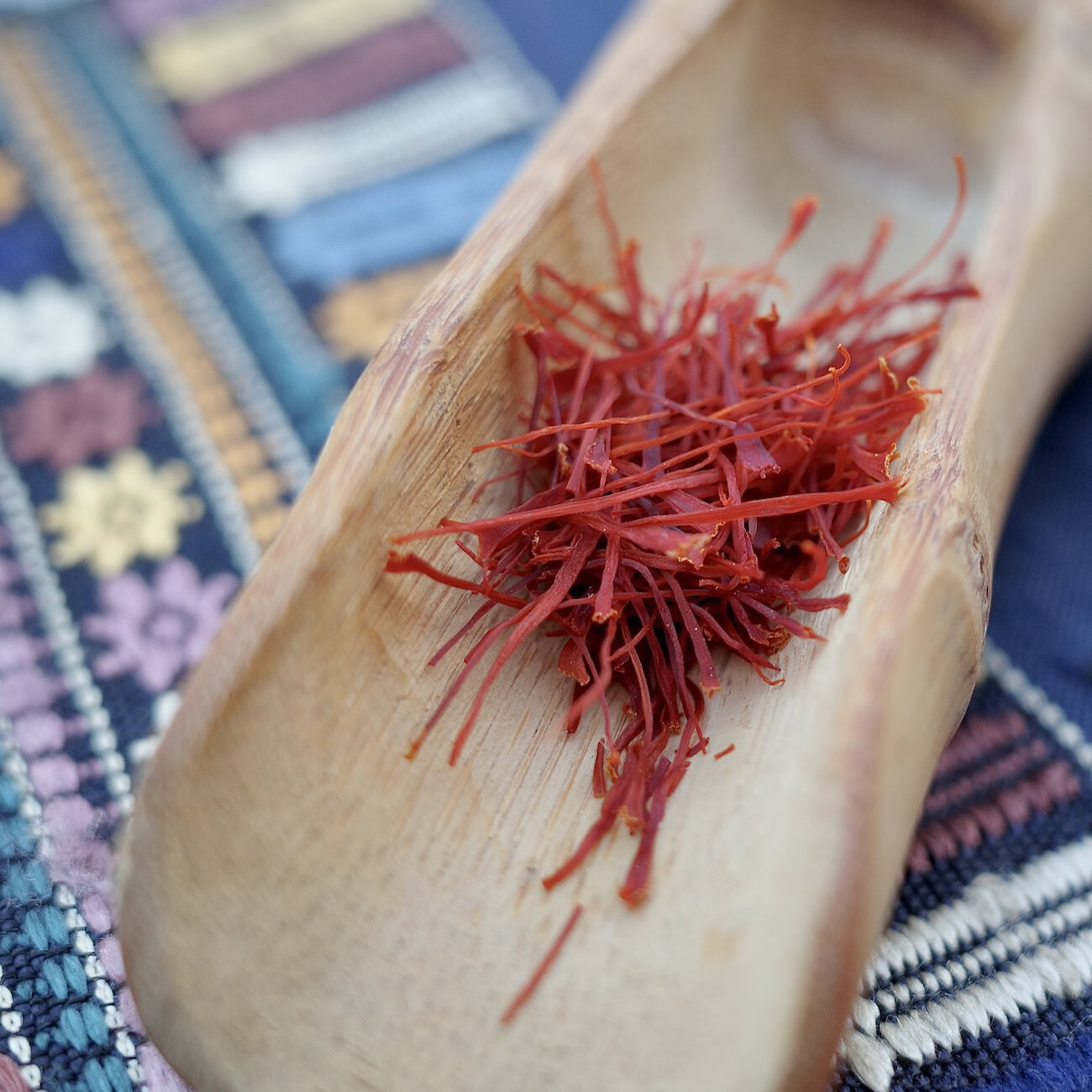
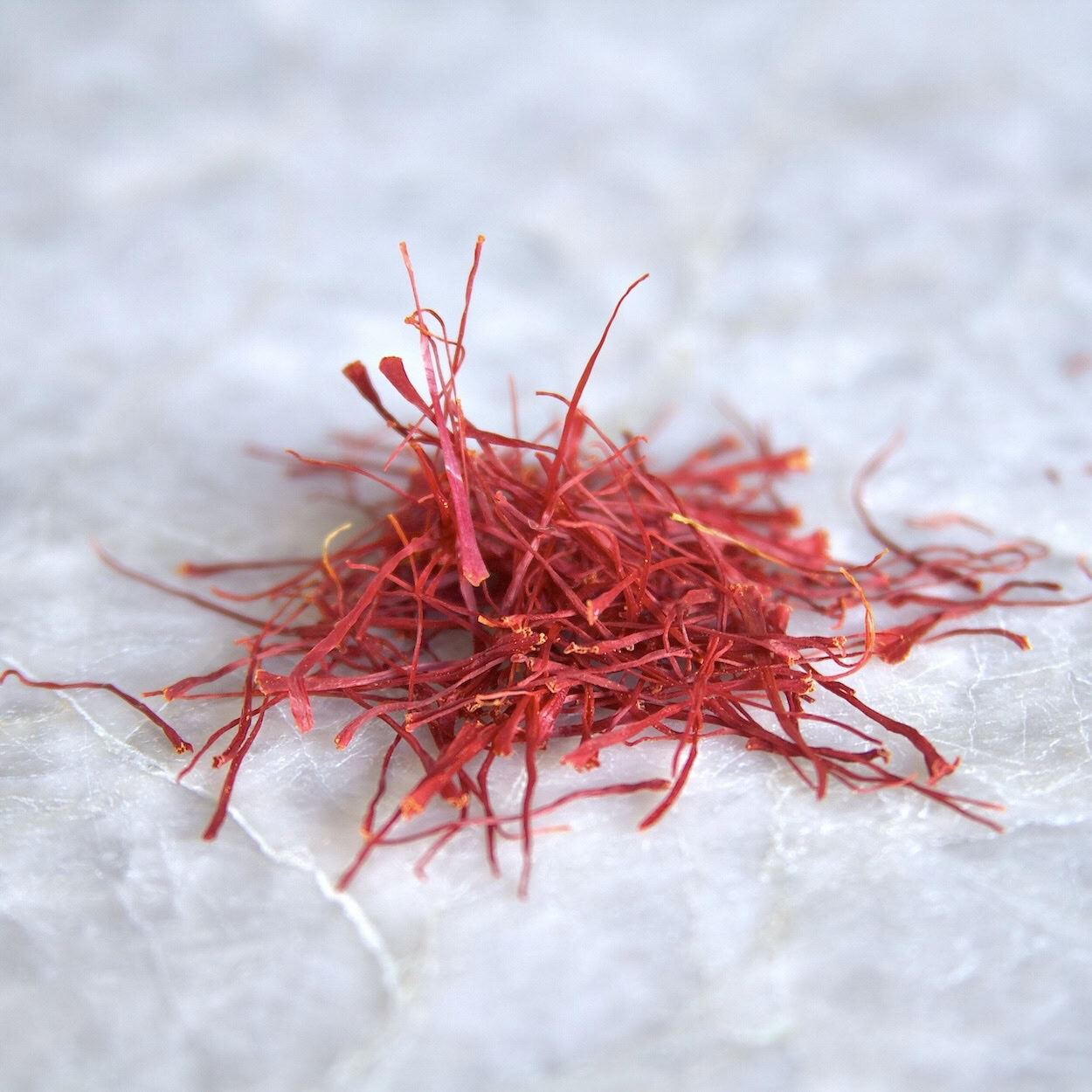
Saffron is the only spice derived from a flower's stigmas, also called "strands" or "threads." They should be a vibrant, deep crimson with a tint of orange-gold at the tips. The deeper and more uniform the red, the better. Saffron is the most expensive spice in the world, which can lead to adulteration. Inferior threads are dyed or mixed in with parts of other plants like safflower, so only purchase from reputable sources.
PRODUCTION
~75,000 flowers meticulously picked by hand will only produce one pound (0.45kg) of the spice. Learn more about why saffron production is so labor-intensive.

FLAVOR & AROMA
Saffron has mysterious qualities that make it one of the world's most coveted spices. Its distinctive, lasting aroma is an odd mix of spicy, creamy, and leathery. It is reminiscent of honey and fine tobacco, undercut by hints of freshly cut hay. It is grassy, yet slightly metallic. This unusual scent is joined by an elusive bittersweet flavor, subtly floral and curiously earthy.
Saffron evolves as it infuses more deeply into a dish. The initial floral notes give way to warmth. This also happens on the palate, as the honeyed sweetness mellows into a delicate bitterness, creating balance. Saffron’s timeless allure is rooted in its sublimity. With such exquisite complexity, words alone could never properly describe it. It is to be experienced, preferably with great company.
CULINARY USES
Highly versatile, saffron enhances delicate fish, amplifies savory meats, and elevates spicy dishes. Just a touch adds a brilliant gold color and penetrating aroma. It lends itself famously to rice dishes, from Spanish paellas to Italian risottos to South Asian biryanis and curries, but it's equally at home in the Mediterranean and the Middle East.
Citrus, stone fruits, and earthy vegetables benefit from a sprinkling, and it affects each one in unique ways. Saffron is also popular in baked goods and desserts, from sweet breads to custards and cookies. To maximize flavor, gently crush a few strands and steep them in warm water, milk, or broth for about 20 minutes. The infused liquid, along with the steeped threads, can then be incorporated into your dish.