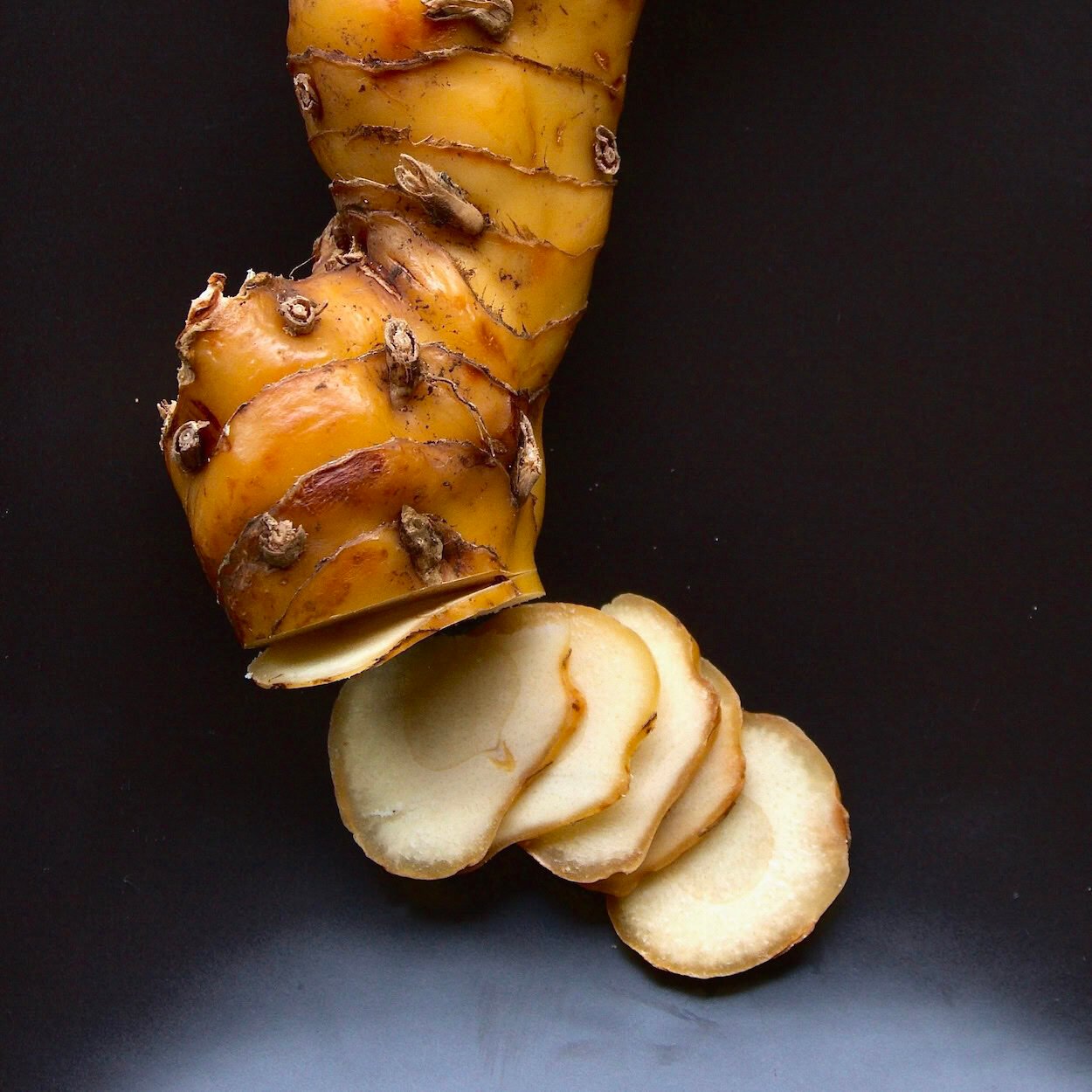
Galangal
Galangal is the spice produced from the rhizomes of two tropical evergreen herbs in the ginger family. Greater galangal (Alpinia galanga) is more popular for cooking, and lesser galangal (Alpinia officinarum) is more often used in traditional medicine.
REGION OF ORIGIN
Greater galangal has flourished for thousands of years in the humid, tropical forests of southern China and mainland Southeast Asia, stretching into the Indonesian islands (especially Java). Lesser galangal likely originated in southeastern China and Vietnam.
PART & COLOR
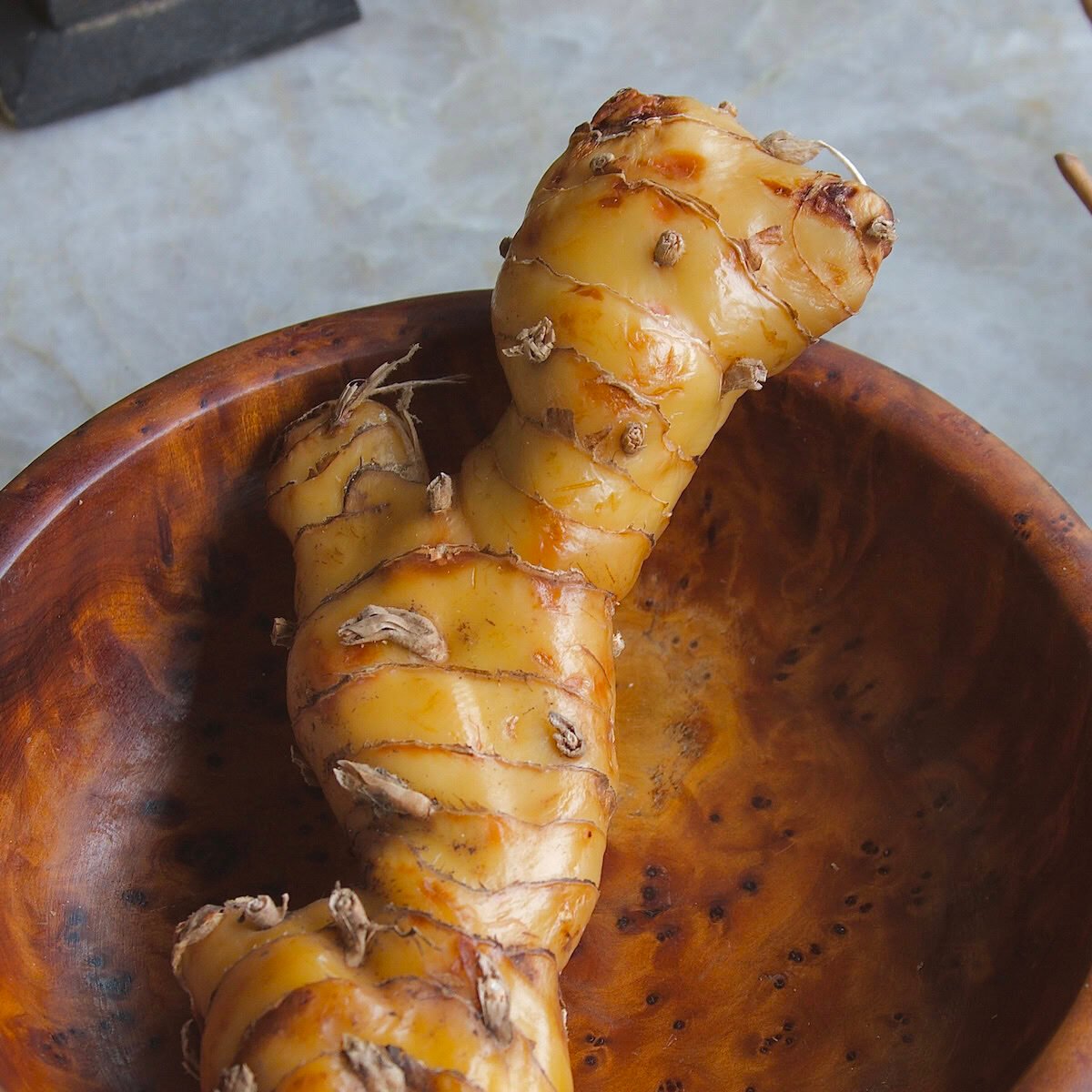
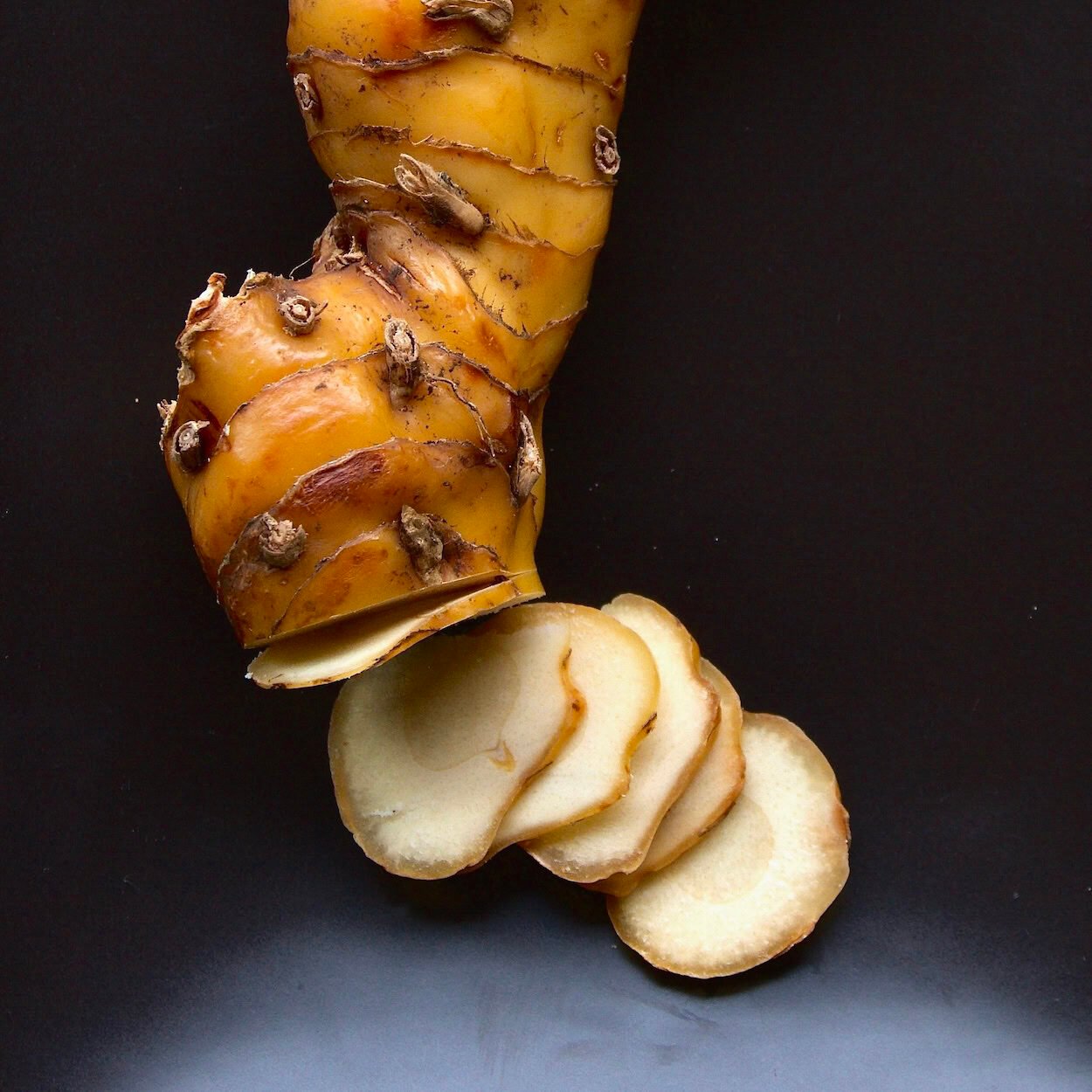
Fresh galangal rhizomes are typically pale beige to orange-brown, sometimes with pinkish or reddish undertones at the nodes. The inside is creamy white to ivory. Some greater galangal varieties have a faint pink hue to the inner flesh, while lesser galangal can be a darker orange inside.
PRODUCTION
Thriving in many tropical climates with ample rainfall, galangal is cultivated primarily from rhizome divisions, whereby farmers separate mature rhizomes into smaller sections to replant. Each rhizome requires 10-12 months to fully mature. Farmers assess the maturity of the underground structures by observing the shoots above-ground. When the long leaves start to yellow, the rhizomes are ready.
FLAVOR & AROMA
Greater galangal is more commonly used in cooking because it's milder and sweeter than its "lesser" cousin. But it’s plenty bold. It has a sharp, citrusy scent that carries notes of pine, earth, and fresh flowers. Grate a fresh rhizome and an intense, peppery pungency will electrify your senses.
On the tongue, galangal is zesty with a spicy warmth. Its heat is more biting than ginger but smoother than chiles, leaving a clean, tingly aftertaste. A medicinal, camphor-like edge can emerge as well. Its unique complexity is irreplaceable in the kitchens of Thailand, Indonesia, Malaysia, and Vietnam.
CULINARY USES
Galangal is a pillar of many Southeast Asian cuisines. It's central to Thai green curries as well as the soups tom yum and tom kha gai, where it helps define the aromatic broth. In Indonesia, galangal services many marinades and "bumbu" spice pastes because its robust flavors stand up well alongside other strong ingredients.
Fresh galangal is frequently used in curries and meat dishes, but it's especially popular with seafood as its bright heat balances overly "fishy" flavors. Thinly slice it, bruise chunks, pound it into a paste, or finely grate it with a microplane.