Wasabi
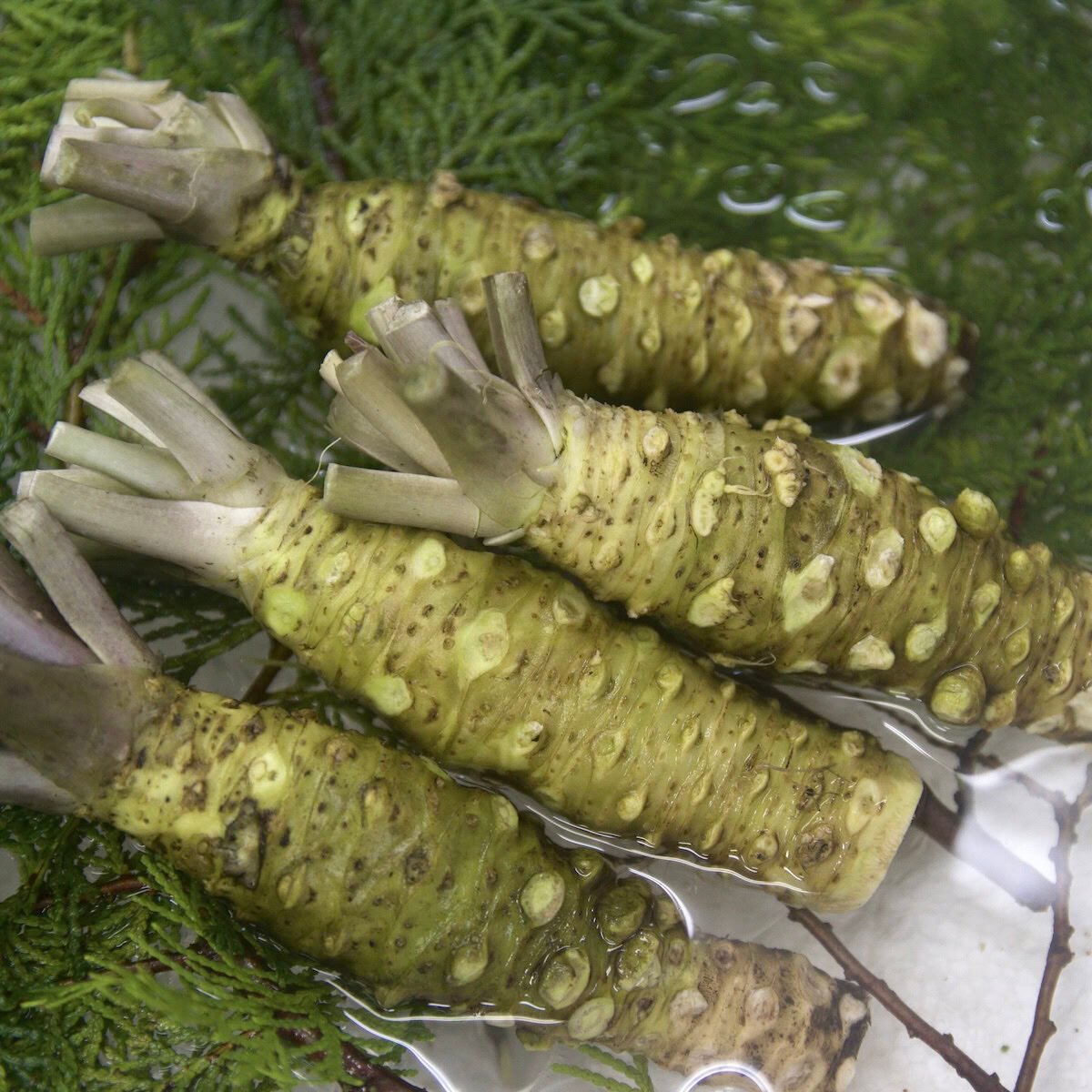
Wasabi is the spice produced from the rhizomes of Eutrema japonicum, a rare evergreen herb in the mustard family.
REGION OF ORIGIN
Wasabi's roots are firmly planted in Japan, where it grows wild in cool, shaded mountain valleys. Plants found growing on the Korean Peninsula once suggested a wider native range, but recent genetic evidence indicates they are most likely escaped Japanese cultivars rather than a native population.
PART & COLOR
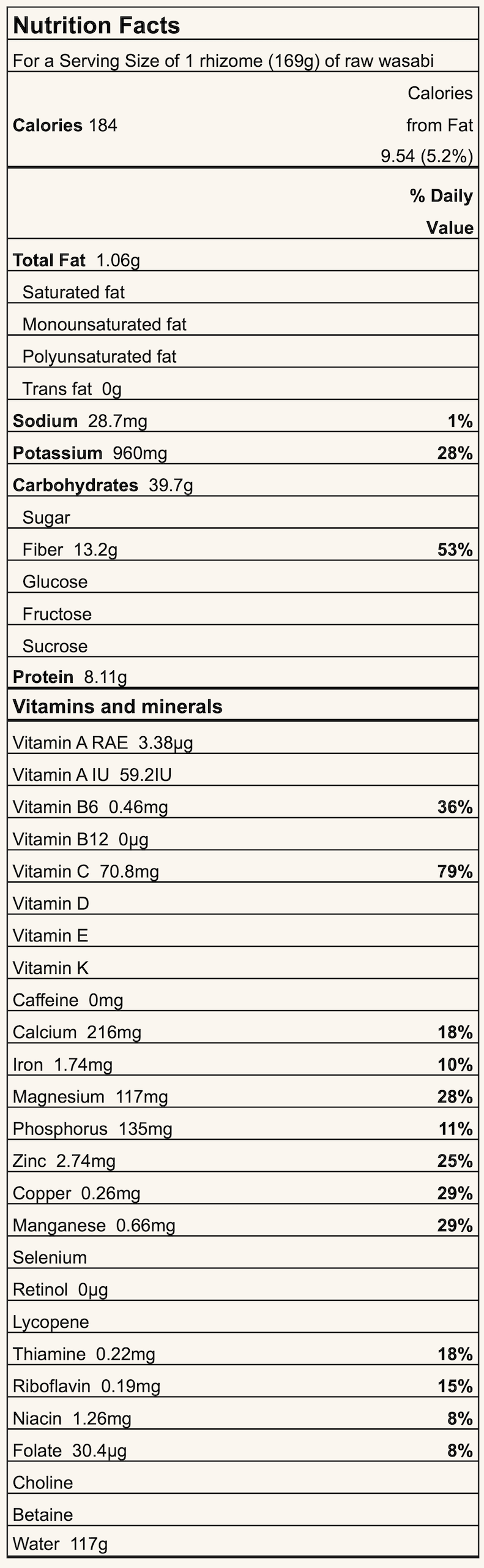
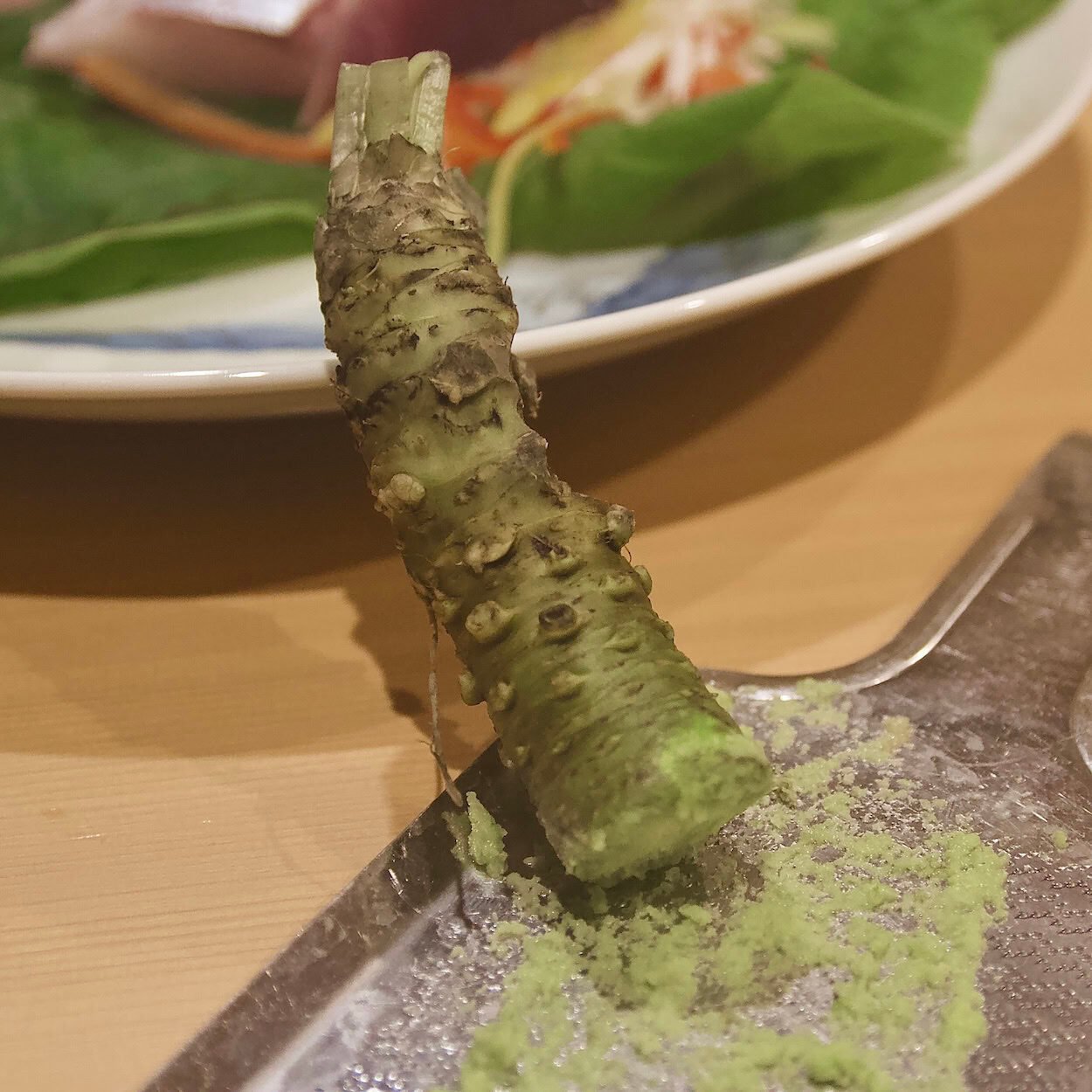
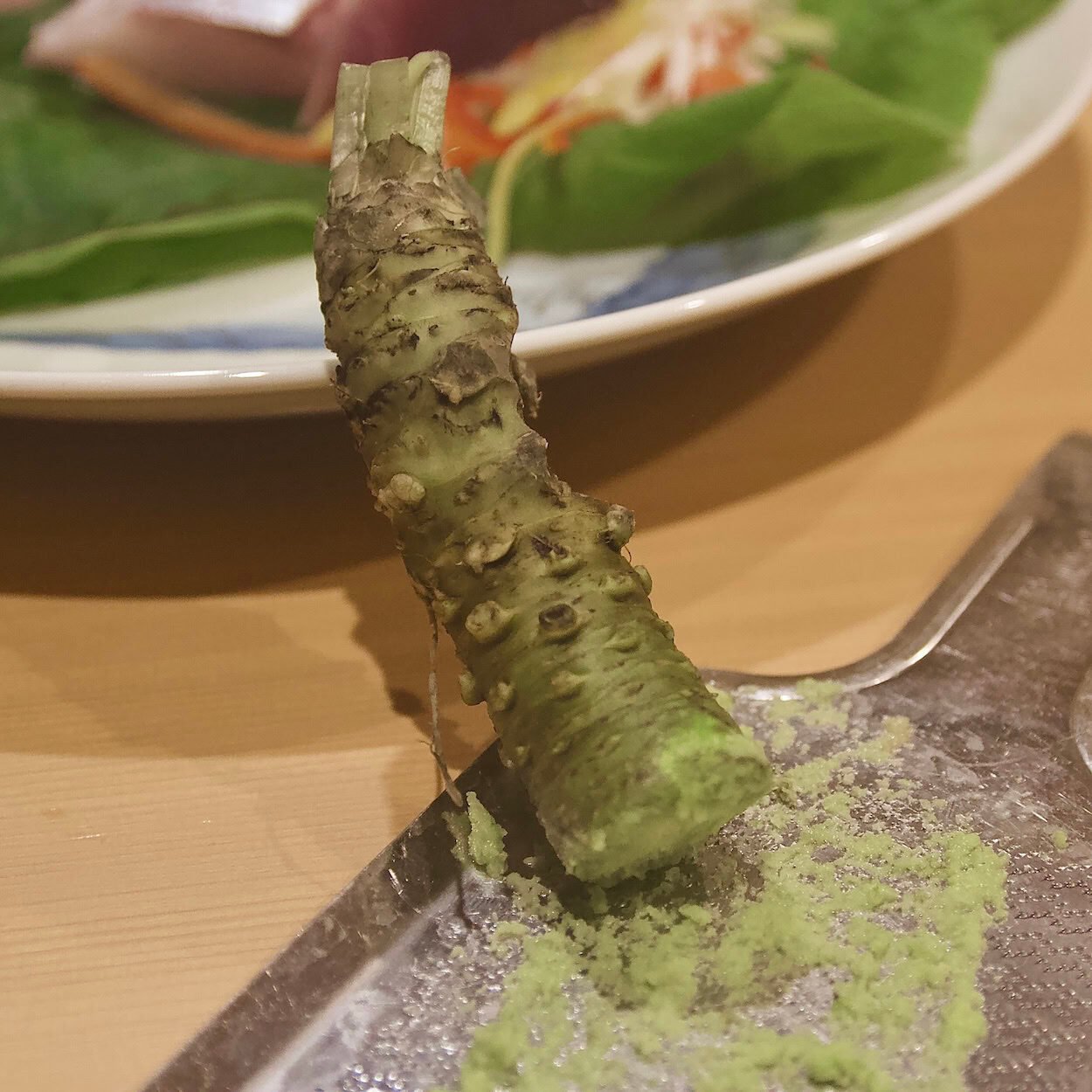
Fresh wasabi rhizomes and wasabi paste have a blend of pale green hues. However, most "wasabi" isn't real wasabi, but rather a mixture of mustard, horseradish, and spinach or green food coloring, resulting in a much darker green. Authentic wasabi rhizomes are either freshly grated, dried and ground into a powder that can be rehydrated, or preserved as a prepared paste. The bright green leaves can also be pickled or eaten fresh as a peppery, bitter salad green.
PRODUCTION
Wasabi is one of the world's hardest crops to cultivate. It requires extremely specific growing conditions: cool temperatures, high humidity, shade, and continual moisture. Learn more about how wasabi is produced.
FLAVOR & AROMA
The flavor of freshly grated wasabi is beautifully complex: hot with a bright, natural sweetness. An earthy aroma with hints of fresh grass rounds it out. Unlike the lingering burn of chile peppers, wasabi's heat rushes through the nose with a sharp pungency that quickly fades. This distinctive tingling sensation invigorates and refreshes you as a subtler spice rests on the palate.
CULINARY USES
In excess, wasabi's fierce heat can overpower its accompaniment (and your sinuses). It is meant to accentuate, so less is more. Rhizomes should be grated as needed because the flavor peaks after two to five minutes.
Wasabi famously highlights the delicate notes of raw fish and complements the saltiness of soy sauce, making it a classic part of the sushi experience. It also amplifies the umami of wagyu and adds an intriguing kick to creamy dips and spreads. Wasabi lends itself perfectly to cold noodle dishes as well, such as udon and soba.