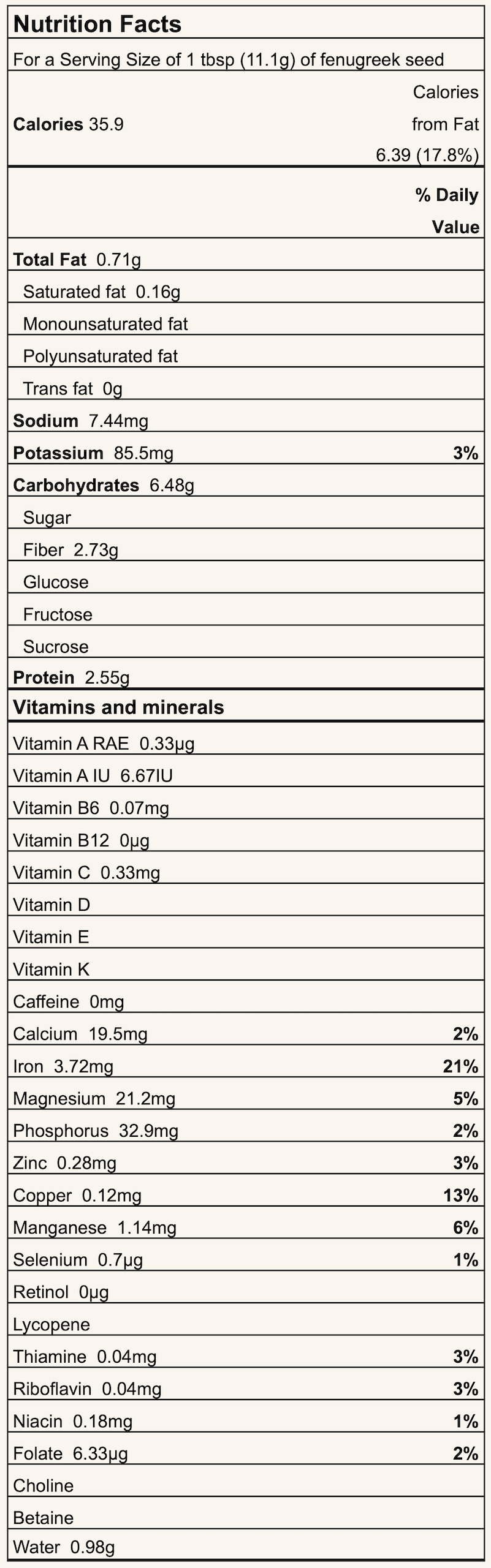
Fenugreek Seed
Fenugreek seed, or just fenugreek, is the spice produced from the seeds of Trigonella foenum-graecum, an annual in the legume family that also provides a culinary herb from its leaves.
REGION OF ORIGIN
Fenugreek most likely originated in the Middle East and the lands east toward northern Pakistan. Its exact domestication story is still uncertain, but cultivation began very early on and spread west into the Mediterranean and east into South Asia. It is one of the oldest seasoning plants, with charred seeds dated around 4000 BCE found at the site of Tell Halal, Iraq.
PART & COLOR
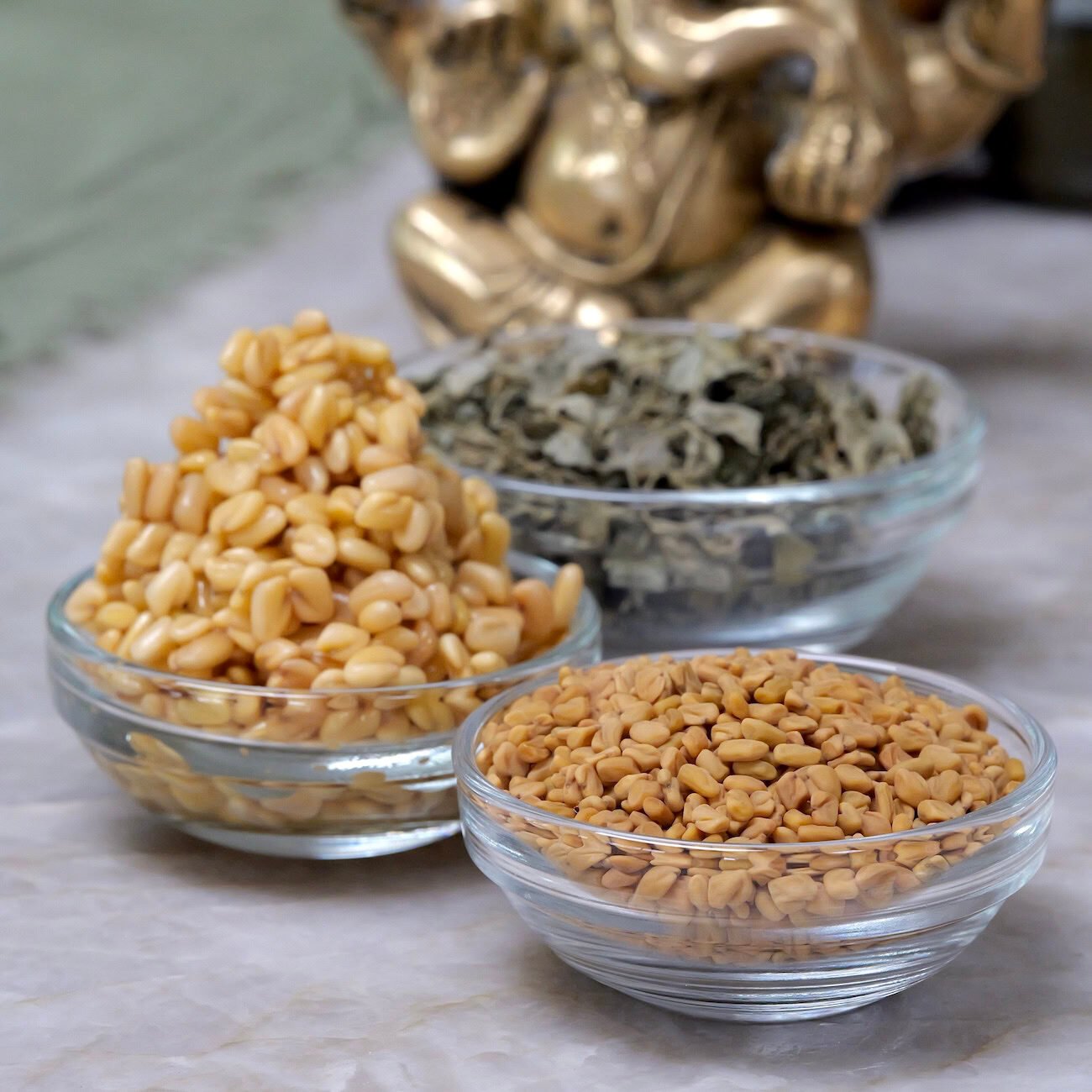
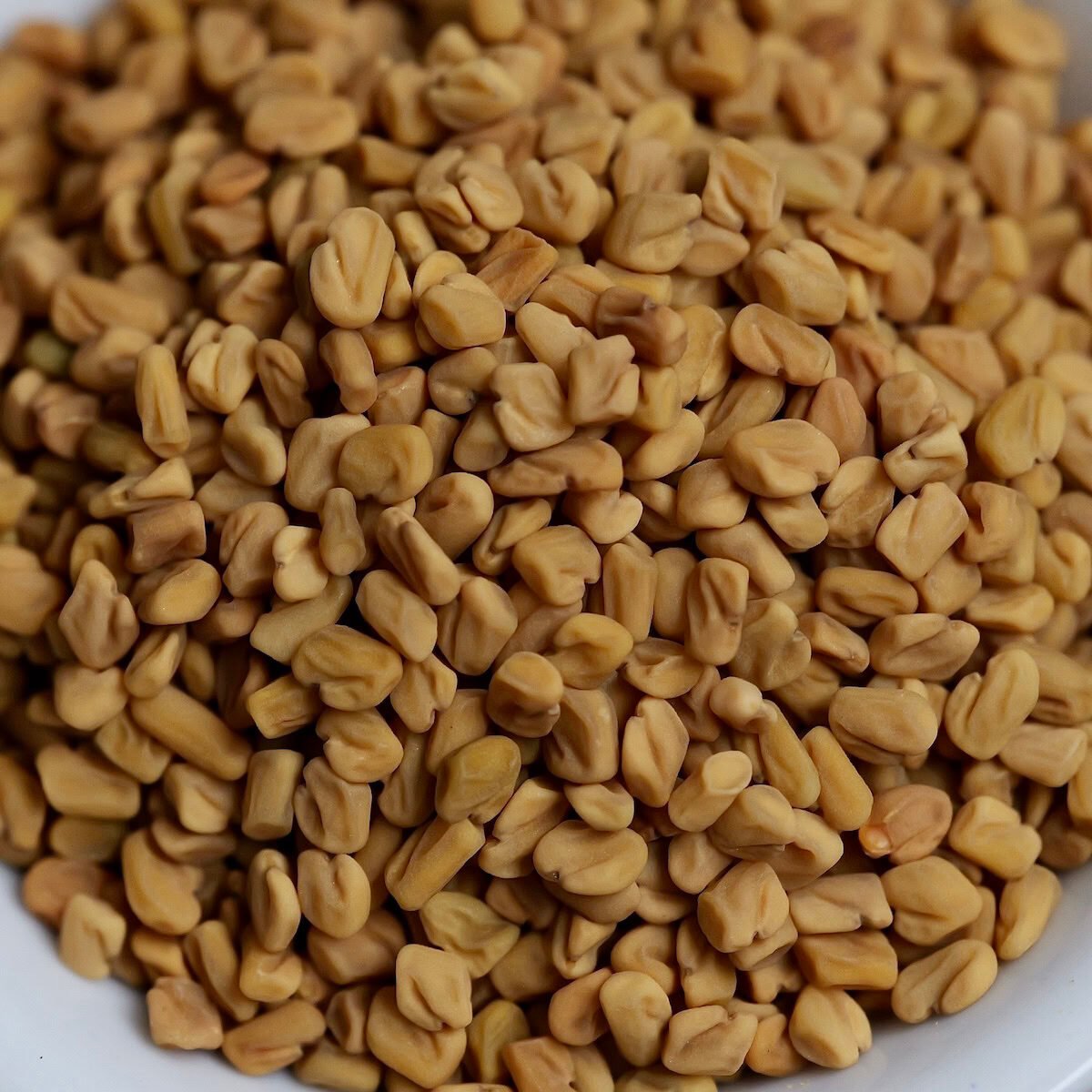
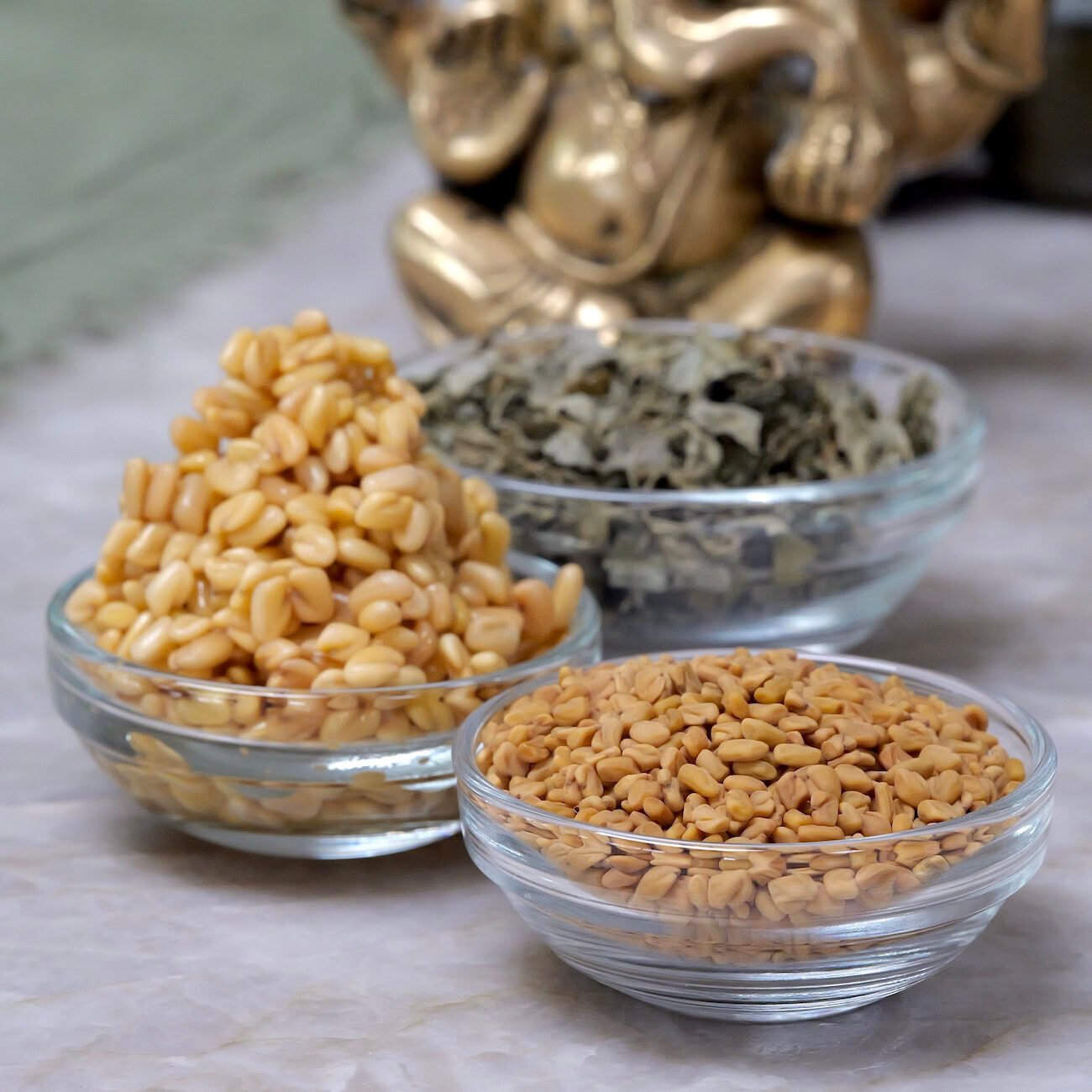
The seeds are hard and angular, resembling little pebbles. They are golden-yellow to amber, often deepening toward light brown or reddish-brown as they dry or age. Fenugreek leaves are a vibrant light green when fresh, but are often dried to make a savory herb that is a muted olive green.
PRODUCTION
Fenugreek is an annual herb that can grow in various climates. Seed pods mature within 3-5 months and contain 10-20 seeds per pod. The plant is left to flower rather than being cut back, although taking one or two cuttings beforehand is common practice. The whole plant is carefully pulled from the ground and dried in the sun so that the pods can fully dry before the seeds are threshed free.
FLAVOR & AROMA
In an almost contradictory way, fenugreek seeds smell sweet, warm, and unmistakably of maple syrup, then taste sharply bitter with a nutty, faintly celery-like edge. That maple aroma comes from sotolon, one of the world's most powerful aroma compounds, perceptible in trace amounts. The bitterness comes from an entirely separate set of compounds, which is why the two sensations never quite merge. That gap is the point, though. The sweet aroma over the savory bite is exactly what makes fenugreek so unique.
Toasting shifts the balance, mellowing the bitterness and unlocking warmer, nuttier flavors with hints of caramel sweetness. The line between toasted and burnt is unusually thin, but handled well, fenugreek delivers the savory depth most people recognize as the smell of curry powder itself.
CULINARY USES
Fenugreek is cherished in South Asian and Middle Eastern cuisine, used in small amounts and rarely alone. Whole seeds are often bloomed in hot oil and poured over dal, sambar or curd rice. Ground, they turn up in many regional spice blends like garam masala, Ethiopian berbere, and most commercial curry powders. In Türkiye, a paste of ground fenugreek, paprika, and garlic called çemen coats cured pastırma, and in Yemen ground seeds whipped with water expand into hilbeh, a frothy relish eaten with bread.
Soaking softens the seeds and tempers their bitterness. When blended, soaked fenugreek seeds create a viscous, creamy paste prized for thickening sauces. Half a teaspoon in idli or dosa batter kickstarts fermentation and helps the batter spread thin and crisp.