

Cassia Cinnamon
Cassia cinnamon refers to all types of cinnamon spices other than Ceylon cinnamon. It is mainly produced from the inner bark of three tropical evergreen Cinnamomum trees in the laurel family: Chinese (C. cassia), Vietnamese (C. loureiroi), and Indonesian (C. burmanni).
REGION OF ORIGIN
The three main cassia species come from East and Southeast Asia: Chinese cassia from southern China, Vietnamese from central and northern Vietnam, and Indonesian from western and central Indonesia, especially Sumatra and Java.
PART & COLOR
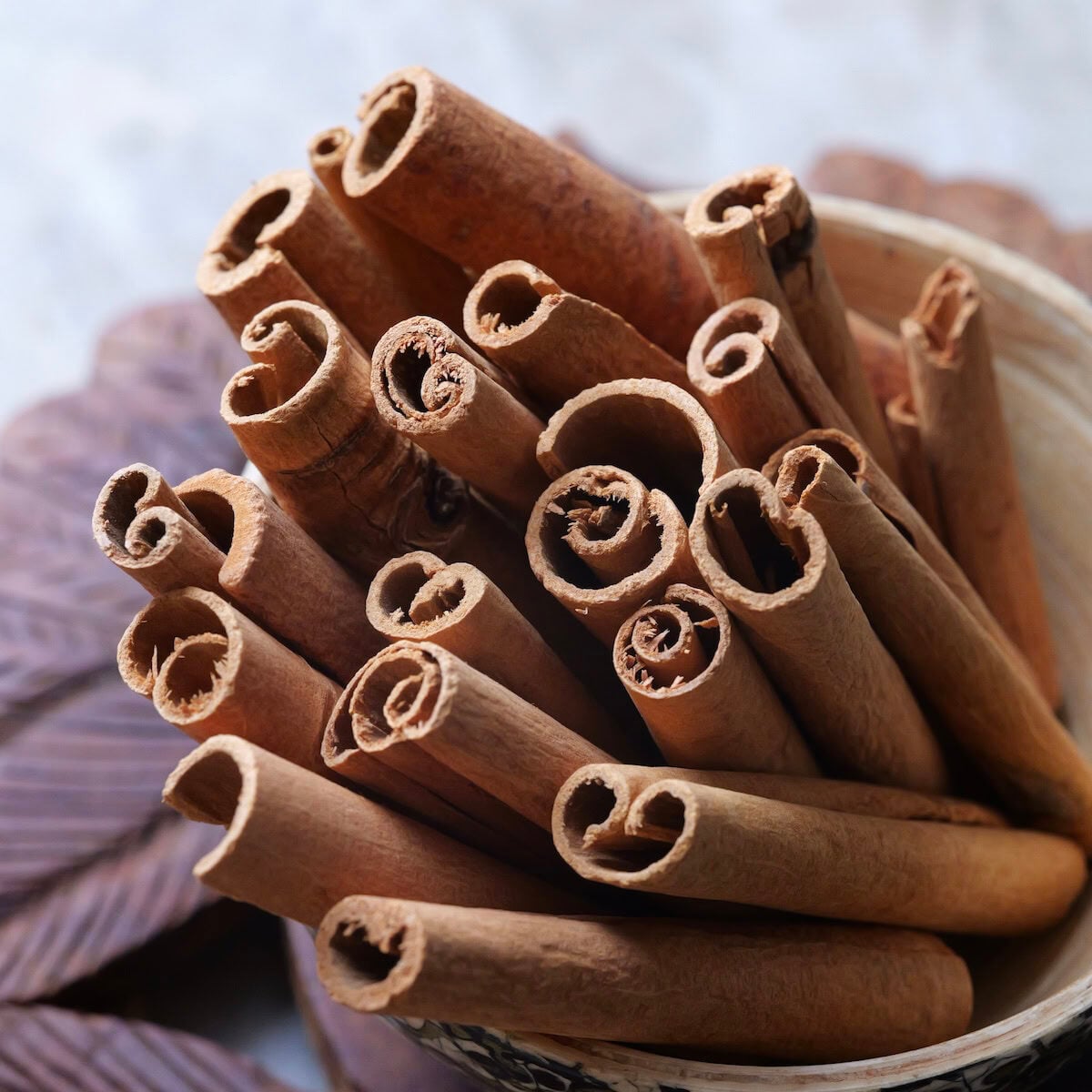
The inner bark dries into thick, hard "sticks," each a single curl, unlike the multi-layered, delicate "quills" of true cinnamon. They are also darker than Ceylon: Chinese is a reddish brown, Vietnamese is a deeper, rusty brown, and Indonesian is a greyer brown. You can also buy "cassia chips," which are broken-up sticks (below), and "cassia buds," the trees' dried, immature fruits that can be used much like cloves.
PRODUCTION
Cassia is harvested from trees mature enough to yield thick bark, which is usually around 4-7 years old. Moisture makes the bark much easier to peel, so the harvest tends to align with each region's rainy seasons. After harvest, the outer bark is scraped away, and the aromatic inner bark is peeled off and dried until it curls, hardens, and darkens.

FLAVOR & AROMA
Unlike true cinnamon’s delicate complexity, cassia delivers a powerful, almost spicy punch. With a much higher concentration of cinnamaldehyde (up to 90% of its essential oil), the flavor compound responsible for cinnamon's signature character, cassia varieties offer a more potent and lingering fragrance. It is less nuanced than Ceylon, but its boldness has merits of its own.
On the palate, cassia cinnamon's flavor mirrors its aroma, offering a robust sweetness followed by a warm, slightly bitter spiciness that sits on the tongue. The taste is bold, assertive, and almost astringent. Chinese cinnamon exhibits a strong, spicy-sweet flavor. Vietnamese cinnamon is often considered the most intense cinnamon. It's exceptionally sweet, almost candy-like. Indonesian cinnamon is known for its balance of sweetness and spice and its warm, inviting fragrance.
CULINARY USES
Cassia is a key component of the iconic Chinese five-spice powder. This aromatic blend is used to season everything from braised meats and roasted duck to stir-fried vegetables and noodles. In Vietnamese cuisine, whole cassia sticks are used to slowly infuse hearty phở broths, complementing the other herbs and spices like Thai basil, cilantro, star anise, and cloves. Indonesian cinnamon is commonly used in savory dishes like rendang, curries, and stews. In the United States, cassia is the cinnamon most used in baked goods and desserts like pies, pastries, and puddings.
Cassia's greater availability and lower cost make it a popular substitute for true cinnamon and one of the main reasons why "cinnamon" is such a beloved flavoring worldwide. Far fewer people would get to enjoy it if the world only had Ceylon. Cassia accounts for roughly 90% of all cinnamon.

