Dill Pollen
Dill pollen is the spice produced from the blossoms and attached pollen of the dill plant (Anethum graveolens), an annual herb in the parsley family.
REGION OF ORIGIN
Dill originated in the Eastern Mediterranean and the Middle East. However, dill pollen as a distinct spice gained popularity in the late 20th century from its cultivation and promotion in California, where dill thrives in the Mediterranean climate.
PART & COLOR
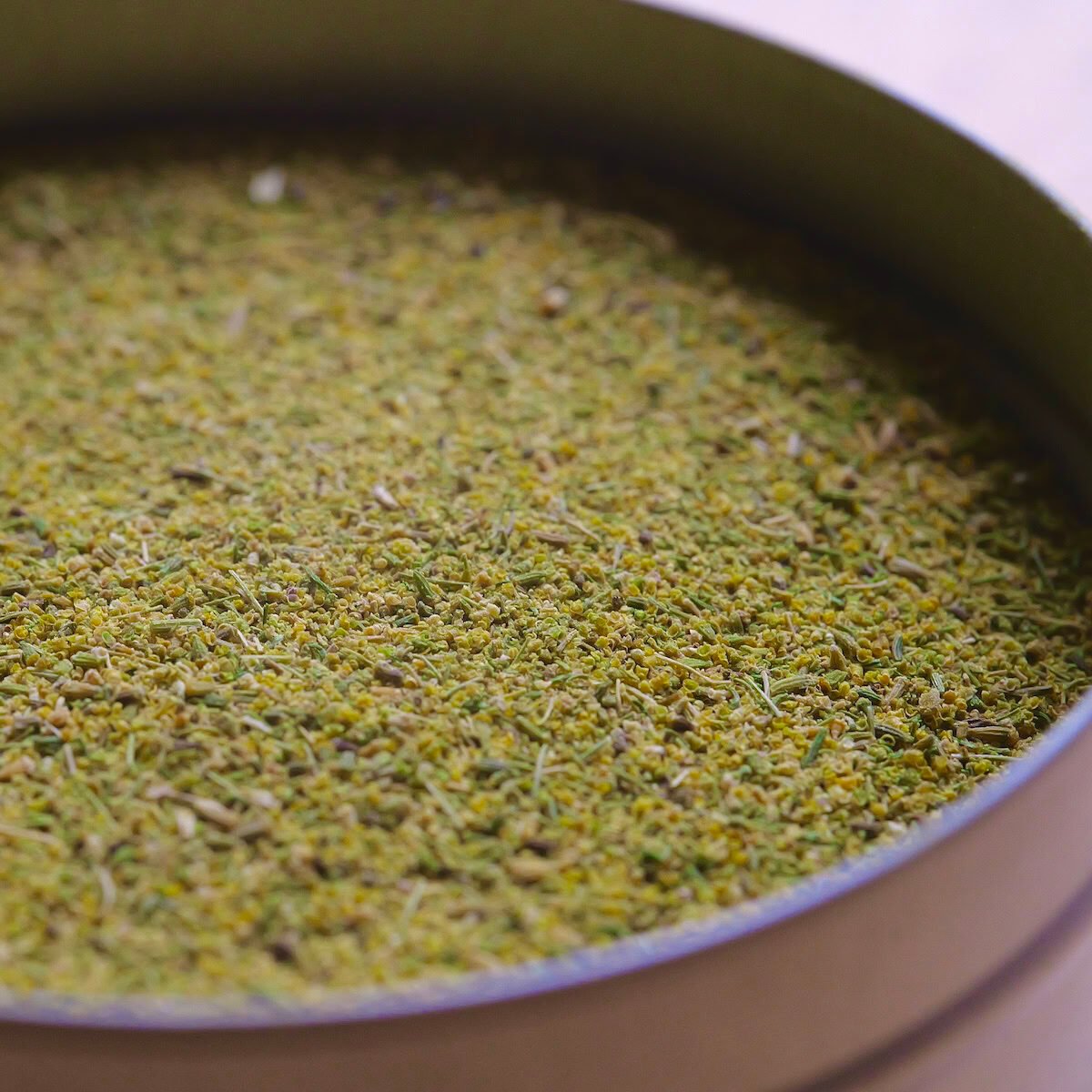
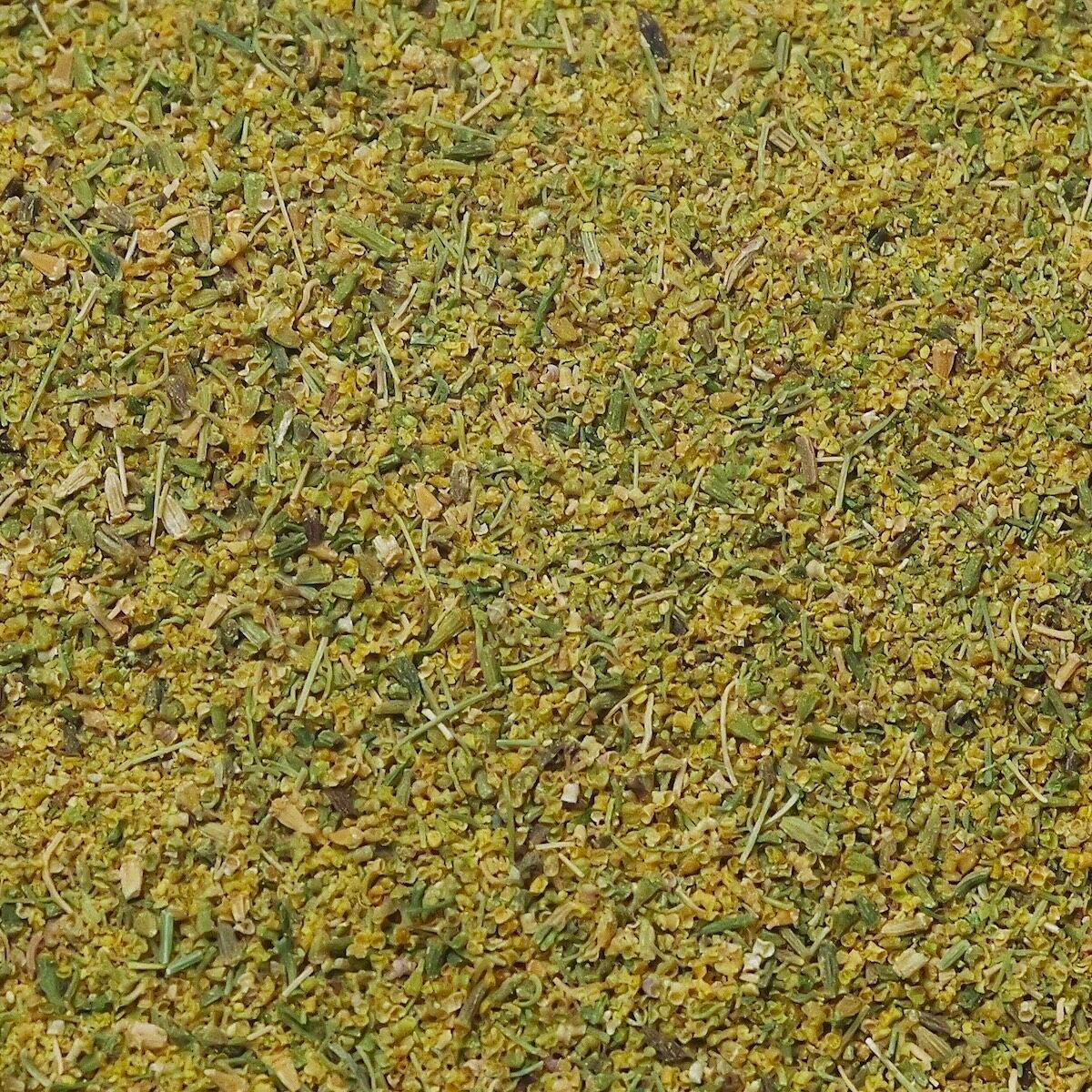
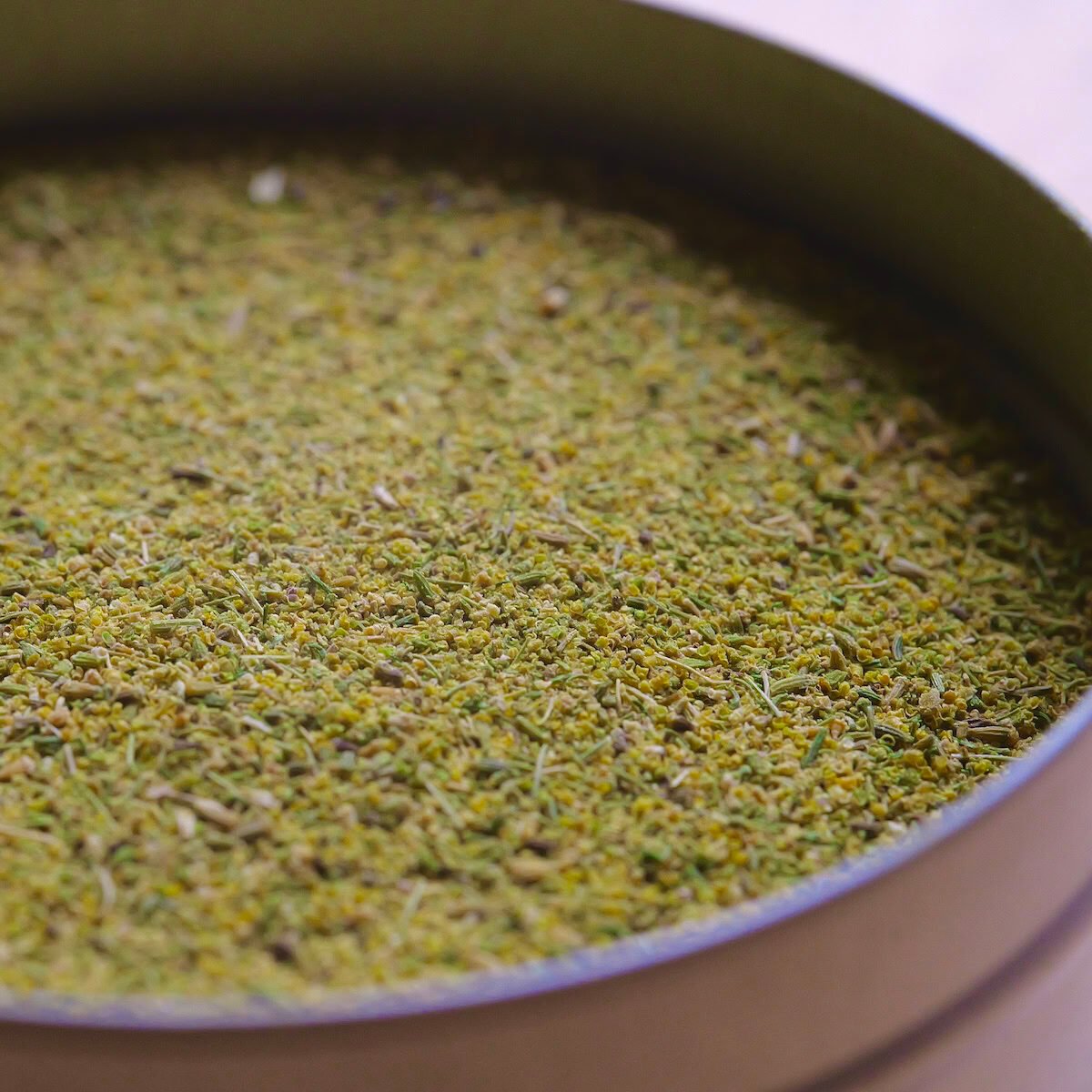
Dill pollen is powdery with a coarse, rough texture because the finished spice includes both fine pollen and small bits of dried dill blossoms. It's typically yellowish-green or a muted mustard-yellow, depending on the variety and maturity of the flowers at harvest.
PRODUCTION
Dill is a fast-growing annual herb that is sown in the spring. Pollen harvest happens during a brief seasonal window, typically in the late summer or early autumn when the flowers are in full bloom. The flowers are carefully collected by hand and then sifted with a fine mesh sieve to separate the pollen from the flower heads. It takes thousands of flowers and hours of labor to produce a usable amount, which contributes to its rarity and high cost.
FLAVOR & AROMA
Dill pollen captures the very soul of the dill plant, distilling it into a potent spice. Its aroma is a vibrant burst of fresh, herbaceous notes with a prominent anise-like sweetness mingling with citrus and honey. On the palate, it offers a blend of flavors that mirror its aroma, but with even more force. It's a powerful seasoning, heady and multi-layered.
Dill pollen seems to possess a dimension of the sublime, more so than the fresh leaves or dried fruits. It has an exquisite air about it that professional chefs and home cooks alike are turning to for a novel stroke of sophistication.
CULINARY USES
Dill pollen's herbal sweetness complements the richness of egg dishes like deviled eggs, omelets, and frittatas, as well as creamy cheeses like ricotta, labneh, and goat cheese. It can also be incorporated into bread dough, pastry fillings, and even desserts.
It pairs particularly well with citrus fruits, making it an excellent addition to lemon cakes and tarts. It can be sprinkled over grilled or roasted vegetables as well, such as asparagus, carrots, or zucchini. Perhaps its best pairing, though, is with seafood, as it elevates the natural sweetness.