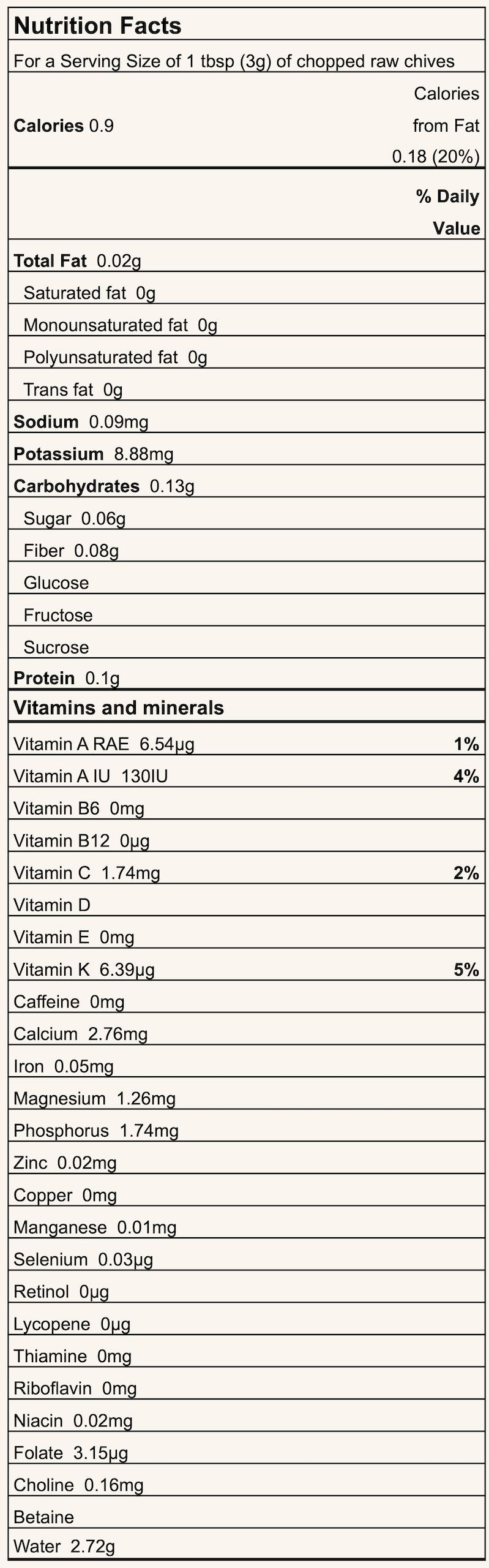
Garlic Chives
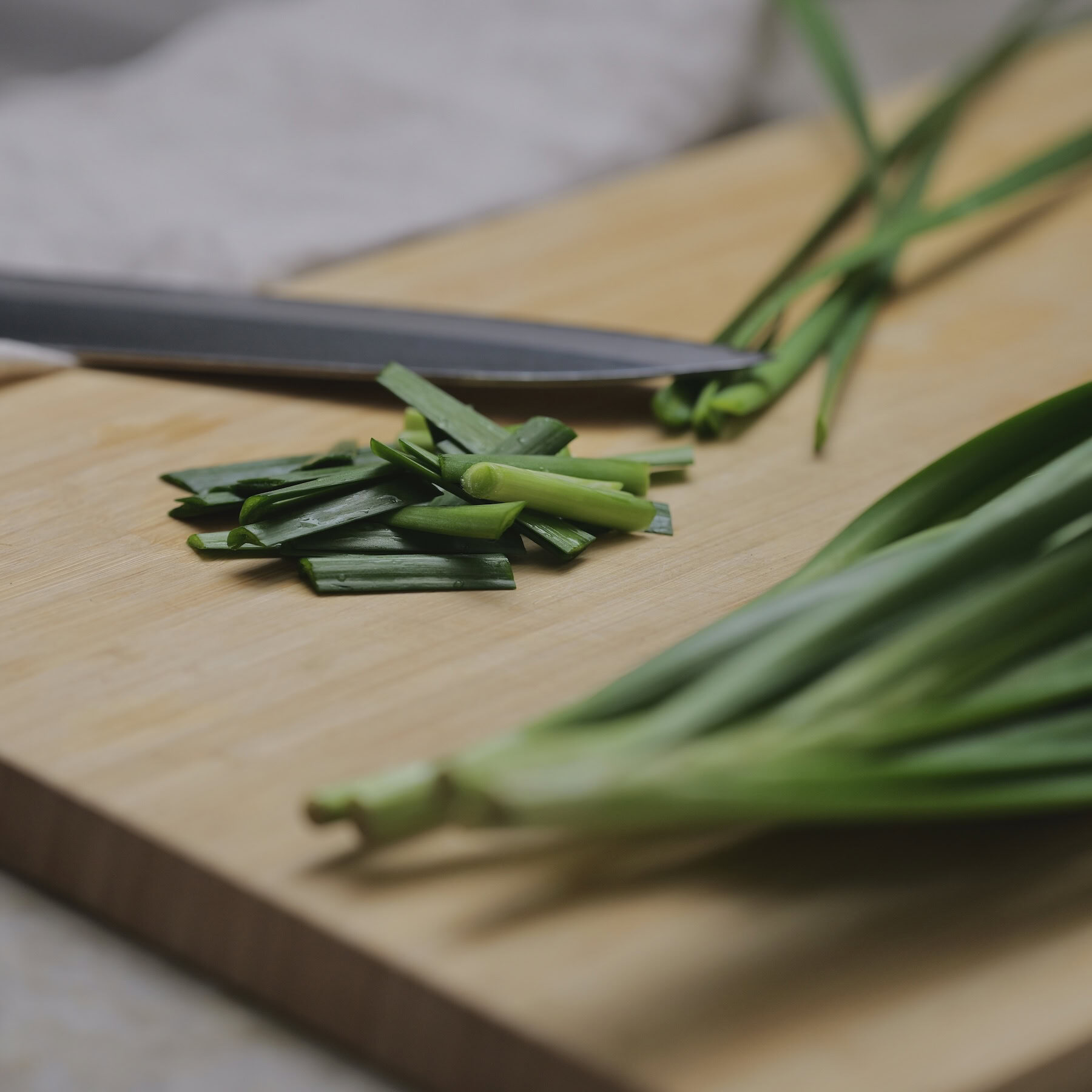
Garlic chives are the herb derived from the grass-like leaves and flowers of Allium tuberosum, a perennial in the onion family. The other main species referred to as "chives" is onion chives.
REGION OF ORIGIN
Garlic chives likely originated in a belt from the Himalayas into China. They then spread through natural dispersal as well as human cultivation and trade to Korea, Japan, and other parts of Asia.
PART & COLOR
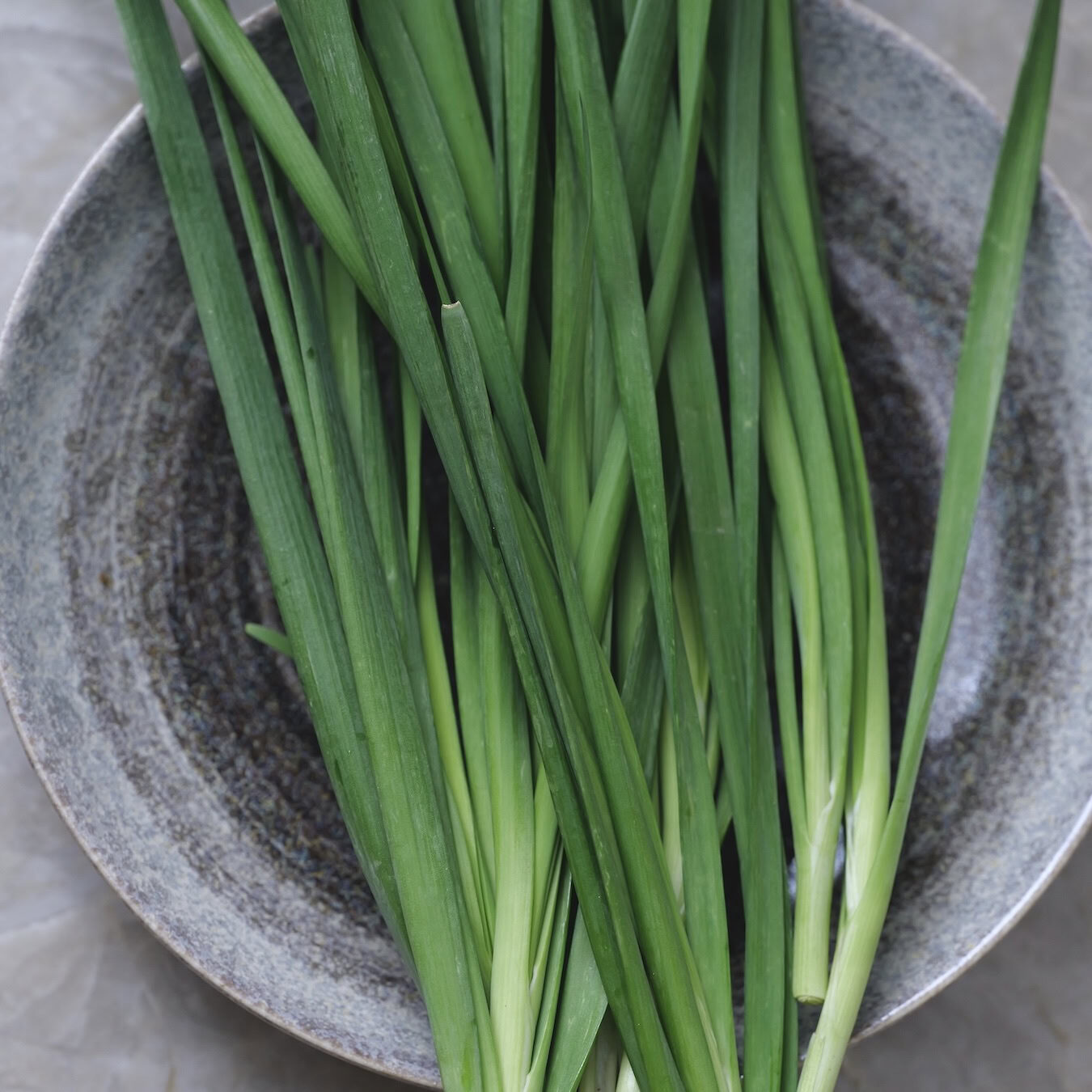
The two main species of chives (onion chives and garlic chives) can be quickly differentiated by the shape of their leaves. Onion chives are hollow and tubular, whereas garlic chives are flat and strap-like. Onion chives are a deep green, and garlic chives are a lighter, more vibrant green. Both have edible flowers. Onion chive flowers are a light pinkish purple with many small florets, and garlic chive flowers are white and shaped like a 6-pointed star.
PRODUCTION
Garlic chives are perennials that can be harvested throughout the growing season, from spring to fall. The leaves are ready to be cut when they are about 6-8 inches (15-20 cm) tall. The grass-like leaves are cut about an inch above the soil line, which encourages regrowth. For optimal flavor, they are harvested before they flower, unless the flowers are desired.
FLAVOR & AROMA
Garlic chives contain some of the same sulfur compounds as their namesake, allowing them to mimic that familiar flavor. They're milder than garlic, though, making them a great substitute when a lighter flavor is desired over the real thing.
Like garlic, the leaves' sharpness mellows when cooked, and they develop a caramelized sweetness. The flowers have a rather potent flavor that mirrors the leaves. Both can become sharper and more assertive the longer they mature.
CULINARY USES
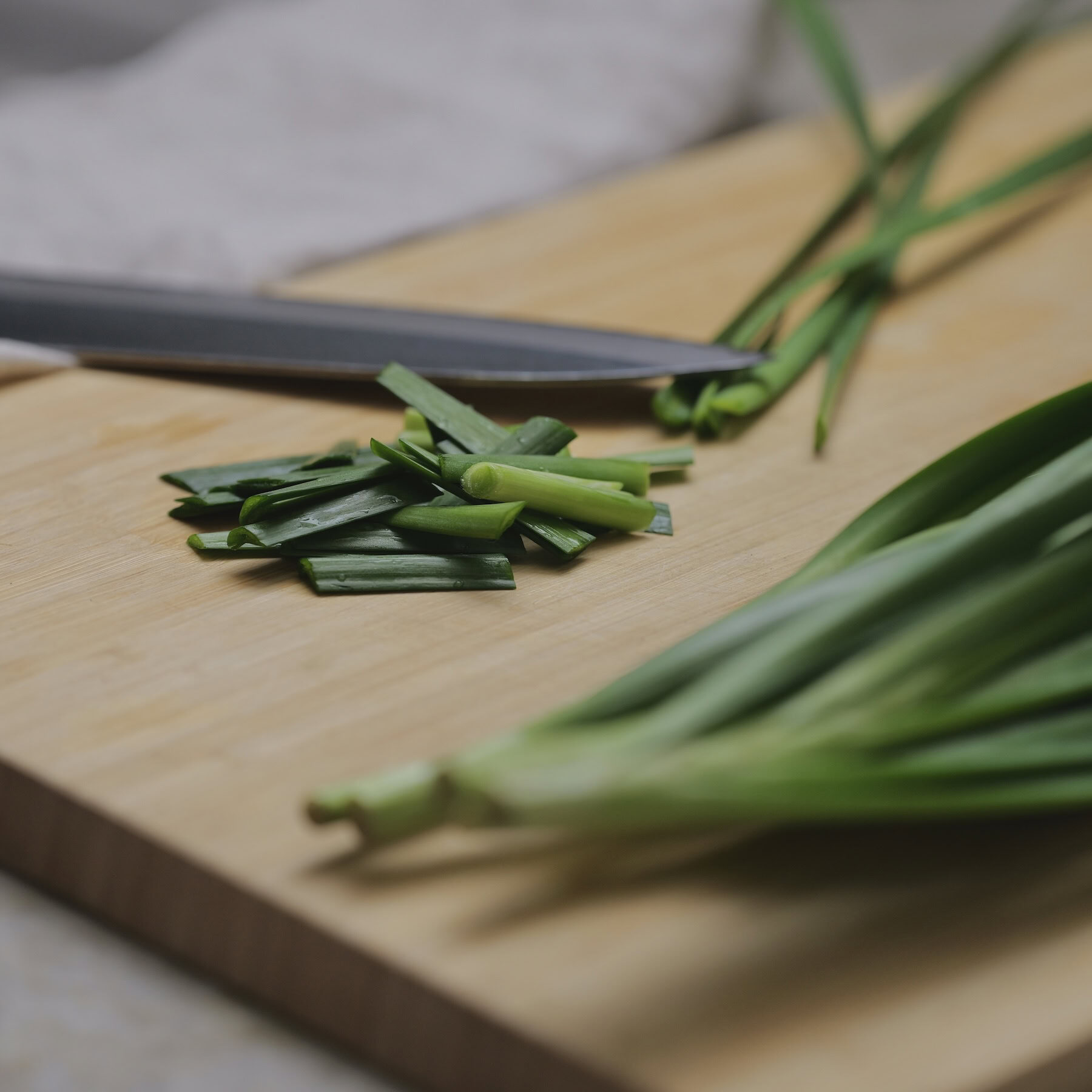
The flat, wider leaves of garlic chives, or Chinese chives, are immensely popular in Asian cuisine, frequently elevating stir-fries, dumplings, noodles, soups, and egg dishes.
They can be used fresh or frozen, although their flavor is best when fresh. Garlic chive flowers seem delicate from a taste standpoint, but they can deliver quite a kick and look good doing it. Dried chives are less common, but they can be used in a pinch when fresh leaves are hard to come by.