

Nasturtium
Nasturtium is the herb derived from the leaves, stems, and flowers of various species in the genus Tropaeolum, part of the Tropaeolaceae family. The seeds can also be used as a spice. There are approximately 90 species, but the two most widely used in cooking are Tropaeolum majus and Tropaeolum minus.
REGION OF ORIGIN
Nasturtium originated in the Andean Mountain Range, reaching across Chile, Bolivia, Peru, Ecuador, and Colombia.
PART & COLOR
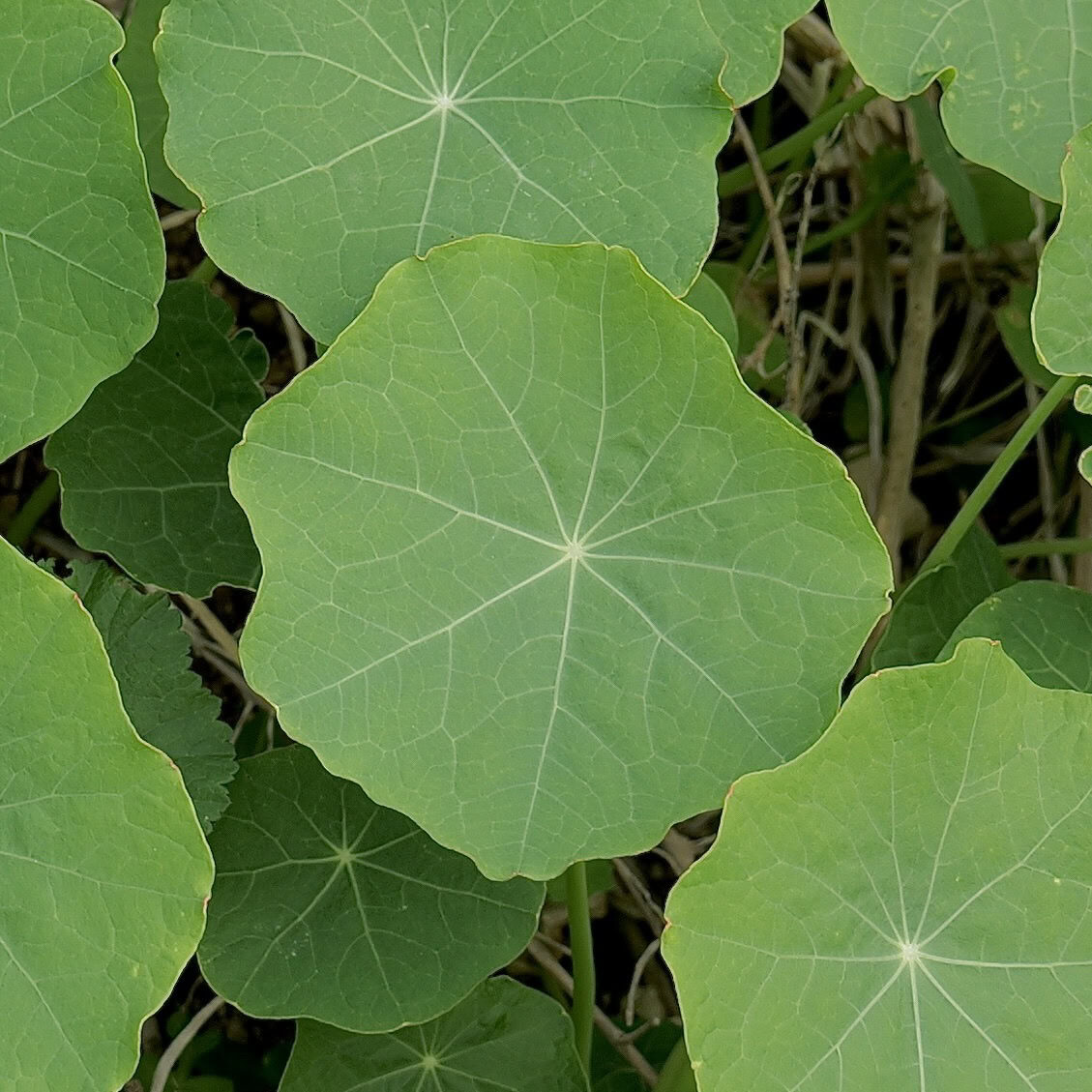
Many parts of the plant can be used. The flat, shield-like leaves are light green with a distinctive central vein system. The stems can be used as a finishing herb. The edible flowers come in many beautiful shades of yellow, orange, and red. The pale green seeds wrinkle and turn greyish brown when dried.
PRODUCTION
Nasturtiums are climbing herbs that are typically grown as annual plants in most climates. They can be harvested throughout the growing season (late spring to early autumn). The leaves can be clipped as soon as they form as their flavors are most intense when young and tender. Nasturtium flowers should be plucked in the morning when their petals are fully open. As the season progresses, the flowers fade and the seed pods form. For caper-like use, the seeds are gathered while still green and soft, but for dried seed use, they are left to mature further until they wrinkle and turn greyish brown.

FLAVOR & AROMA
CULINARY USES
Raw nasturtium leaves are great in salads, sandwiches, and pesto. They pair nicely with seafood, particularly as an edible garnish for ceviche or grilled fish. They can also be sautéed, which mellows their peppery quality, making them earthier. The flowers add an attractive and flavorful twist to salads, soups, and desserts. They can also be used to infuse vinegar, butter, and honey with lovely flavors and colors, or blended into a freshly made oil for immediate use.
The seed pods can be eaten raw and are best when young, light green, and soft. They are often pickled like capers to uplift sauces, dressings, marinades, and charcuterie boards.
