Sumac
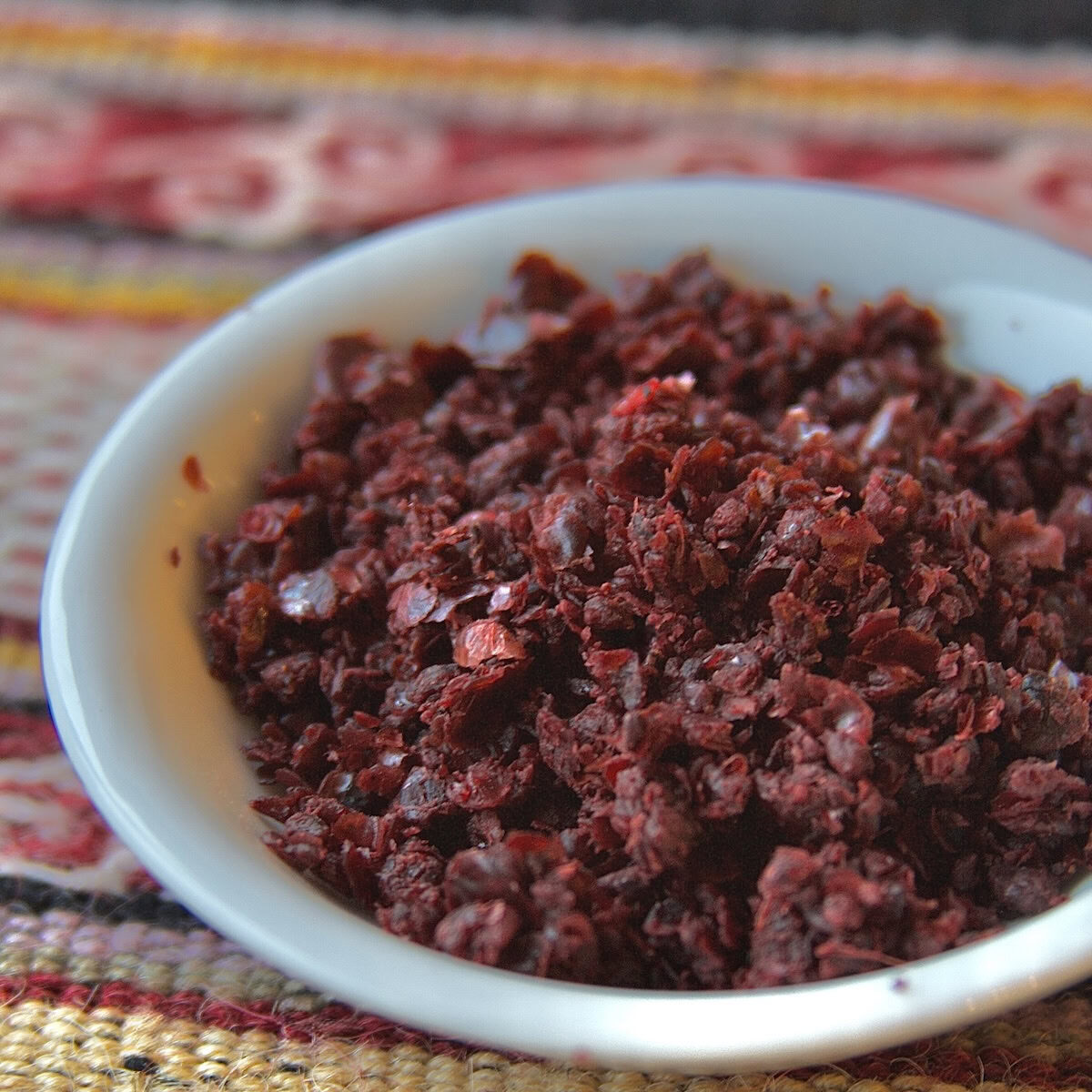
Sumac is the spice produced from the fruits of Rhus coriaria, a deciduous shrub or small tree in the cashew family.
REGION OF ORIGIN
Rhus coriaria is native to a broad arc spanning the Mediterranean, North Africa, and the Middle East. This is the main plant used to make the sumac spice globally. However, mainland North America has its own edible sumac species (such as Rhus glabra, Rhus typhina, and Rhus trilobata) that have long been wild-harvested by Indigenous peoples.
PART & COLOR
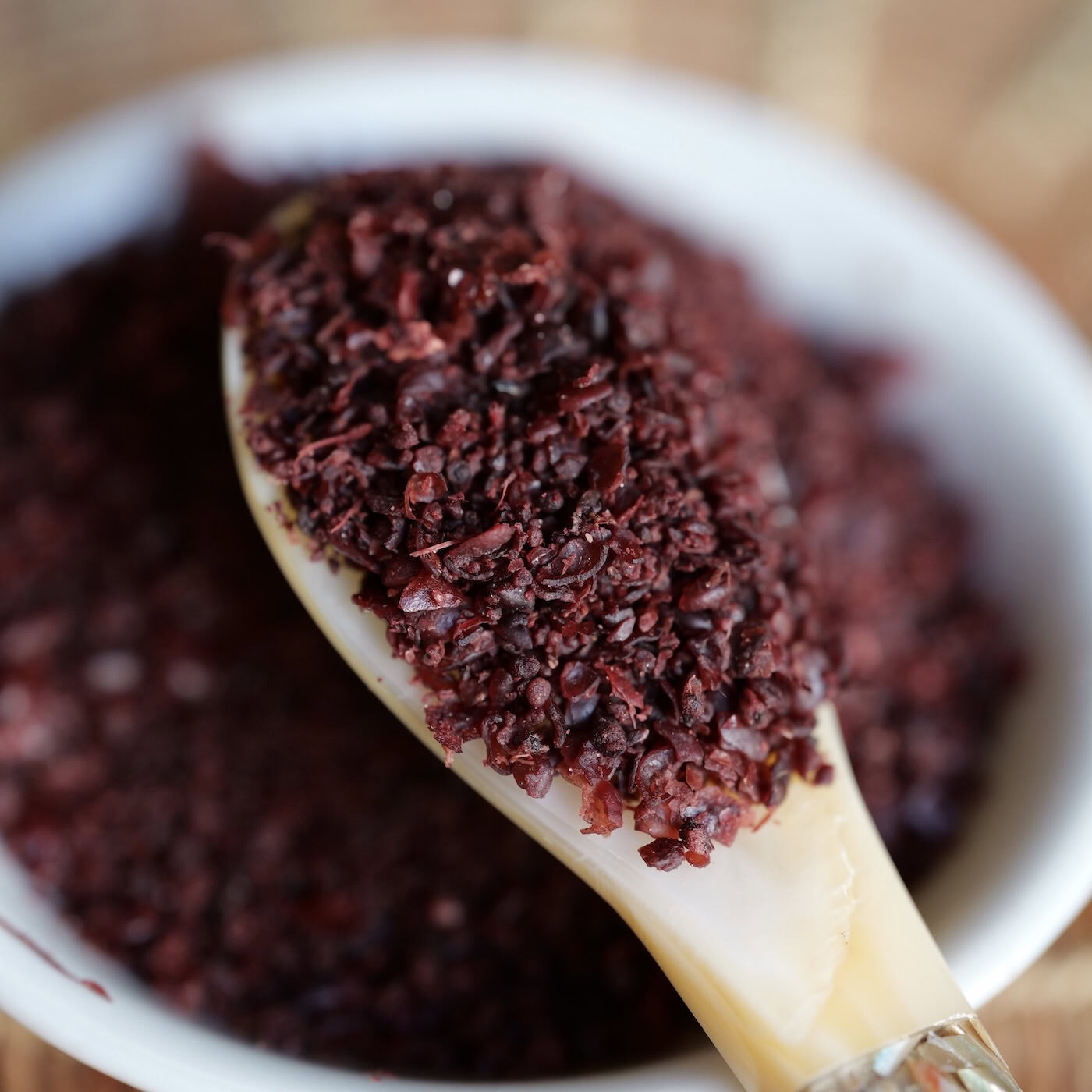
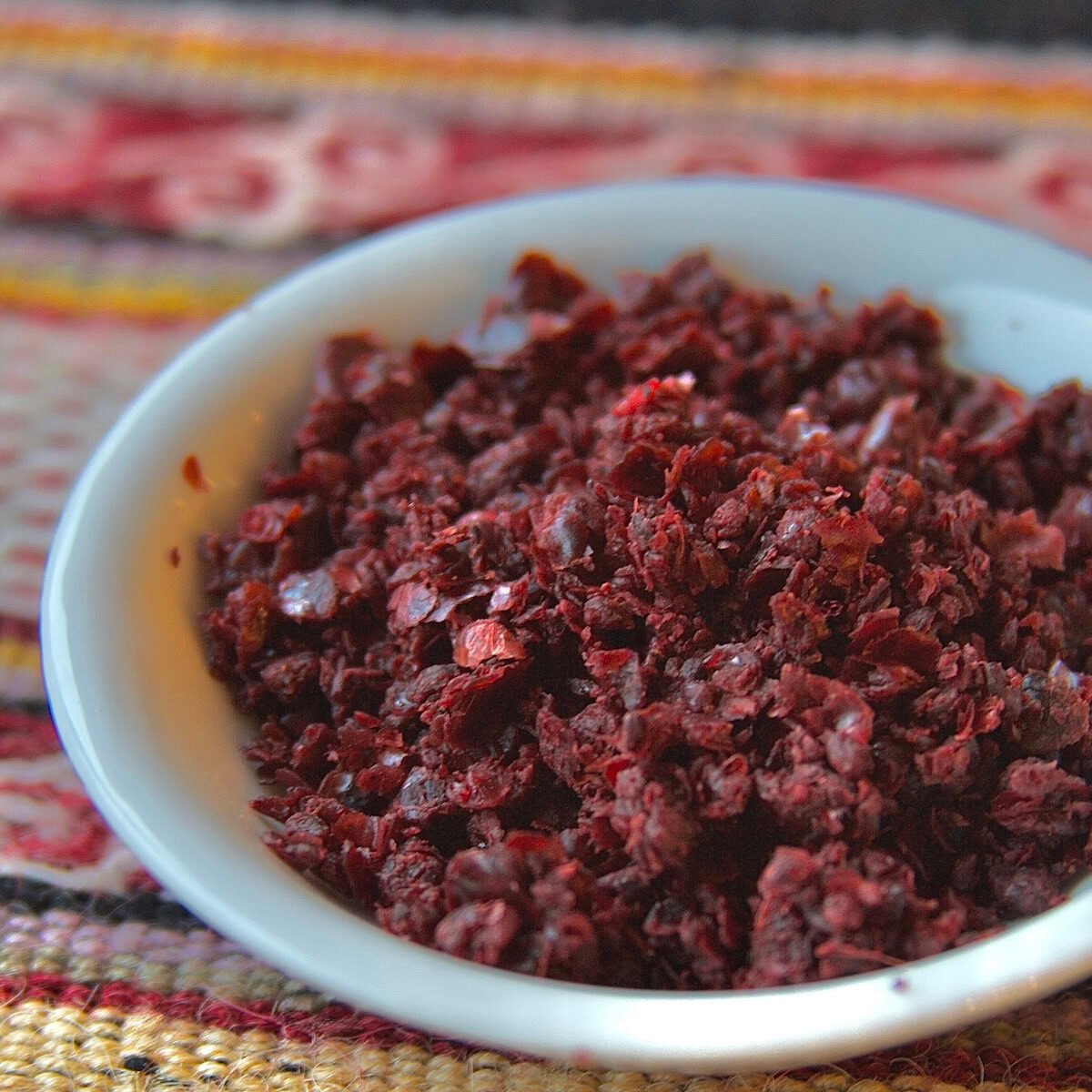
Sumac "berries" are actually small fruits called drupes. They are a vibrant red to deep crimson on the plant, but turn a rich burgundy to reddish-purple when dried. Properly prepared sumac often has a coarse and slightly oily texture. A dull, overly dry powder indicates an older or lower-quality spice.
PRODUCTION
Rhus coriaria flowers from late spring into summer, and its fruits ripen from late summer to early fall. They’re ready for harvest when fully ripe and deep red, signaling a high concentration of acidity and essential oils. Farmers cut the dense fruit clusters off the branches by hand. The fruits are then carefully dried: just enough to be ground without losing their natural oils.
FLAVOR & AROMA
Sumac is a singular spice. The initial impression is an inviting, lively scent, but the real experience happens on the tongue. It’s an explosion of tart, lemony goodness with notes of fresh berries, cherries, and grapefruit zest. Its tartness cannot be overstated, and that’s what makes it so delicious. At first, it’s exciting and bold, then its sharp acidity tapers off with a crisp and refreshing aftertaste.
This all comes from a rich composition of acids and tannins, which allow sumac to impart tang without the moisture of citrus juice, a valuable trait.
CULINARY USES
In Middle Eastern, North African, and Mediterranean cuisines, sumac seasons grilled chicken, lamb, beef, fish, and vegetables. It’s a classic ingredient in many za’atar blends, which are dusted over flatbreads and roasted meats. It’s excellent in marinades too because its natural acidity helps tenderize the meat, balance the richness, and elevate the savory notes.
Sumac pairs well with creaminess and is often sprinkled over hummus and yogurt dips. And it's a great spice for salads. Mix it with onions, tomatoes, potatoes, and cucumbers.