Poppy Seed
Poppy seed is the spice produced from the seeds of the opium poppy (Papaver somniferum), an annual herb in the Papaveraceae family.
REGION OF ORIGIN
The opium poppy originated in the Western Mediterranean. The earliest dated cultivated seeds come from ~5500 BCE at La Marmotta in central Italy, making the poppy the only major plant domesticated in Europe during the Neolithic.
PART & COLOR
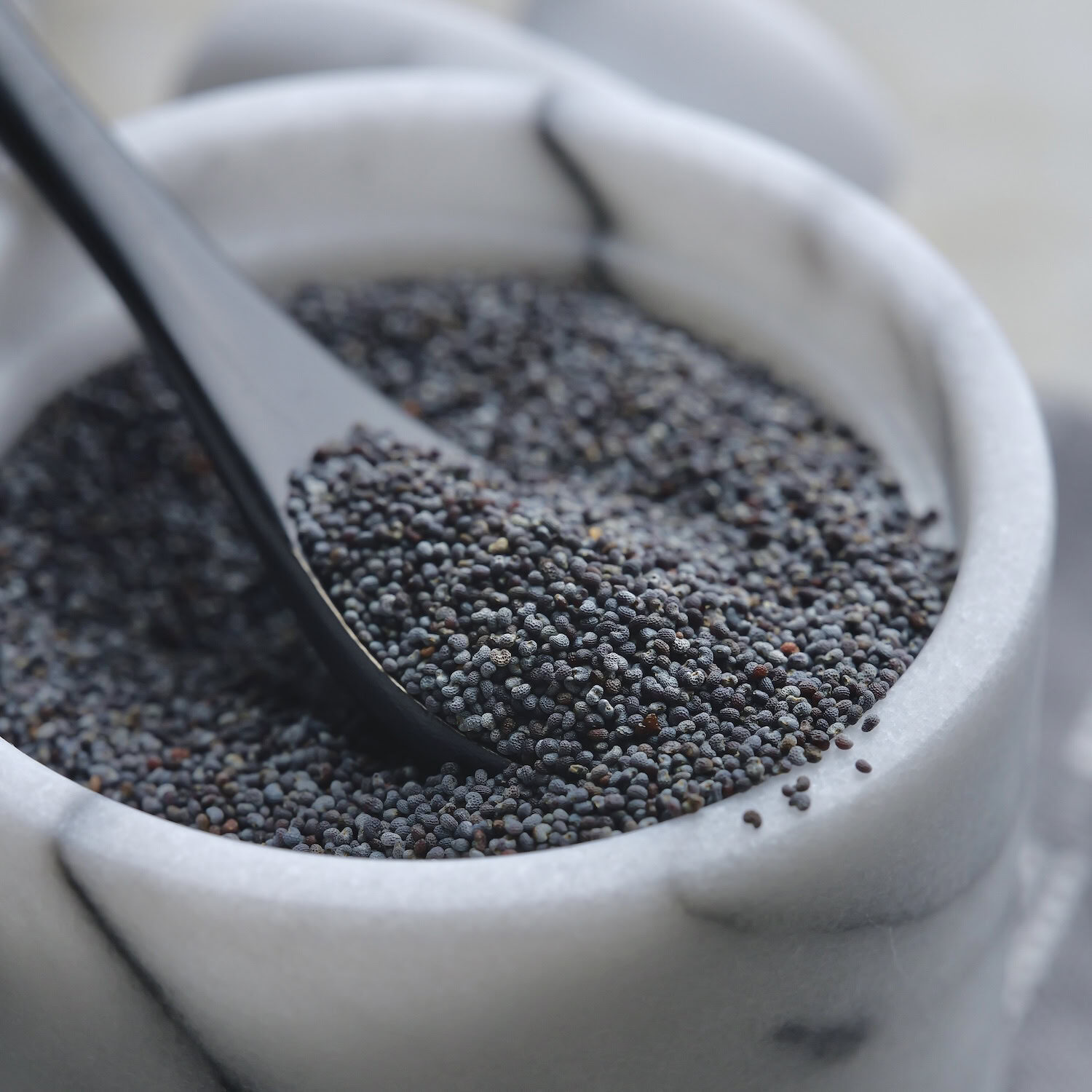
Poppy seeds are tiny and kidney-shaped with a rough, honeycomb-like surface. They are most often blue-grey to blue-black, though some varieties are brown, cream, or white.
PRODUCTION
Despite its delicate appearance, the opium poppy is surprisingly resilient. Depending on the climate, it's either sown in the fall or early spring. Poppy seed capsules, or "pods," develop after the flowers bloom. Once the petals have fallen, the pods start to mature, resembling miniature vases. When they turn pale and start to rattle, the seeds are ready for harvest. Timing is critical as the pods will release their seeds if left on the plant. The dried pods are then shaken or opened to collect the tiny seeds. This must be done with extreme care to avoid scattering them everywhere.
FLAVOR & AROMA
Poppy seeds are defined by delicate almond and walnut notes and a hint of earthy bitterness. When toasted or baked, the nuttiness deepens, and they become a little sweet.
When added whole to a dish, the seeds offer a nice crunch that enhances the texture of the other ingredients. When ground, they become creamier, almost buttery. This allows them to blend seamlessly into sauces, fillings, spreads, and dips with a richer flavor than when whole.
CULINARY USES
Poppy seeds are perhaps best known for lying on top of pastries. From bagels and muffins to strudels and cakes, baked goods are their wheelhouse. The textural contrast and visual appeal are always welcome. But they can do more.
Toss them over salads and roasted veggies. Sprinkle them over freshly cut fruits like oranges, berries, kiwis, and grapefruit. Cold-pressed poppy-seed oil can also be drizzled over cold dishes or mixed into dressings.