

How to Use Galangal
The Spice of Life
Pungent · Citrusy · Peppery · Medicinal
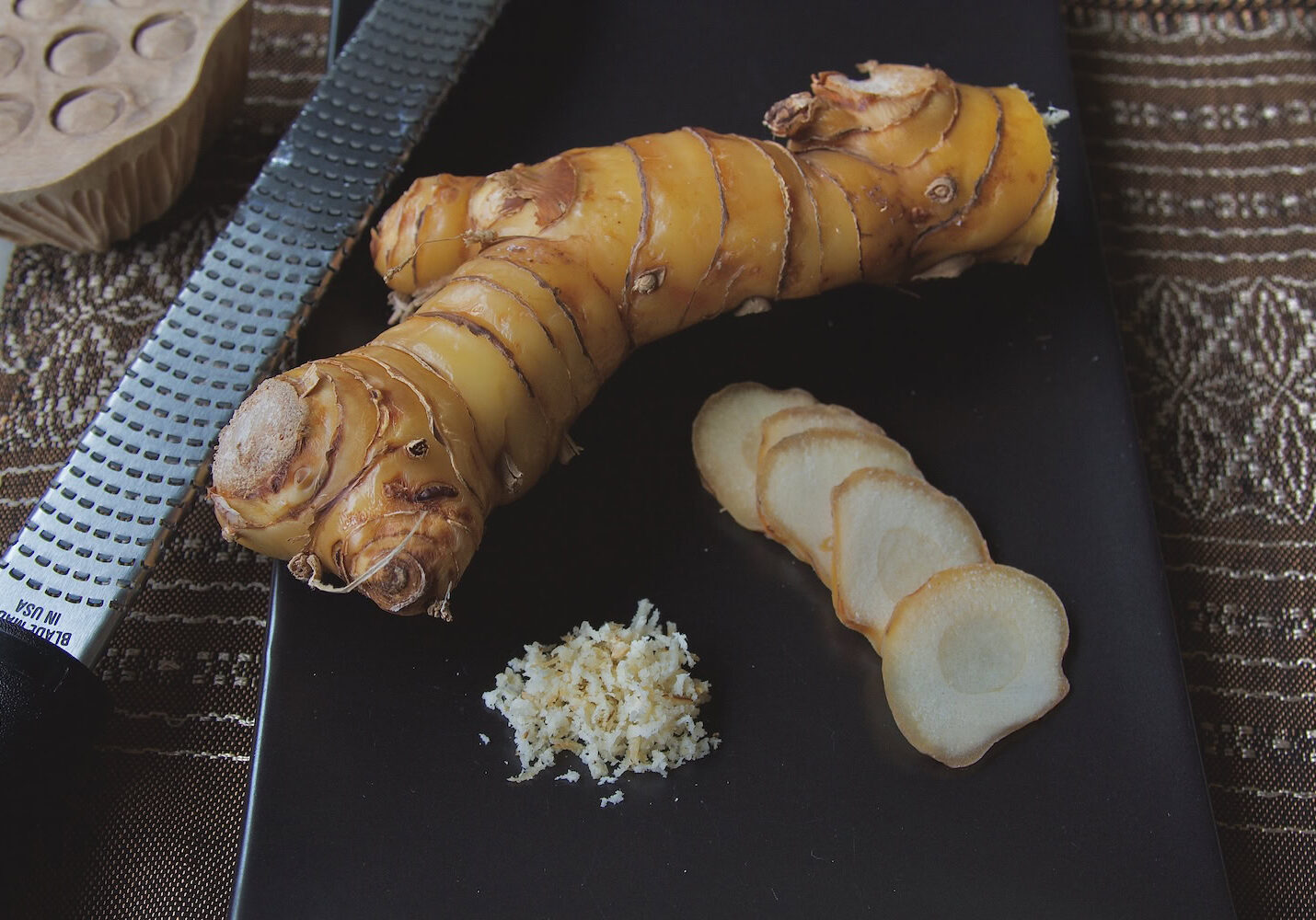
FORMS
- Fresh galangal is sold in knobs that resemble ginger but are denser and thicker. They should look plump and clean without much dirt or debris. This form will always be much more floral and bright than the dried spice, so when you want lift and clarity to cut through rich, fatty dishes, choose fresh. This also gives you more preparation options: you can slice it, grate it, or mash it into a paste.
- Dried galangal chips and powders are common in Indonesian and Middle Eastern spice blends. The powdered form can be convenient and works best in soups, stews, marinades, and dry rubs, where it can diffuse evenly.
STORAGE
- Fresh galangal keeps best when it's protected from drying out. Wrap whole rhizomes in a slightly damp towel and refrigerate in an airtight container for about 1–2 weeks. In humid climates, uncut galangal can also be kept in a cool, dark pantry for up to a week, much like ginger. For storage up to 3 months, whole rhizomes can be frozen, though the texture will soften. Sliced galangal freezes more reliably and is easier to use immediately after taking it out.
- Dried galangal chips will last for up to 2 years and powders will last about a year if both are kept in a cool, dry, dark place. Like most dried spices, they will gradually lose their key notes as time passes.
PREPARATION
- Slicing: Because the rhizome flesh is woody and fibrous, galangal is usually sliced into thin coins. It can be significantly tougher than ginger, so a heavy knife or cleaver is usually needed to cut it, and it helps to scrape off the skin first. Fresh slices can be simmered whole in soups or stews, imparting their intense flavor before being removed, since the toughness makes them unpleasant to chew.
- Grating: Galangal does not juice well like ginger, and grating can be impractical if the variety is too hard. However, rhizomes can usually be grated with a sharp microplane, which creates fluffy shreds that melt well into your other ingredients.
- Making Pastes: You can also soften its fibrous flesh by pounding it in a large stone mortar and pestle. When preparing curry pastes, galangal is often combined with garlic, shallots, lemongrass, and chilis to give them much more character.
- Soaking: Dried galangal chips only (never fresh) should be rinsed briefly, then soaked in hot water for 20–30 minutes until pliable. Soaking softens the dense, dehydrated fibers so they can be blended into a paste or infused into stocks and broths.
COOKING
- How Much to Use: Galangal is sharper and more peppery and piney than ginger. Its resinous citrus and camphor notes come from its volatile oils, but its clean, cutting heat is driven by phenolic compounds that hold steady under heat. This is why galangal will dominate a dish if used without restraint. Cooking doesn't really mellow it.
- Simmering: For this same reason, long simmering helps develop galangal's complex flavors without the risk of losing pungency.
- Blooming: You can bloom chopped or crushed galangal gently in oil or coconut milk before adding to liquid-based dishes. This unlocks even more aromatic oils, just avoid high heat as it burns quickly.
- Pairing: Unlike ginger, galangal is rarely used in sweet cooking. Its medicinal flavor is more at home with lemongrass, kaffir lime, chilies, and turmeric. In Southeast Asian cuisines, especially Thai, Indonesian, and Malaysian, galangal is essential for curries and spice pastes, hot and sour soups, and broths for tom yum and rendang. Its aromatic, tangy top notes help neutralize coconut milk, fatty meats, and fishy flavors with ease.
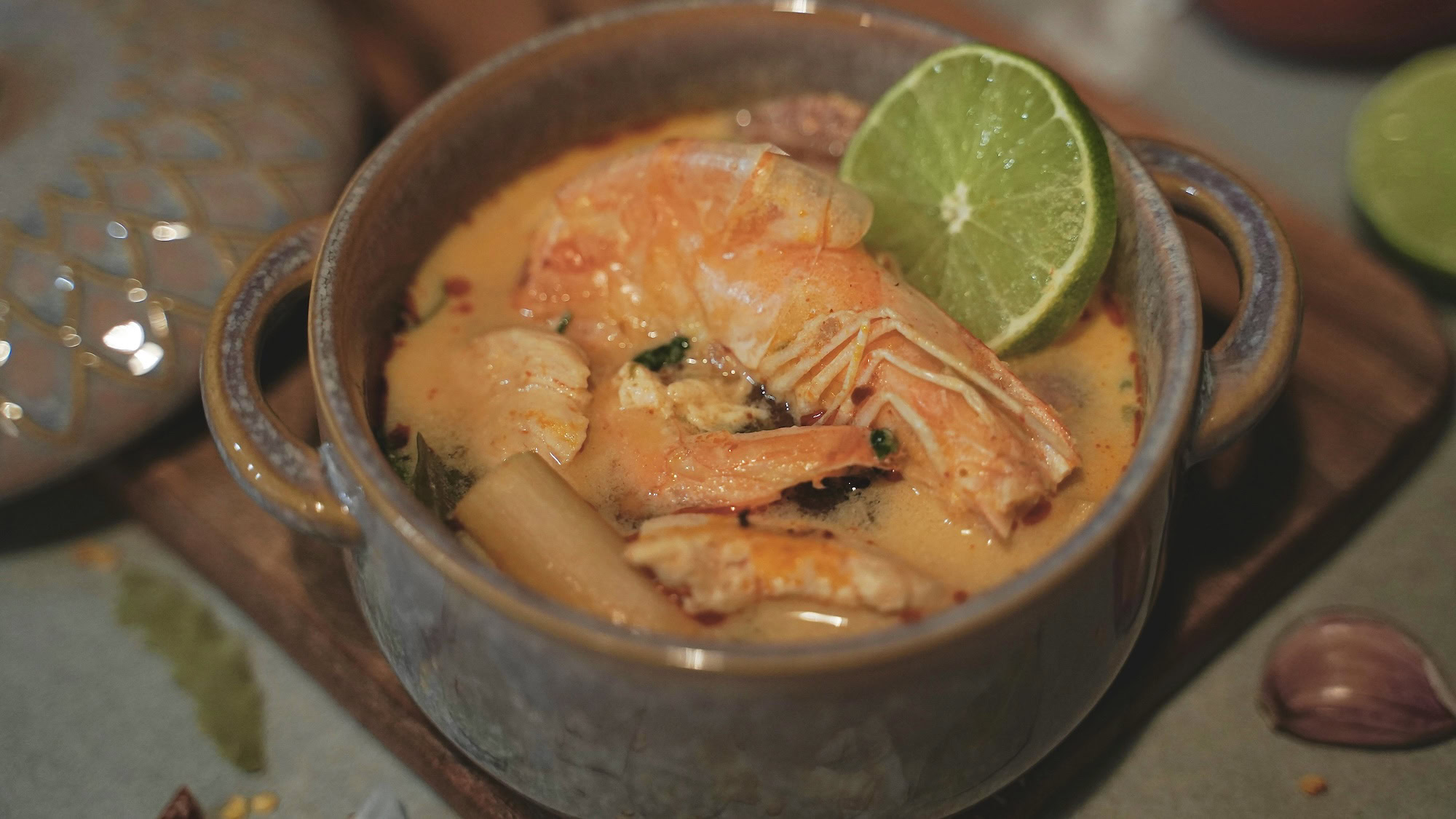
Tom Yum Soup