

How to Use Garlic
The Magic Bulb
Pungent · Savory · Sulfurous · Sweet

Garlic is punchy and irresistible, a foundational ingredient. Raw, roasted, sautéed, dried, powdered, or fermented, its character transforms with every preparation, allowing for boundless creativity.
FORMS
- Fresh: This is the most versatile and expressive form. Raw cloves have a sharp, sulfurous heat, but gentle cooking makes them nutty and mellow. If roasted long enough, they turn into a buttery, caramelized paste. And since cloves can be sliced, minced, crushed, or kept whole, they give you total control over flavor, intensity, and texture.
- Dried: Dried garlic comes in various forms, all of which offer concentrated flavor without the sharpness of raw cloves. Garlic flakes rehydrate nicely in soups and stews (pictured below). Granulated garlic is great for blends, rubs, sauces, dressings, and marinades. Garlic powder is useful when you need to quickly give a dish a savory baseline. Keep in mind, though, that all dried forms burn faster than fresh and become bitter when they do, so use low heat when cooking with them and never toast them dry.
- Garlic Confit: When you want garlic’s full richness without the harsh bite, simply simmer peeled cloves in enough oil to cover them, keeping the heat low so they never brown. 45 minutes later, you'll have garlic confit: soft, sweet, and buttery cloves that you can spread on bread or melt into sauces and soups.
- Garlic Oil: You naturally get infused oil from making garlic confit, but there's a faster option you can learn about in the Preparation section below. Garlic oil is ideal for dressings, sautéing, stir-fries, or finishing dishes. It allows for even distribution and eliminates the risk of bitterness that comes with overcooking raw cloves.
- Pickled Garlic: Preserving cloves in a vinegar-based brine replaces their raw sharpness with a tangy acidity. The cloves stay crisp, which is great for salads, antipasti, and sandwiches. Pickled garlic has a gentler aroma and a pleasantly sour finish. It’s also a smart way to extend garlic’s shelf life without losing its character. Brined cloves stay firm, flavorful, and ready to chop, mince, or use whole.
- Black Garlic: This is fermented, slow-aged garlic with a soft, jelly-like texture and a syrupy sweetness akin to tamarind or balsamic vinegar. Its umami depth makes it ideal for glazes, vinaigrettes, broths, and any dish that would benefit from richer undertones.
STORAGE
- Fresh: Store whole bulbs in a cool, dark, well-ventilated place, like a pantry, cupboard, or basket on the counter away from sunlight. They keep for several weeks without refrigeration. Discard them if they become soft, wet, or moldy. Also, bitter compounds concentrate in the sprouts within the cloves, so if you see any, split open the clove and cut them out. Peeled cloves should be refrigerated airtight and used within 2 weeks since they rapidly lose aroma.
- Dried: Keep all forms of dried garlic (flakes, granules, powders) airtight, cool, dry, and dark for 6-12 months. High-quality dried garlic products should be cream-colored, not bright white, as that often means skins and root parts were added in as filler.
- Garlic Confit: Keep garlic confit fully submerged in its oil and refrigerate immediately. It must stay cold to prevent botulism, a rare but serious illness caused by bacteria that grow when low-acid foods are stored in oil. Never use it past a week at the absolute most. If you want to store garlic confit longer, you can freeze it in small amounts for up to 3 months, and it will still retain its soft, buttery texture.
- Garlic Oil: Store homemade garlic oil in an airtight jar in the refrigerator, never at room temperature. It's critical to strain out all remaining garlic pieces so it's just a clean, clear oil. For the same reasons as garlic confit, use it all within 4 days or discard. Store-bought oils are much more shelf-stable.
- Pickled Garlic: Store pickled garlic in its brine in an airtight jar in the refrigerator, where it will keep for several months. The vinegar’s acidity prevents harmful bacterial growth, but only as long as the cloves remain fully submerged, so top it off with extra brine if needed. Avoid using wet utensils when dipping into the jar to preserve both flavor and shelf life. If the brine becomes cloudy or fizzy, discard it.
- Black Garlic: Store whole black garlic bulbs or peeled cloves in an airtight container in the refrigerator will keep them fresh for up to a month. You can also freeze them and they'll thaw without losing their chewiness. Always keep the container sealed tightly, though, as its high moisture content makes it prone to drying out if left exposed.
PREPARATION
- Extracting the Cloves: To remove garlic from its papery skin, first break the bulb by hand and pull off the cloves you need. The quickest way to peel each clove is to place it under the flat of a knife and give it a firm press; the skin cracks and slips off. If you need fully intact cloves, trim the root end first and peel by hand. Old or stubborn cloves can be loosened by microwaving for 5 seconds. For large batches, shaking the cloves vigorously between two bowls or in a pot will knock most of the skins free.
- Cutting: The way garlic is cut determines the intensity of its flavor. Slicing produces a gentler, nuttier taste, while mincing or puréeing triggers the maximum release of allicin, the compound responsible for the spice's pungency. Waiting a minute after mincing or smashing allows allicin to fully develop. The rule is more damage equals more intensity, so from strongest to mildest: paste > minced > sliced > whole. Undamaged whole cloves never develop allicin’s sharpness.
- Rehydrating Dried Garlic: You can soak dehydrated garlic flakes and chunks in equal parts water (10–15 minutes) to bring them back to life.
- Making Garlic Oil: Start by covering garlic slices with enough cold oil to submerge them. Bring it up slowly over medium-low heat. The moment the garlic goes pale gold (not brown), the flavor is extracted. This should only take about 2-3 minutes, at which point you can turn off the heat and strain out the garlic.
- Making Sauces: Use raw garlic in sauces for its bright sharpness. For tomato sauces, toss in the tomatoes as soon as the garlic becomes aromatic to cool the pan and prevent the garlic from burning.
COOKING
- Preventing Bitterness: Garlic burns at roughly 350°F (180°C), turning acrid, bitter, and metallic. Therefore, it's best to use low to moderate heat, add later in the cooking process, and mix with onions (which cook more slowly) to buffer it.
- Layering Garlic: The best dishes use garlic in layers, not all at once, to create dimension. Garlic oil comes first to establish background depth, then sautéed garlic for a nutty, mellow element, then fresh or lightly cooked garlic for a final aromatic lift.
- Cooking Medium Matters: Vegetable oils are best at spreading garlic's most potent qualities. Butter, on the other hand, softens it by coaxing out its gentler flavors. Coconut milk mutes harshness but carries its own fragrance, so make sure it works with your dish.
- Cooking with Animal Fats: Garlic bonds beautifully with saturated fats, which carry its sulfur compounds in a richer way than neutral oils. Duck fat makes garlic taste fuller and more roasted, even when briefly sautéed. Beef tallow gives it a deep, almost caramelized backbone ideal for potatoes, beans, and braises. Lamb fat boosts garlic’s earthy side. When you bloom garlic in these fats (or fold in roasted or confit cloves afterward), you get a flavor that’s not just garlicky, but meaty, cohesive, and deeply savory. It makes simple dishes like roasted vegetables, fried rice, lentils, and pan sauces taste restaurant-grade.
- Mitigating Odor: The penetrating scent of garlic will linger on your hands and breath. To quickly eliminate the odor in both cases, lemon juice and parsley are both effective. Rub lemon juice or parsley leaves between your fingers, and chew lemon rinds or parsley sprigs to freshen your breath.
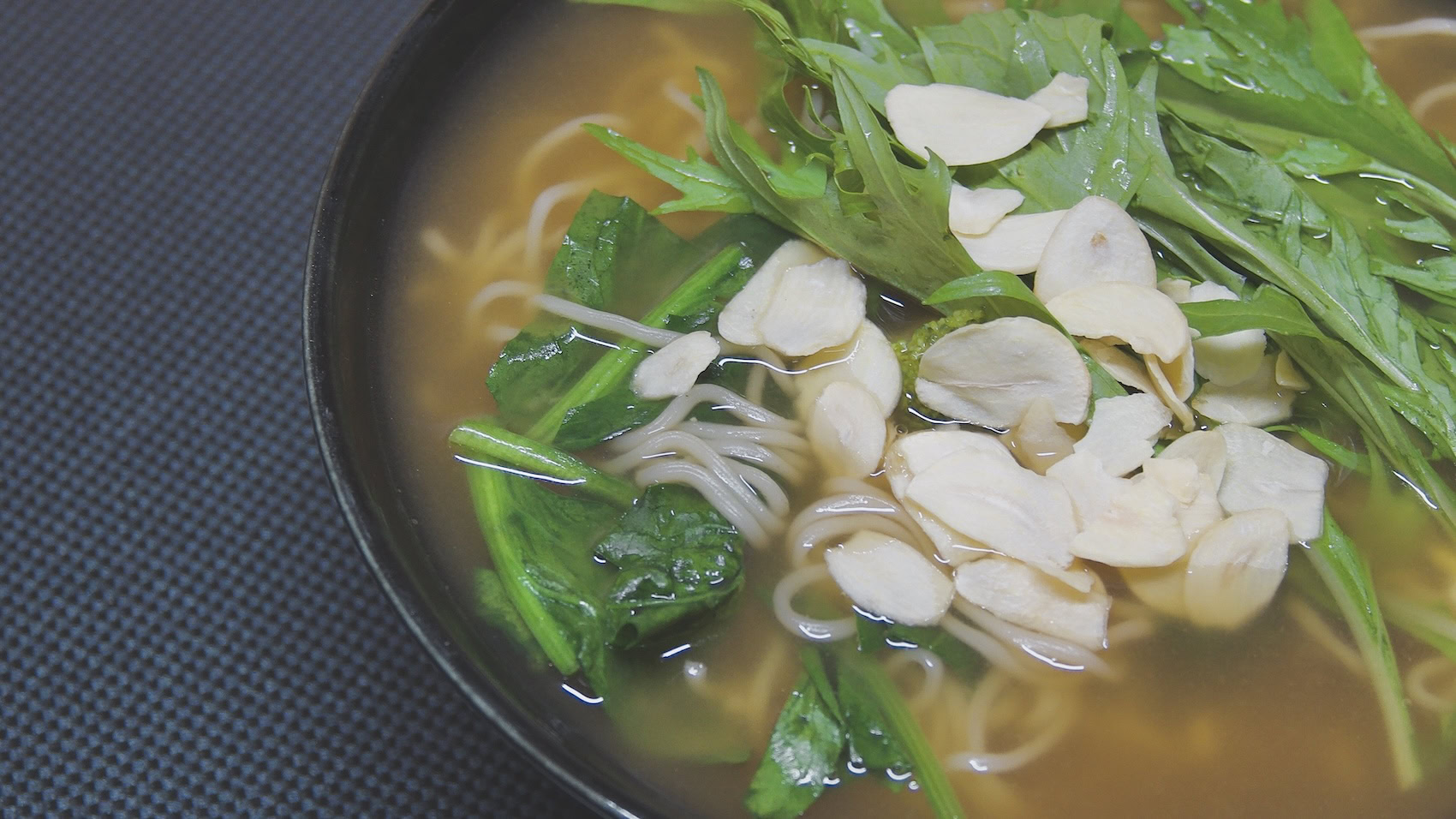
Dried garlic chips topping a simple noodle bowl with mizuna. Dehydration produces a sweeter, mellower, more concentrated flavor without the sharp sulfurous bite. Slices like these also soften slightly in hot broth for a pleasing mouthfeel.