Anise
Anise is the spice produced from the tiny fruits of Pimpinella anisum, an annual herb in the parsley family.
REGION OF ORIGIN
Anise comes from the eastern Mediterranean and the Middle East, specifically from southeastern Türkiye through Cyprus and the Levantine coast. Early records indicate cultivation began around 4,000 years ago in ancient Egypt.
PART & COLOR
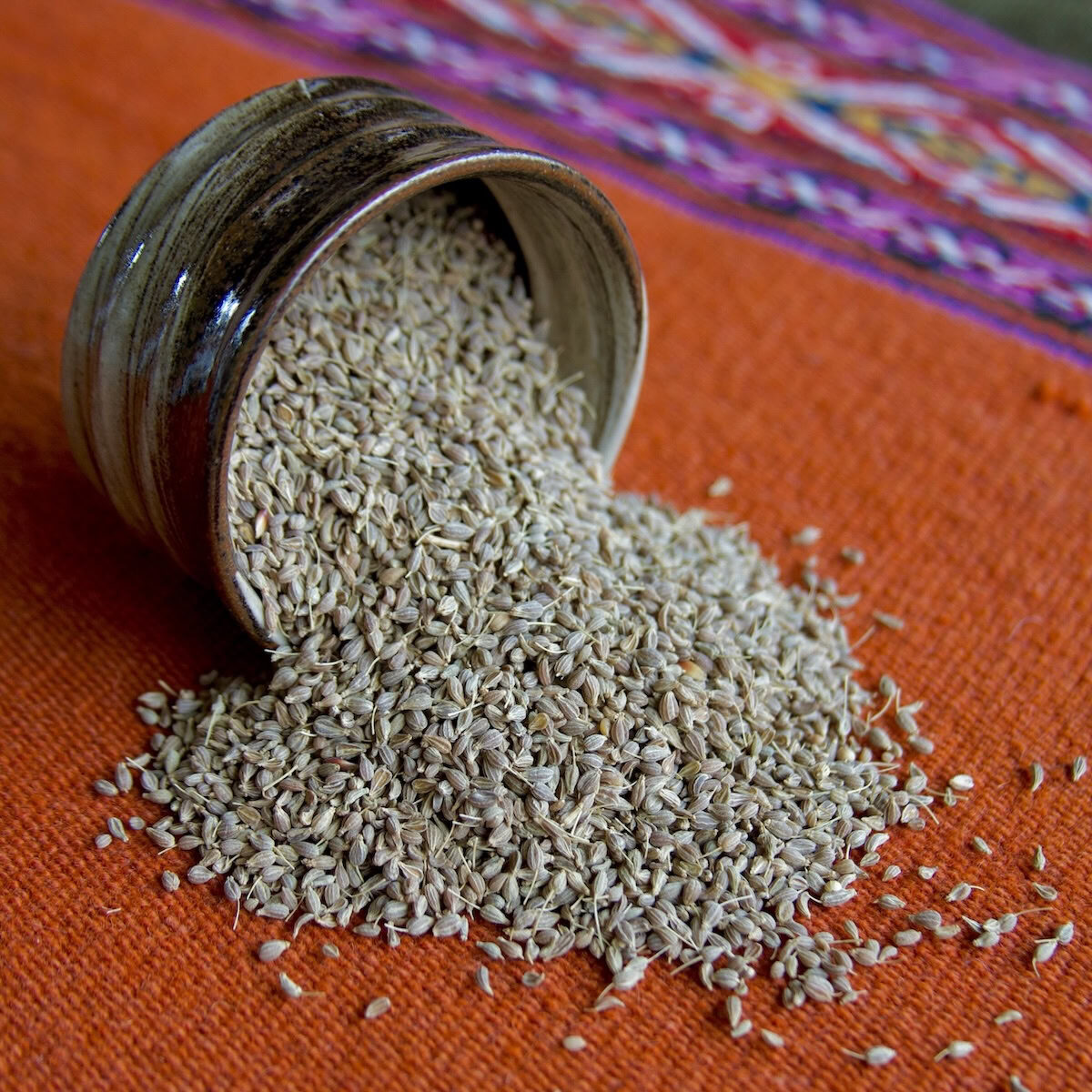
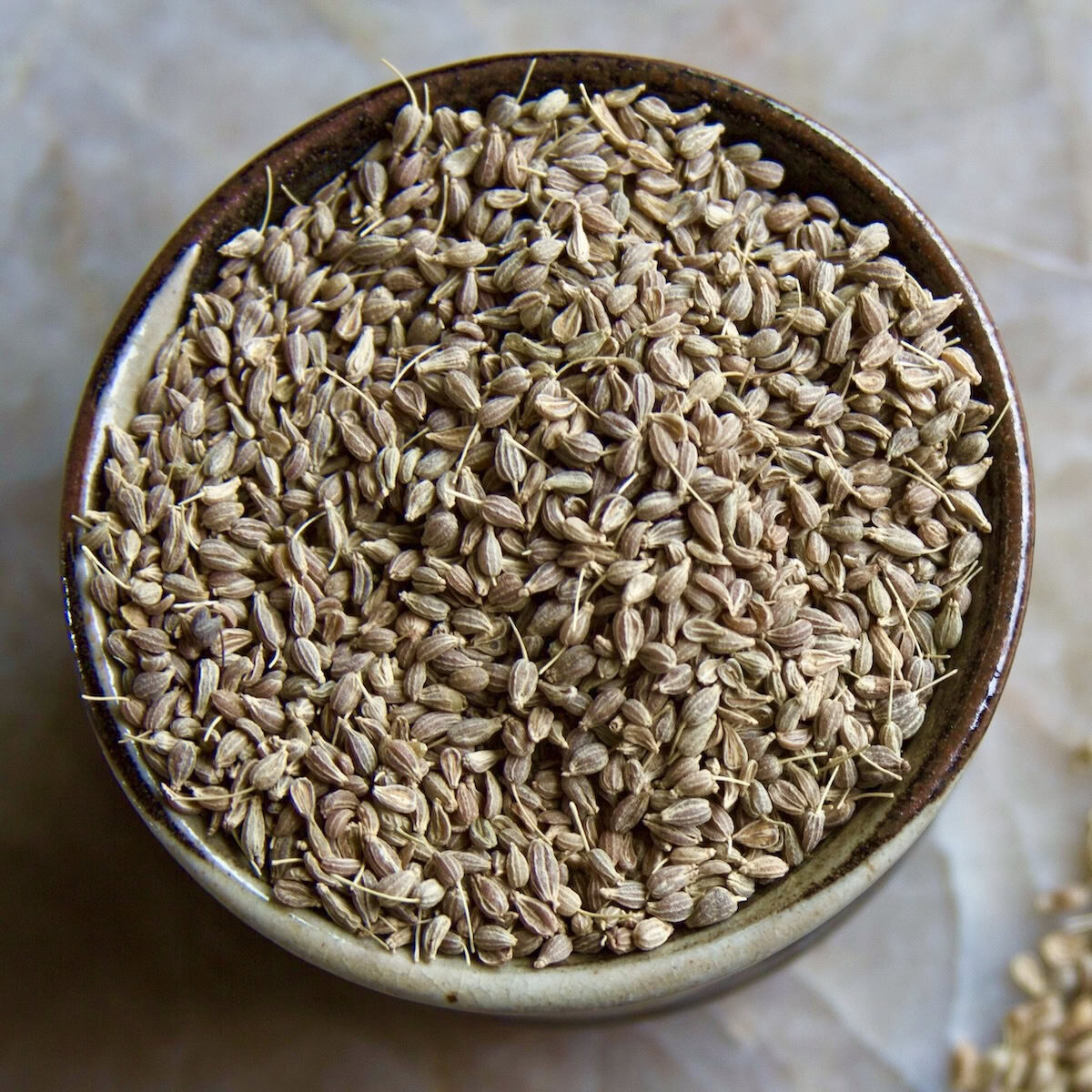
Like the other "seed" spices in the parsley family (caraway, coriander, cumin, dill seed, and fennel seed), anise "seeds" are actually tiny, drop-shaped fruits called schizocarps. They are light brown to greenish-grey with fine vertical ridges, and some of their little stems are often still attached. The young leaves of the anise plant can also be used in salads, soups, eggs, or teas, offering a milder flavor similar to tarragon.
PRODUCTION
Pimpinella anisum is an annual herb planted in the spring. The fruits reach maturity about 3-4 months after planting and are ready for harvest in the late summer to early autumn when the flower clusters have dried. Timing is critical as overripe fruits can shatter and fall. The whole plant is cut close to the ground and hung or laid out to dry, which helps preserve the fruits' essential oils.
FLAVOR & AROMA
The aroma of "aniseed" resembles mildly sweet licorice with a subtle mintiness. Beneath this sit fainter herbal, floral notes that keep it from feeling one-dimensional. It's a comforting fragrance popular in aromatherapy and perfumery.
The flavor is a bold initial spike of licorice and sweetness, with a light cooling that lingers on the tongue. It gradually evolves into a more complex weave of warm, bitter, and spicy notes. These effects mainly come from anethole, the same flavor compound found in fennel and star anise. Anethole ignites our sweetness receptors, making it seem ~13 times sweeter than sugar, with much fewer calories. Anise's high concentration of anethole (80-90% of its essential oil) is why it's so often used to flavor candies and liqueurs.
CULINARY USES
Across North African, Middle Eastern, Mediterranean, and European cuisines, anise is a cornerstone of baking and confectionery, gracing Moroccan breads like khobz, treats like Italian biscotti and German springerle cookies, and candies like French anis de Flavigny. Its light licorice flavor and natural sweetness make it the perfect pairing for chocolate as well. Anise is also used to flavor meats and vegetables across Europe. It complements the tangy notes of tomato-based sauces in particular, a natural fit for pasta.
Whole anise can be used to infuse syrups, oils, vinegars, teas, and liqueurs. It's the essential flavor of iconic spirits such as ouzo, arak, rakı, anisette, absinthe, and many aguardientes, as well as variations of sambuca and pastis.