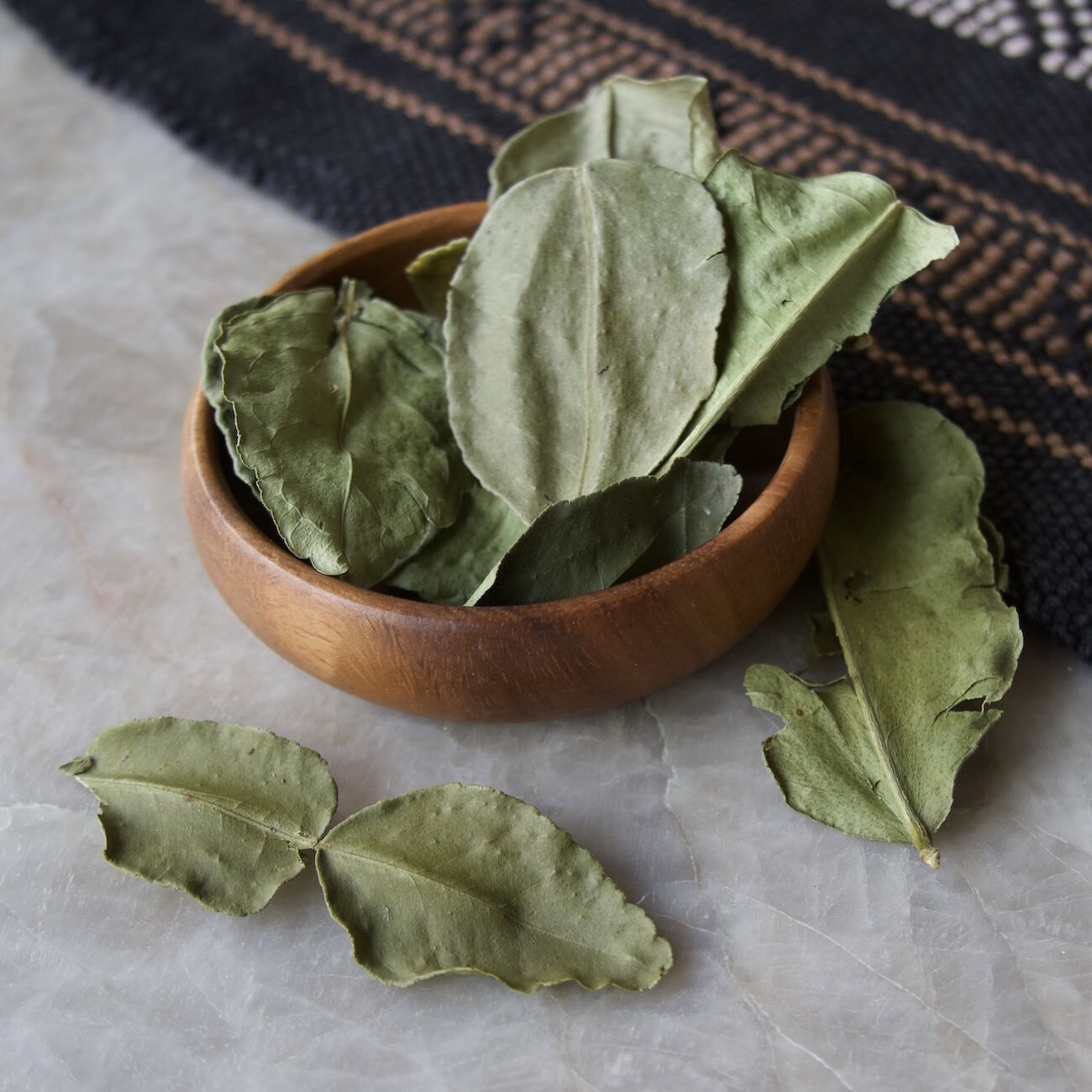
Makrut Lime Leaf
Makrut lime leaf is the spice produced from the double-lobed leaves of Citrus hystrix, a thorny tropical evergreen tree in the citrus family.
REGION OF ORIGIN
While its precise origin is unclear, Citrus hystrix is native to a broad Southeast Asian and Pacific Island range. It was domesticated early on in the ancient Indo-Malayan region, including present-day Thailand, Laos, Cambodia, Malaysia, Indonesia, and the Philippines. Thriving in many warm, humid climates with fertile soil, makrut lime has now been cultivated in tropical and subtropical regions worldwide.
PART & COLOR
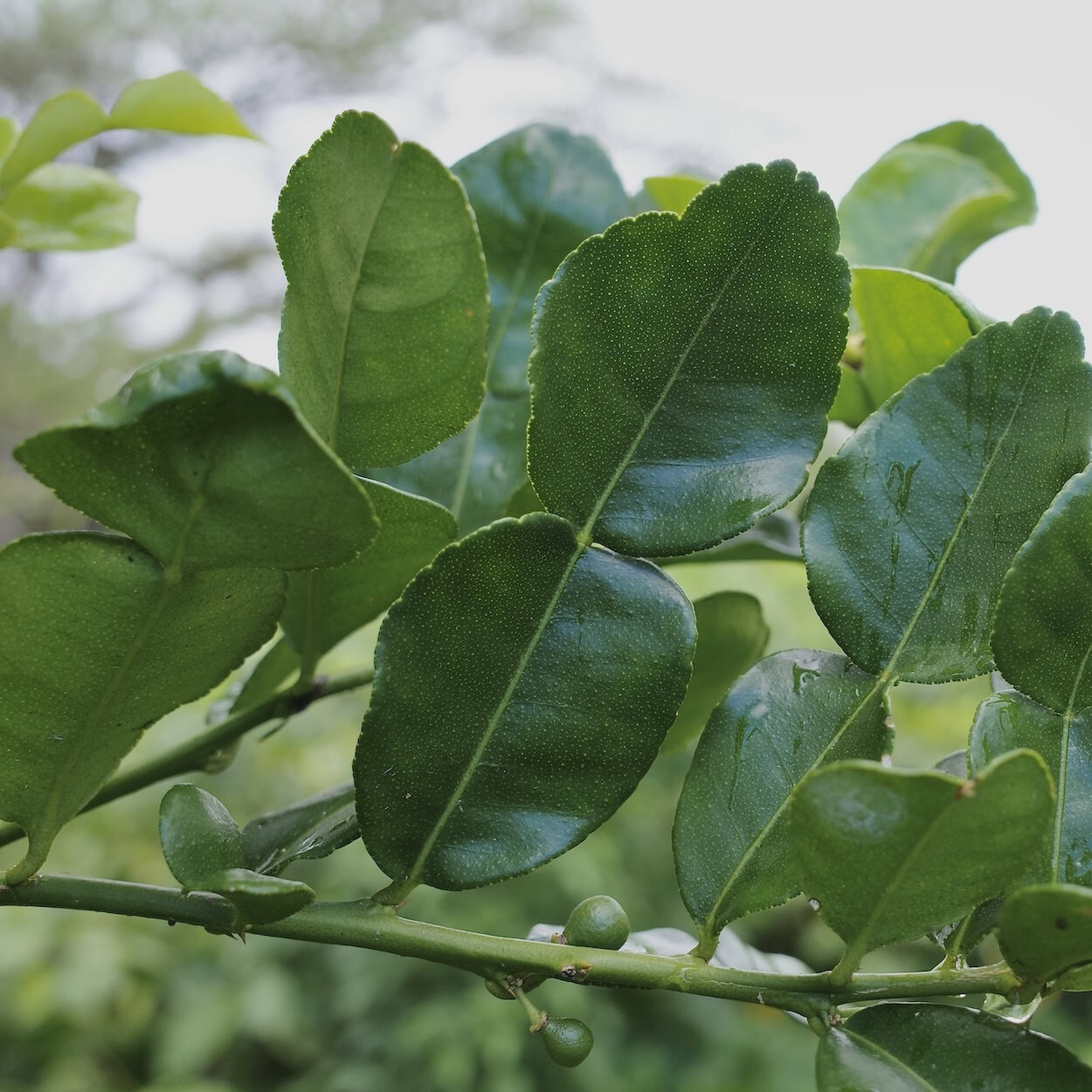
The leaves are stiff, glossy, and deep green on top with a matte, light green underside. They fade to a muted olive green when dried. The small, bumpy limes themselves are equally prized for their intensely flavored zest.
PRODUCTION
The makrut lime tree is evergreen, so leaves can be harvested year-round in warm climates. However, they are most flavorful when young and tender, so peak harvest tends to align with the warmer months when new growth is most abundant. Harvesting can be slow, challenging work as the leaves must be hand-picked while navigating around long thorns.
FLAVOR & AROMA
Makrut lime leaves are a powerhouse. Scattered throughout every leaf are hundreds of tiny glands containing volatile oils. Rubbing, bruising, or tearing a leaf releases them, filling the air with a vibrant burst of lime zest, mandarin orange, lemon peel, and floral and grassy notes.
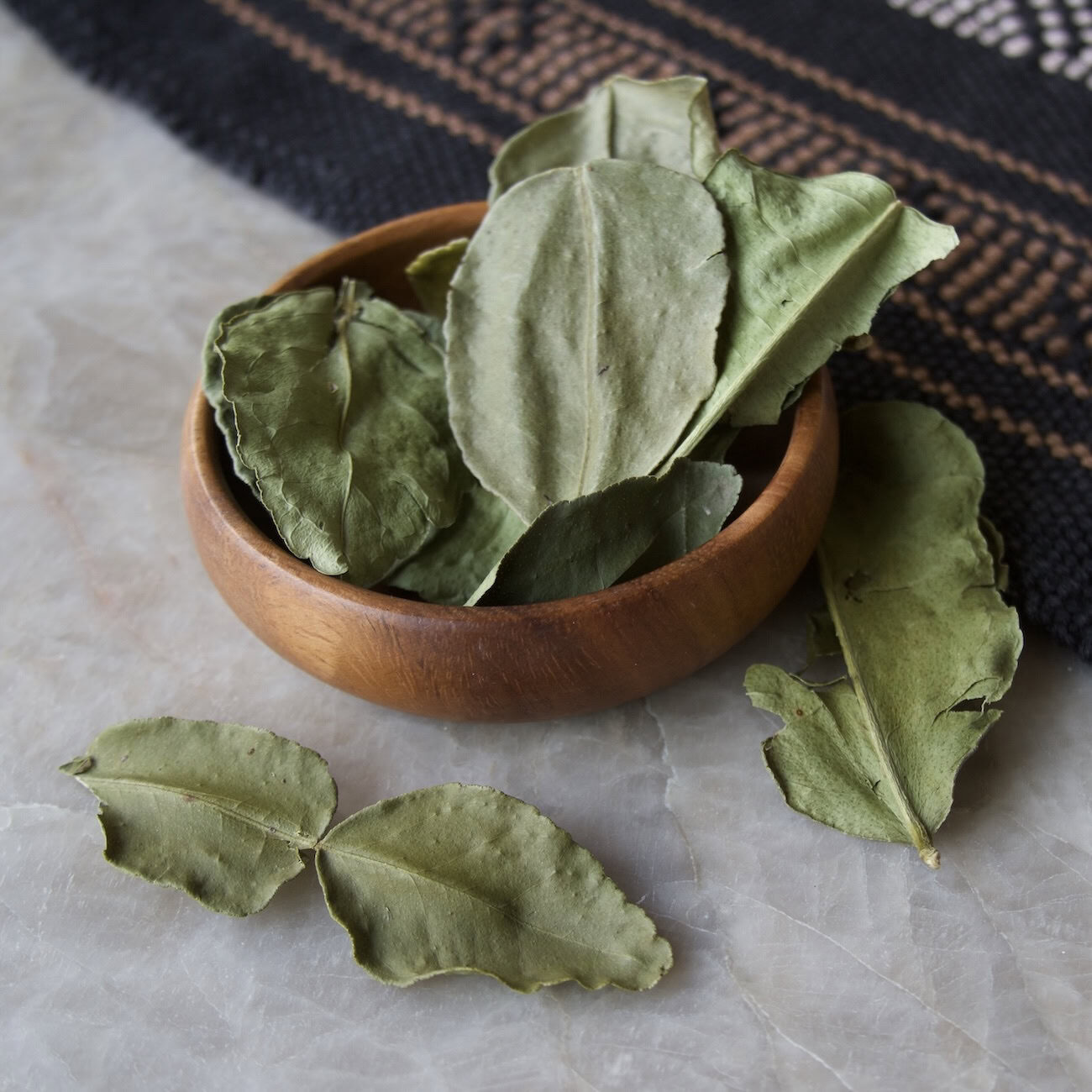
The fragrance is coupled with an intense citrusy flavor that has a sharp, slightly spicy edge. It's distinctly lime-like, but with a complexity that transcends a typical lime’s sourness. A hint of bitterness balances out its sweetness. When dried, the scent is more muted, lacking the bright quality of fresh leaves. Dried leaves retain their flavor far longer than fresh leaves do in the refrigerator, but they're less nuanced and have a woody, hay-like undertone. Still, the convenience of having dried leaves on hand shouldn't be overlooked.
CULINARY USES
These potent leaves are indispensable to many Southeast Asian cuisines. In Thailand, they are a staple in green and red curries and soups like tom yum and tom kha gai. They brighten Indonesian rendang, soto, and nasi uduk, as well as Malaysian spicy noodle soups like laksa and rice dishes like nasi lemak. They're also crucial to traditional Cambodian dishes like amok trey, a steamed fish curry wrapped in banana leaves.
Fresh leaves are often preferred for their intense flavor. Remove the tough central vein, then tear, slice, chop, or bruise the leaves to release their oils before adding them to stir-fries, soups, salads, rice, broths, oils, and teas. Dried leaves can infuse liquids similar to bay leaves, and they can also be ground into a powder and used as a spice rub or seasoning.