Tamarind
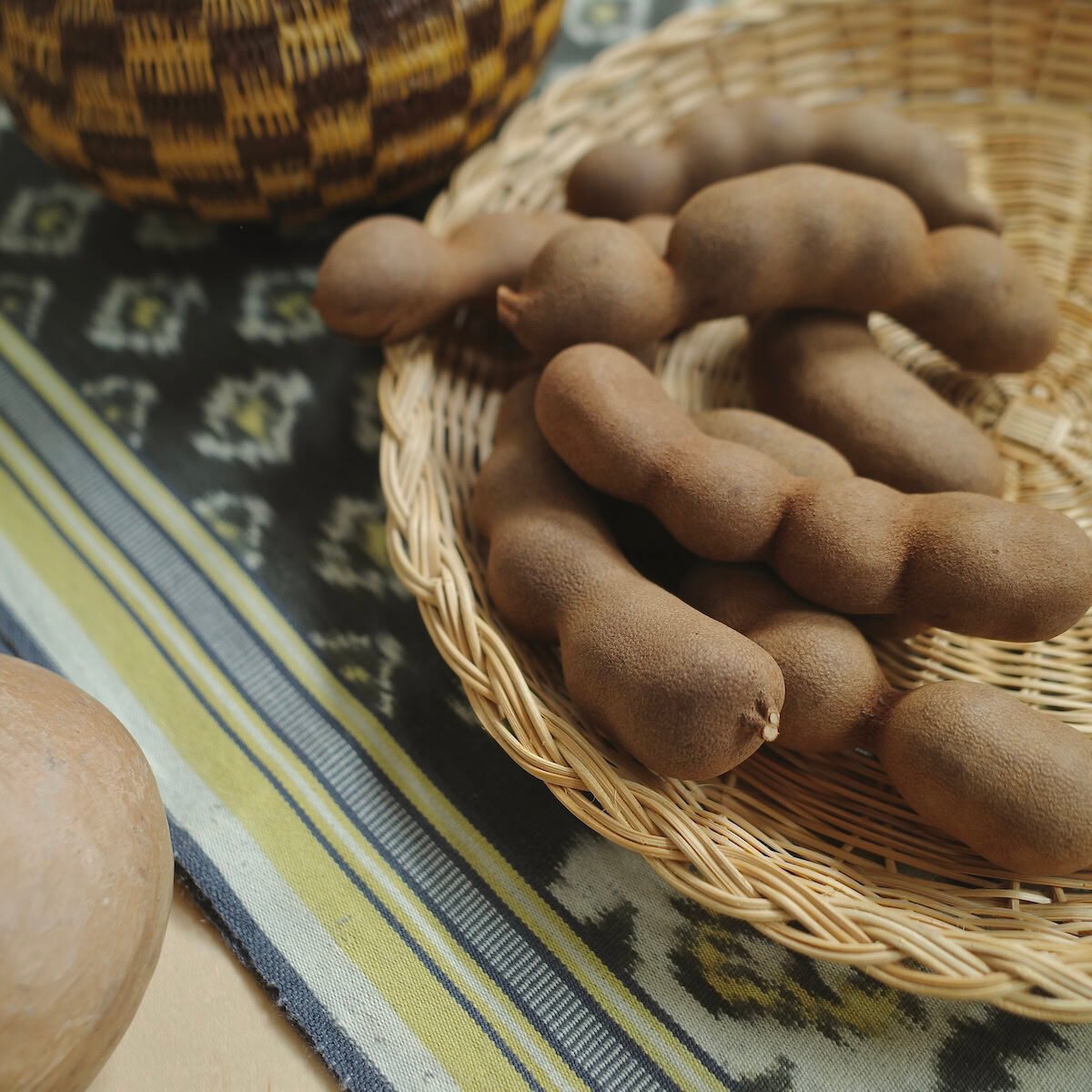
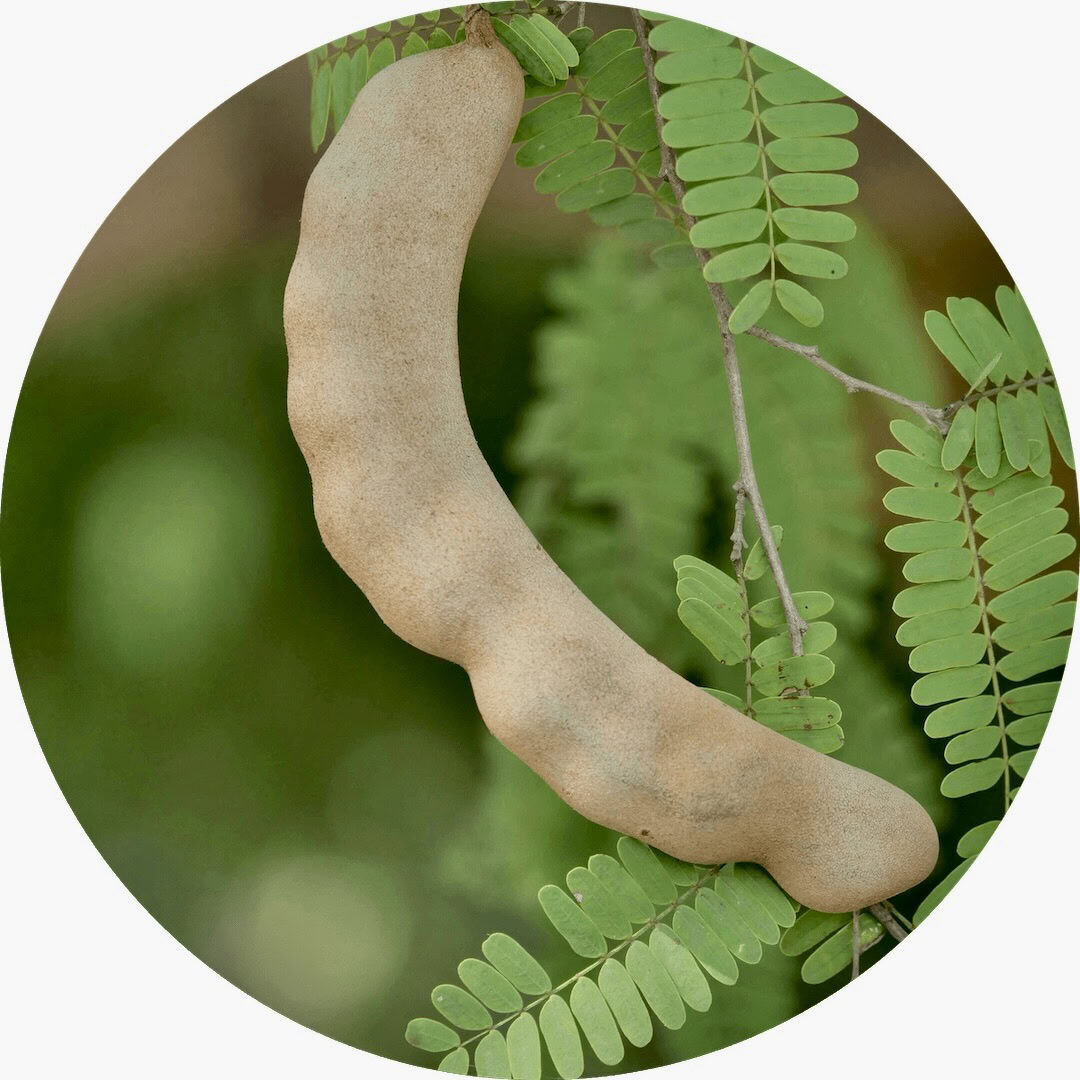
Tamarind is the spice produced from the pulp of the fruit pods of Tamarindus indica, a long-lived tropical evergreen tree in the legume family.
REGION OF ORIGIN
Despite tamarind growing wild in India as if it were born there, growing genetic evidence supports a tropical East African origin. The tamarind tree reached India in ancient times and became so deeply naturalized and cultivated there that it was long mistaken for an Indian native.
PART & COLOR
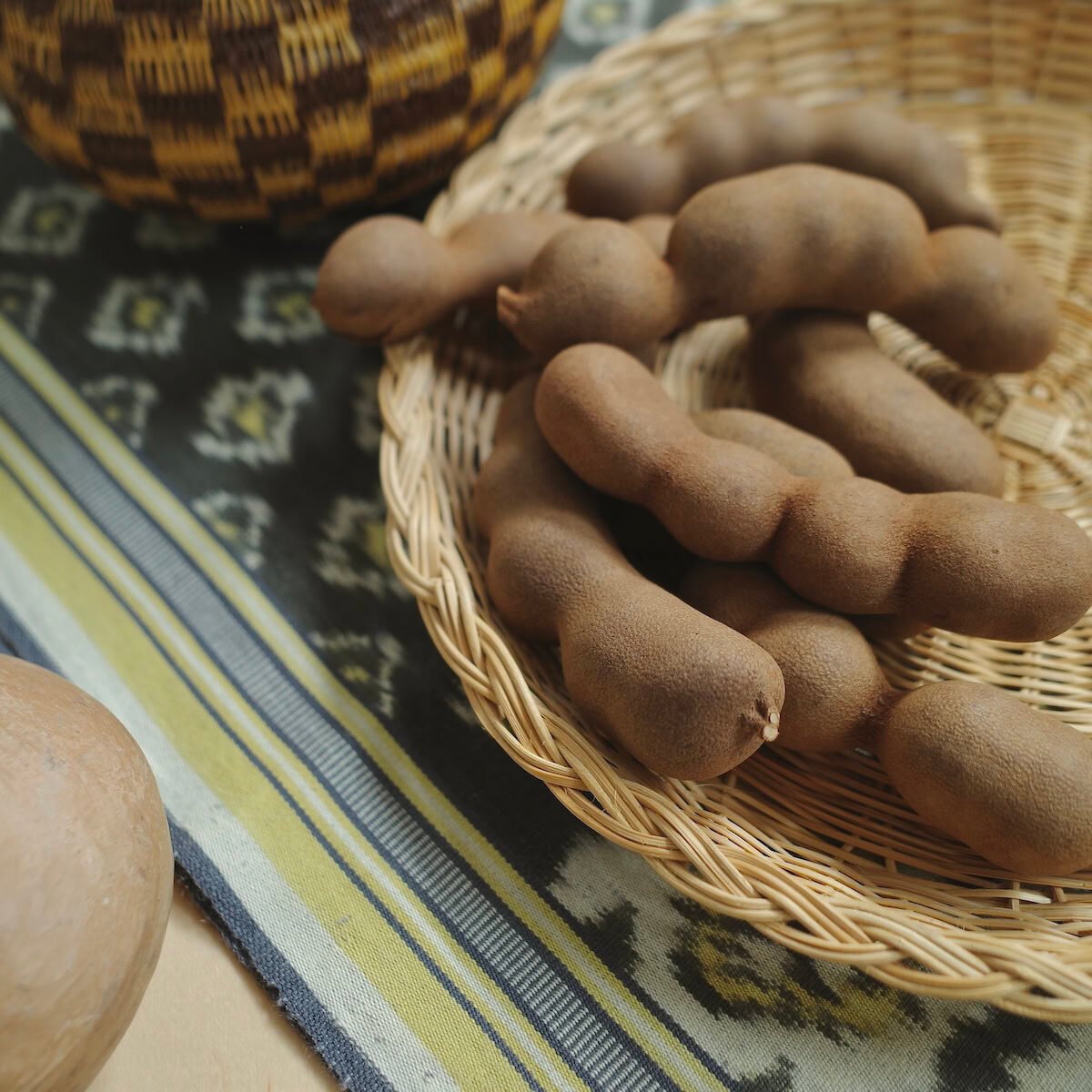
Fresh tamarind pulp surrounds the seeds within the fruit pods, with thick, fibrous strands running through it. It is a rich, reddish brown color. The spice is also sold as compressed blocks of pulp, which are usually a darker shade.
PRODUCTION
Tamarind is widely cultivated throughout the tropics, so its harvest season varies significantly by region, climate, and the desired ripeness of the fruit. Once the pods ripen and their shells become brittle, they are ready for harvest. They are either hand-picked directly from the branches or knocked down with poles. They are then either sold whole or shelled by hand to separate the sticky pulp from the brittle shell, stringy fibers, and seeds.
FLAVOR & AROMA
Tamarind offers a symphony of flavors, its ripe pulp a unique balance of sweet, sour, tart, and tangy. The underlying sweetness often carries hints of dried fruit like dates and apricots, while a subtle, bright citrus element adds freshness. Delicate floral notes complete it.
The intensity of each of these qualities varies based on the ripeness of the fruit and the variety, of which there are many. Selective breeding has led to diverse tamarind cultivars, ranging from tart and sour to exquisitely sweet. When the pulp is dried, its core sweet-sour character becomes more concentrated, while some of its subtler aromatics soften.
CULINARY USES
Tamarind's culinary uses are wide-ranging, reflecting its global cultivation and long history. From Latin American aguas frescas and Caribbean marinades to Indian chutneys and the famous pad Thai, tamarind is a central flavor in many beloved beverages and dishes from around the world. It's even a key ingredient in England's Worcestershire sauce.
The pulp can be used fresh or rehydrated from its dried, compressed form. Both can provide a tangy base for sauces, curries, and desserts. While the pulp is the star, the kernels of tamarind seeds are also processed into a powder or gum and used as a thickening agent.
CLASSIFICATION
Expand- KINGDOM: Plantae
- CLADE: Tracheophytes
- CLADE: Angiosperms
- CLADE: Eudicots
- CLADE: Rosids
- ORDER: Fabales
- FAMILY: Fabaceae
- GENUS: Tamarindus
- SPECIES: Tamarindus indica
OTHER NAMES
Expand- English: tamarind, tamarind fruit, Indian date
- Spanish: tamarindo
- Portuguese: tamarindo
- French: tamarin
- Italian: tamarindo
- German: Tamarinde, Indische Dattel, Sauerdattel
- Dutch: tamarinde, indische dadel, assem
- Polish: tamarynd
- Hungarian: tamarindusz, tamarindusz gyümölcs, indiai datolya
- Finnish: tamarindi
- Greek: tamarin
- Turkish: demirhindi, temirhindi, Hint hurması
- Hebrew: tamar hindi, tamar-hindi, tamarhindi
- Arabic: tamr al-hind, tamr hindī, tamar hindi
- Persian: tamr-e hendi, tamre hendi, temrehindi
- Wolof (Senegal): dakhar, dakkar, dakah, daharg, ndakhar
- Zambia
- Bemba: mushishi
- Nyanja: mwemba
- Tonga: musikamushishi, mwemba, musika
- Sudan
- Arabic: ardeib, aradeib
- Nuba languages: shekere, kuashi, danufi
- Uganda
- Ateso: epeduru, esukuru, esuguguru
- Karamojong: apedura, lopeduru
- Luganda: mukoge
- Lugbara: iti
- Madi: iti
- Lusoga: mukoge
- Lugwe: muhuwa
- Lunyuli: muhungwa
- Luo: chwaa, chwoo
- Kakwa: pitei
- Bugungu: munondo
- Runyoro: mukoge
- Rutoro: nondwa
- Kenya
- Bajun: ukwaju
- Boni: mukai
- Boran: roqa, groha
- Digo: mkwadzu
- Embu: muthithi
- Giriama: mkwaju, kwaju
- Kamba: chuzaa, kithumula, kikwasu, nthumula, nzumula, ngwasu
- Kipsigis: lemecwhet, lamaiyat
- Luhya / Bukusu: kumukhuwa
- Luo: ochwaa, chwaa
- Maasai: olmasamburai, oloisijoi
- Malakote: morhoqa
- Marakwet: aron, oron
- Mbeere / Meru: muthithi
- Nandi: limaiyua, lamayuet
- Orma: roqa
- Pokomo: mkwayu
- Pokot: oron, arol
- Sabaot: lemaiyua
- Samburu: rogei
- Sanya: roka
- Swahili: ukwaju, mkwaju, msisi
- Taita: mkwachu
- Taveta: mase, muzumura
- Teso / Turkana: epeduru
- Tharaka: muthithi
- Tugen: aryek, arwe
- Ethiopia
- Amharic: humer, hemor, homor, humar, komar, tommar, roka
- Gamo / Oromo: b’roka, broka, racahu, dereho, dindie, ghroma, gianko, omar
- Tigrinya: arabeb, humer
- Somali: hamar, hamaar, rakhai, raqee, roge, roqhe
- Russian: indiyskiy finik
- India
- Hindi: imli, amli
- Punjabi: imli, ambli
- Bengali: tentul, tetul, tintul, tintiri, amli
- Odia: tentuli, teetuli
- Gujarati: ambli, amali, amli
- Marathi: chinch, chincha, chinchoka (seed)
- Telugu: chinta, chintapandu (fruit), chinta chettu (tree)
- Kannada: hunase, hunise, hunase hannu (fruit), hunase mara (tree)
- Tamil: puli, amilam, puliyam pazham (fruit), puliyamaram (tree)
- Malayalam: puli, valanpuli, pulimaram (tree)
- Sanskrit: amlika, āmlikā, tintiri, tintrini
- Sinhala (Sri Lanka): siyambala, maha siyambala
- Nepali: imli
- Burmese: ma gyi, ma gyi thi (fruit), magyee, majee-pen (tree)
- Thai: makham, ma kham, bakham, somkham, som makham, makham piak (wet tamarind), met makham (seeds)
- Lao: mak kham, maak kham, khaam, ton kham (tree)
- Khmer (Cambodia): ampil, ampul, khoua me
- Vietnamese: me, cây me (tree), trái me (fruit), me chua (sour tamarind)
- Malay: asam, asam jawa
- Indonesian: asam, asam jawa, asem jawa, tambaring
- Filipino: sampalok, sampaloc
- China
- Mandarin: suānjiǎo, suan jiao, luówàngzǐ, luo wang zi, suāndòu, suan dou, dàmǎlín, da ma lin
- Cantonese: syun gok, syun dau, lo mong zi, daai maa lam
- Korean: tamarindeu
- Japanese: tamarindo
Note: Languages that use only the common international spelling and have no distinct or widely used local name are not listed.
NUTRITION FACTS
Expand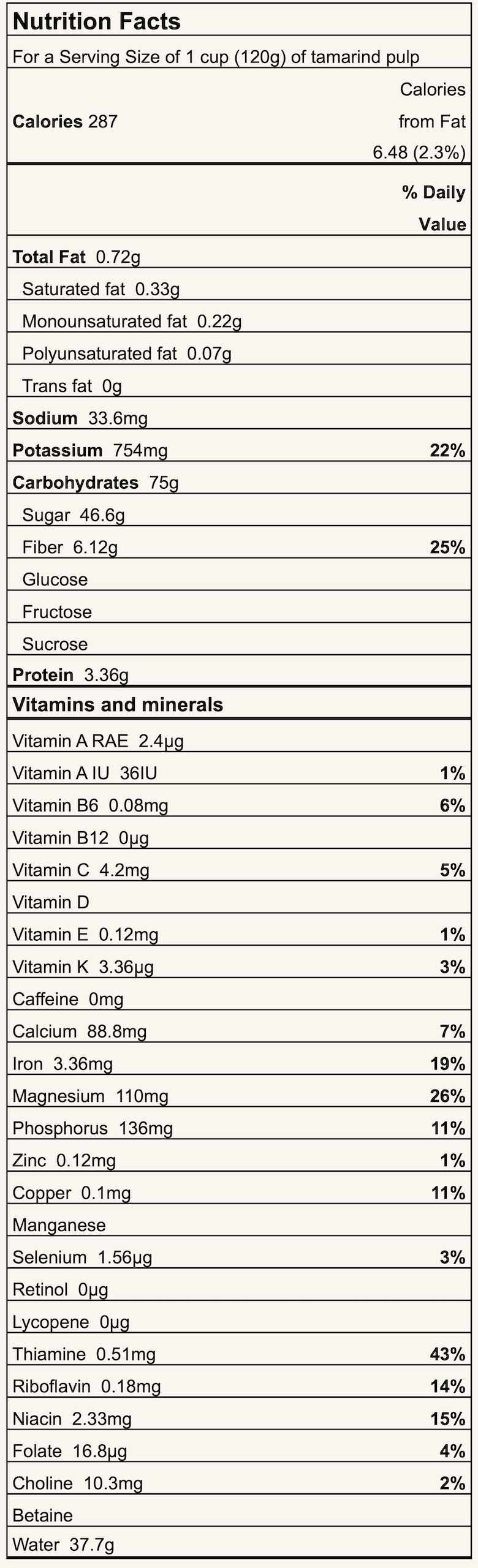
FLAVOR CHEMISTRY
ExpandFlavor emerges from the combined effects of aroma, taste, and mouthfeel. Tamarind is valued primarily for taste rather than aroma, but unlike purely sour spices, it is intensely sweet as well, with a dark, caramelized depth from a small set of volatiles:
Aromatic Compounds
- 2-Phenylacetaldehyde
- One of the most abundant volatiles in tamarind pulp, contributing a honeyed, faintly floral quality beneath the sourness.
- Honeyed, sweet, and faintly floral.
- Furfural and 5-Methylfurfural
- These compounds are formed as sugars and other compounds in the pulp break down during ripening, drying, heating, and storage. They give tamarind its caramelized, molasses-like depth, and are why tamarind tastes cooked and dark rather than simply sour.
- Caramel-like, bready, and warm.
- Other Aromatic Compounds
- Tamarind also contains hexadecanoic acid, limonene, pyrazines, and thiazoles. The pyrazines and thiazoles add warm, faintly roasted undertones, while limonene contributes a small citrus note.
Taste and Mouthfeel Compounds
- Tartaric Acid
- Tamarind’s dominant acid and the main source of its sourness, present at roughly 8 to 18% of commercial dried pulp. Tamarind is the richest natural source among edible fruits, several times the concentration found in lemons. It is the same acid whose potassium salt forms the “wine diamonds” sometimes found on corks or at the bottom of wine bottles.
- Sharp, sour, and clean.
- Sugars
- Reducing sugars make up a quarter to nearly half of commercial dried pulp, which is why tamarind reads as sweet-sour rather than simply sour. That balance is what lets it work in candies and drinks as readily as in savory dishes.
- Sweet, rich, and date-like.
- Malic and Citric Acid
- Present in smaller amounts, adding apple-like and citrusy edges to the dominant tartaric sourness.
- Tart, fruity, and bright.
- Tannins
- Responsible for tamarind's astringency and the mouth-drying sensation that keeps its sweetness in check.
- Astringent, drying, and faintly bitter.
Understanding Composition
- Chemical composition can vary widely, mainly in the concentrations of certain compounds. This variation causes differences in quality, which is why the best spices and herbs are often graded by the levels of key compounds that drive flavor, aroma, and color.
- Quality is affected by variety, age and freshness, region and terroir, environmental stressors, and potential adulteration. It's then further influenced by how the plant is handled at every stage: cultivation, harvesting, processing (drying, curing), shipping, storage, and preparation (grinding, grating, infusing, toasting). A magnificent spice or herb is a celebration of an immense journey, shaped by nature, the people who produce it, and the cook who delivers it to a dish.
HEALTH BENEFITS
ExpandTamarind leaves, fruits, and seeds have been an integral part of traditional medicine systems throughout Africa, Asia, and the Americas for centuries. They've been used to treat constipation, fever, malaria, wounds, pain and swelling, and bacterial and fungal infections. Now that modern research is shedding more light on this spice's unique properties, here is an overview of some of the most promising areas of tamarind's medicinal potential:
- Digestive Aid
- The organic acids in tamarind, primarily tartaric acid, can have a laxative effect, providing relief from occasional constipation. Additionally, compounds like tannins and terpenes exhibit antimicrobial activity, suggesting tamarind may play a role in supporting a healthy gut microbiome by combating harmful bacteria. Tamarind pulp also contains complex carbohydrates that might act as prebiotics, nourishing beneficial gut bacteria and contributing to digestive balance.
- Antioxidant and Liver Health
- Tamarind is rich in flavonoids like epicatechin and procyanidins, offering strong antioxidant protection. These compounds help neutralize free radicals, potentially reducing inflammation and cellular damage. Studies suggest that the antioxidants in tamarind might support the liver, shielding it from damage caused by toxins and oxidative stress.
- Heart Health and Blood Sugar Management
- Initial research suggests that tamarind might help regulate cholesterol levels, potentially lowering LDL cholesterol (bad) and raising HDL cholesterol (good). Tamarind's organic acids and fiber may also help slow down carbohydrate absorption, potentially minimizing blood sugar spikes. More research is needed to determine its effectiveness in diabetes management.
- Wound Healing
- The antimicrobial and anti-inflammatory properties of tamarind's tannins and phytochemicals have been traditionally used for wound healing. Modern research is exploring its potential to promote skin regeneration.
- Oral Health
- The astringent and antiseptic qualities of tamarind have been used in traditional mouthwashes to maintain oral hygiene and limit gum inflammation.
- Immunity Support
- Citric acid and other antioxidants in tamarind could play a role in general immune health, helping the body stave off infections.
Important Considerations
- Presence of Safrole in Tamarind Leaves: While traditionally used in small quantities in certain cuisines and natural remedies, modern research suggests limiting consumption of tamarind leaves in particular due to the presence of the compound safrole. The use of this compound as a direct flavoring agent is now restricted in many countries due to concerns over potential carcinogenic effects. We recommend not cooking with tamarind leaves due to this concern.
- Most Research is Preliminary: While research is promising, more extensive human clinical trials are needed to definitively confirm the efficacy and safety of tamarind's medicinal properties.
- Dosage Matters: Researchers commonly use concentrated extracts, so standard dietary consumption may not yield the same results. More studies are required to establish proper dosages and administration methods.
- Medication Interaction: Tamarind should not be considered a replacement for conventional medical treatments. While it is generally safe for most people, it is critical to exercise moderation and consider interactions with other medications.
- Disclaimer: Consult healthcare professionals before using spices or herbs medicinally.
ALTERNATIVE USES
ExpandTamarind is widely grown in tropical regions around the world. The more uses we have for it the better since increased demand from industry could support many local economies where tamarind is abundant. Here are some of its popular alternative uses:
- Cultural and Spiritual Significance
- In several cultures, especially in Sudan, India, Thailand, and Mexico, the tamarind tree holds symbolic value and is sometimes incorporated into rituals and ceremonies. It is often associated with protection, resilience, and longevity. Rightfully so, as the average lifespan of a healthy tamarind tree is reported to be no less than 200 years, and there are some famous examples reaching over 500!
- Reforestation
- Tamarind trees contribute significantly to reforestation efforts, especially in arid regions, by stabilizing soil and enhancing biodiversity through their deep root systems. They also offer socioeconomic benefits through the utilization of their fruit, leaves, and seeds. Their robust nature and minimal water requirements make them invaluable in ecological restoration and sustainable land management practices, supporting both environmental health and community livelihood.
- Skincare
- The vitamin C and organic acids in tamarind are being explored for their potential to brighten skin tone and address hyperpigmentation. Tamarind pulp has traditionally been used as a natural exfoliant to remove dead skin cells and promote a smoother complexion.
- Hair Care
- Traditional use suggests tamarind might support healthy hair by offering conditioning benefits, adding shine, and managing scalp issues.
- Metal Polishing
- The acidic nature of tamarind pulp has been traditionally used to clean and polish copper, brass, and bronze. This highlights its potential value in cleaning and rust removal applications.
- Leather Tanning
- Tannins present in tamarind bark and leaves have been used in the leather tanning process to make it more durable and supple.
- Laundry and Cleaning
- In some regions, tamarind pulp is used as a natural stain remover and cleaning agent, perhaps due to its acidic properties.
- Livestock Feed
- Tamarind pulp or leaf meal is added to animal feed to boost immunity.
- Textiles
- Studies have shown that tannin extracted from tamarind seed coats can act as an effective natural mordant when dyeing cotton, wool, and silk with natural dyes like sumac, annatto, turmeric, and pomegranate. Mordants help fix dyes to fabrics, making colors more durable and resistant to fading. This is rather fortuitous, as eco-friendly alternatives are increasingly sought after in this industry.
- Paper and Wood Treatment
- Research is exploring whether tamarind seed extract could help improve paper quality and protect wood from termites and fungal decay.
- Adhesive and Binding Agent
- The starchy components of tamarind seeds are being studied for their ability to act as a natural, sustainable adhesive and binding agent.
- Water Purification
- Tamarind seed components are being investigated as a potential flocculant, a substance that helps clarify water by clumping particles together, making them larger and heavier and thus easier to remove from a liquid.
Disclaimer
- While tamarind shows promise in these areas, its effectiveness may be limited compared to commercial alternatives.
SUBSTITUTIONS
ExpandTamarind is cherished for its distinct sweet and sour flavor profile, which is integral to many dishes around the world. Finding a proper substitute can be challenging, but here are alternatives that can mimic different aspects of tamarind's character. If you can’t find fresh tamarind pods or prepared tamarind pulp, or if you have an aversion to tamarind’s sourness, try these:
For Its Sweet and Sour Flavor
- Amchur
- Offers the closest approximation to tamarind's sweet-sour flavor. It is tart and slightly fruity. This option is ideal for dry dishes where you want to add a tangy acidic note without adding moisture.
- Sumac
- Similarly, this tangy, slightly fruity spice made from ground dried berries provides a clean, lemony acidity that mimics tamarind’s sourness without the added moisture or sweetness. Best used in dry rubs, salads, dips, or sprinkled over finished dishes.
- Pomegranate Molasses
- Provides a deep, tart-sweet flavor with a hint of fruitiness. Its consistency and tanginess make it a good substitute, though it's sweeter and less acidic. It works well in sauces, marinades, dressings, and stews where a darker color is acceptable.
- Lemon or Lime Juice + Brown Sugar
- This combination recreates a similar sweet-sour balance, and you can adjust the sugar amount to achieve your desired sweetness. It is best for liquid-based dishes like soups and curries where additional sweetness is desired.
For Its Texture and Thickening Ability
- Date Paste
- For recipes that rely on tamarind for its sourness as well as its body, date paste mixed with a bit of lime or lemon juice can provide both sweetness and a thick, smooth texture.
Substitution Tips
- Incomplete Substitution: All spices and herbs are too complex to match exactly, so focus on which aspects of their flavor, aroma, texture, or color you wish to replicate.
- Quantity: Start with a small amount of the substitute and adjust to taste. It won't be a 1:1 exchange in flavor or potency.
- Context: Consider the entire dish and how the substitute's full flavor profile will merge with the other ingredients.
- Experimentation: Playing with substitutions is a great opportunity to explore how different flavors interact. If you approach it with curiosity, you may really enjoy the process and make some delicious discoveries along the way.
A BRIEF HISTORY
ExpandA long-lived giant with a sprawling canopy, the tamarind tree has fascinated the world for ages. Originating in the savannas of tropical East Africa, tamarind pulp was consumed for its tangy flavor and valued for its medicinal properties. Historical records trace the cultivation of tamarind back to ancient Egypt by 400 BCE, and it is believed that the tree made it to Asia in the same millennium. It crossed the Indian Ocean to the shores of Southeast Asia and the islands of Indonesia, where its sweet-sour taste quickly became integral to local cuisines there. Carried onwards by traders and travelers, tamarind took root in the tropical embrace of South Asia, embedding itself deeply in the vibrant culinary and cultural fabric of India.
As trade routes expanded and centuries unfolded, tamarind traveled along the Silk Road, captivating the palates of Arab and Persian traders. They called it "Tamar Hindi" or "Indian date" as they introduced it to the Persian Gulf, a consistent reminder of its global journey. In medieval times, tamarind caught the attention of Europe, where it became a symbol of exploration. By the 16th century, Portuguese and Spanish explorers were transporting tamarind across the Atlantic, introducing it to the tropical climates of the Caribbean and South America. In these new worlds, tamarind was welcomed by indigenous peoples and colonists alike, who were enchanted by its flavor and versatility. Tamarind lent its magic to savory curries and stews, refreshing beverages, and tart confections. Alongside its culinary uses, it earned a place in traditional medicine practices. Its leaves, fruits, and bark held remedies for many ailments, from fevers to digestive troubles.
Since it can thrive in many tropical regions, tamarind continues to transcend boundaries and unite culinary traditions to this day. But beyond its value to food and wellness, the tamarind tree is also being recognized for its role in sustainable agriculture and reforestation efforts, with projects underway in Ethiopia, India, and Thailand. As environmental awareness grows, tamarind just may experience another surge in global interest. From African medicine cabinets to bustling Asian markets to Latin American kitchens, this spice has woven its way into the heart of so many diverse cultures around the world.